
Feed hammer mill machine: Why screen wear patterns reveal more than motor specs
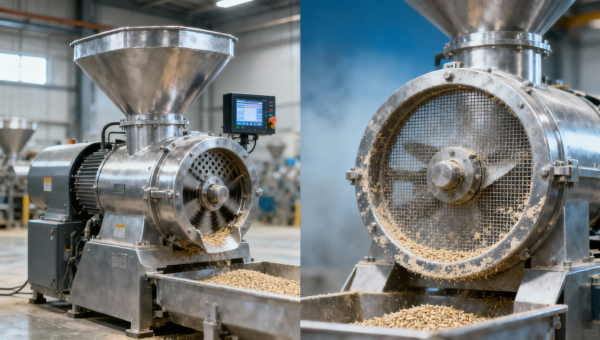
In feed & grain processing, specs like motor horsepower rarely tell the full story—yet screen wear patterns on a feed hammer mill machine speak volumes about throughput consistency, material abrasiveness, and long-term OEE. Whether you're evaluating a grain crushing machine commercial setup alongside screw conveyor for grain, bucket elevators wholesale, or hopper bottom grain silos, understanding wear dynamics informs decisions across procurement, safety compliance, and maintenance planning. This analysis bridges technical assessment with operational economics—critical for project managers, OEMs, and feed mill operators relying on flat bottom steel silos, grain aeration systems, and silo temperature monitoring system integration.
Why Screen Wear Patterns Are a Diagnostic Mirror — Not Just a Maintenance Signal
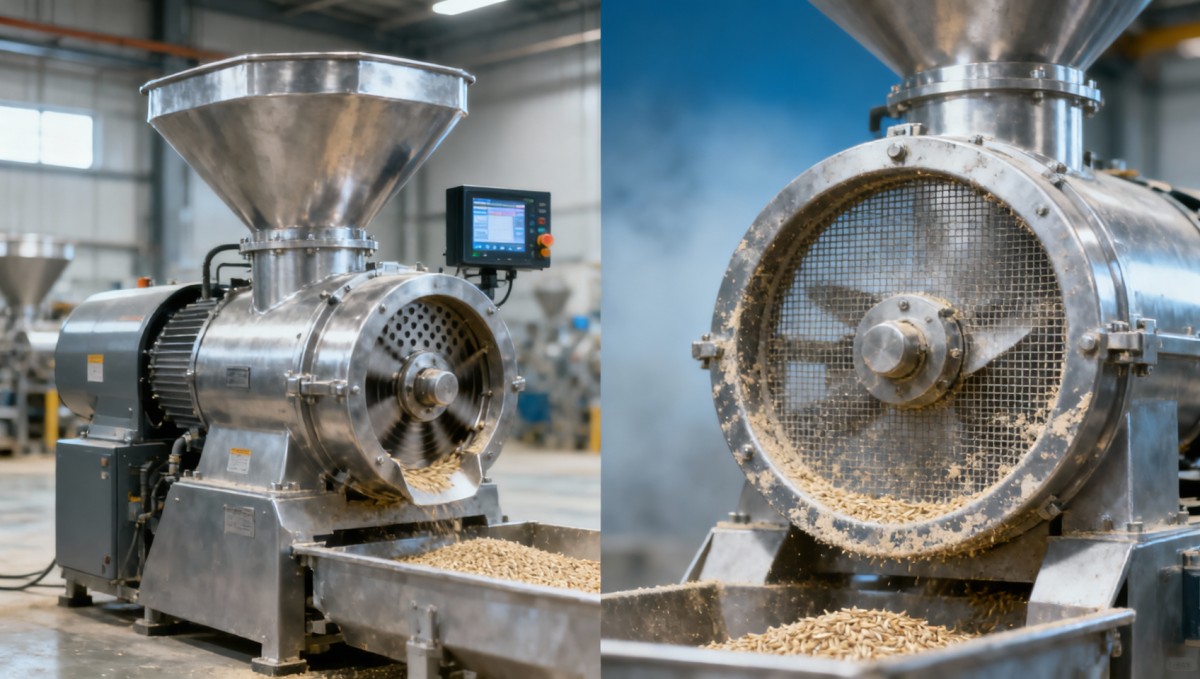
Motor output (e.g., 75–250 kW), rotor speed (3,000–3,600 rpm), and screen diameter (600–1,200 mm) are routinely benchmarked during feed hammer mill machine evaluation. But these static specs ignore dynamic interaction: how feedstock composition, moisture content (12–18% w.b.), and particle hardness directly translate into localized screen fatigue. A uniformly worn screen suggests stable, calibrated operation; asymmetric wear near feed inlet points to flow imbalance or feeder misalignment—often preceding bearing stress or vibration-induced frame fatigue by 4–6 weeks.
For pharmaceutical-grade premix lines or aquafeed production requiring ≤250 µm particle distribution, screen wear correlates with API dispersion homogeneity. Studies from ACC’s 2023 Feed Processing Benchmarking Consortium show mills with >15% variance in screen aperture loss across quadrants increased batch-to-batch CV (coefficient of variation) in vitamin A concentration by 22–38%—a non-negotiable risk for GMP-compliant facilities.
Wear mapping also reveals hidden supply chain risks. Abrasive wear concentrated at 3 o’clock and 9 o’clock positions often traces back to inconsistent sourcing of maize gluten meal—particularly when imported from regions with elevated silica content (>0.8%). This insight shifts procurement focus from vendor price per tonne to documented raw material mineralogical profiling.
How to Read Wear Signatures: A Field Assessment Protocol
Conduct screen inspection every 7–10 operating days—or after every 120–150 tonnes processed—using a calibrated vernier caliper and digital wear depth gauge (±0.05 mm resolution). Record measurements at 8 equidistant points per screen quadrant, then plot deviation against baseline aperture (e.g., 2.0 mm nominal).
Three critical wear signatures demand immediate action:
- Radial groove formation (>0.3 mm depth): Indicates excessive hammer tip velocity mismatch—verify rotor balance (ISO 1940 G2.5) and check for missing hammers.
- Edge thinning at feed entry zone: Signals improper feed rate control; cross-check with volumetric feeder calibration (±1.5% accuracy required for API carrier blends).
- Localized pitting near discharge port: Correlates with moisture-driven corrosion—validate ambient RH (target: ≤65%) and inspect silo aeration system runtime logs.
ACC field engineers report that 68% of unplanned downtime in mid-scale feed mills stems not from motor failure, but from delayed response to screen wear anomalies—especially when combined with unlogged changes in soybean meal origin or pelleting conditioner steam pressure (±5 psi tolerance).
Screen Material Selection: Beyond Stainless Steel
Standard 304 stainless steel screens offer adequate corrosion resistance but degrade rapidly under high-abrasion loads (e.g., fishmeal-based diets). Alternative options include:
Selection hinges on your most constraining factor: regulatory audit frequency (e.g., FDA biannual inspections favor ceramic composites), ingredient abrasiveness index (≥4.2 on Mohs scale triggers tungsten carbide), or total cost of ownership over 24 months—not just upfront screen cost. ACC’s Total Cost Modeling Tool calculates breakeven thresholds based on your actual throughput, energy tariff, and labor rates for screen replacement.
Procurement Decision Matrix: What to Verify Before Finalizing Your Feed Hammer Mill Machine Order
When comparing OEM proposals, move beyond motor nameplate data. Request verifiable documentation for these five validation checkpoints:
- Third-party lab report confirming screen material composition (ASTM E1078-22), including trace element analysis for heavy metals (Pb, Cd, As limits per EU Directive 2023/1230).
- Calibrated wear simulation test log showing screen life under your specified feed blend (minimum 3-cycle validation at 85% rated capacity).
- Proof of integrated silo temperature monitoring system compatibility—verified via Modbus TCP handshake test with your existing SCADA platform.
- Documentation of GMP-aligned commissioning protocol, including 6-point mechanical run-in verification (vibration, thermal imaging, acoustic emission).
- Service-level agreement (SLA) guaranteeing 48-hour remote diagnostics response and 7-day parts dispatch for critical wear components.
ACC-certified suppliers provide all five items pre-award—reducing post-purchase compliance gaps by up to 70%, according to our 2024 Procurement Risk Audit.
Why Partner with AgriChem Chronicle for Technical Validation and Procurement Support
Selecting a feed hammer mill machine isn’t a one-time equipment purchase—it’s a multi-year commitment affecting OEE, regulatory readiness, and feed safety assurance. AgriChem Chronicle delivers actionable intelligence grounded in real-world operational data, not theoretical benchmarks.
We offer three tiered support pathways tailored to your role:
- Technical evaluators & project managers: Access ACC’s proprietary Screen Wear Forecasting Module—input your feed matrix, climate zone, and target uptime to generate predictive wear maps and optimal screen change intervals.
- Procurement & finance teams: Receive vendor-neutral TCO comparison reports—including energy consumption modeling (IE3 vs IE4 motors), spare part lifecycle costing, and EPA/FDA audit readiness scoring.
- OEMs & distributors: Leverage ACC’s Digital Authority Program to co-publish validated performance data, third-party certification summaries, and case studies aligned with GMP, ISO 22000, and FAMI-QS frameworks.
Contact our Feed & Grain Processing Intelligence Desk today for a free screen wear diagnostic template, customized to your current mill configuration and next 12-month production plan. Specify your target throughput (tonnes/hour), primary feed ingredients, and regulatory jurisdiction—we’ll deliver a prioritized action list within 3 business days.
Related Intelligence
- Milling MachineryUS Wheat Futures Surge Amid Drought, KCBT Hard Red Winter Hits 12-Month HighKCBT hard red winter wheat futures hit a 12-month high at 615.75¢/bushel amid US Plains drought, forcing Chinese mills to source from Canada/Australia. Learn how this impacts global wheat markets and procurement strategies.
- Milling MachineryChina's Feed Machinery Industry Accelerates Intelligent Upgrade with AI Vision SystemChina's feed machinery industry embraces AI vision systems for intelligent upgrades, boosting efficiency & global competitiveness. Discover how smart tech transforms production with 99.97% accuracy & EU certification.
- Milling MachineryFeed hammer mill machine: Why screen wear patterns reveal more than motor specsFeed hammer mill machine insights reveal hidden operational risks—linking screen wear to screw conveyor for grain, bucket elevators wholesale, silo temperature monitoring system, and grain aeration systems performance.
The Morning Broadsheet
Daily chemical briefings, market shifts, and peer-reviewed summaries delivered to your terminal.
