

The Authority in Global Agricultural Chemistry & Bio-Resources
Agri and Forestry Equipment Buying Factors: Total Cost, Uptime, and Service Support
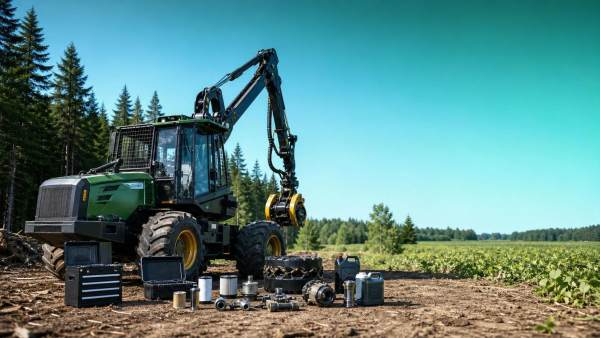
Agri and Forestry Equipment Buying Factors: Total Cost, Uptime, and Service Support
For enterprise buyers evaluating Agri and Forestry equipment, purchase price alone rarely reflects real value.
Long-term profitability depends on total cost of ownership, machine uptime, parts availability, and the strength of service support across operating regions.
This guide explains the buying factors that reduce risk, protect output, and improve returns from capital equipment investments.
Why Agri and Forestry Procurement Has Changed
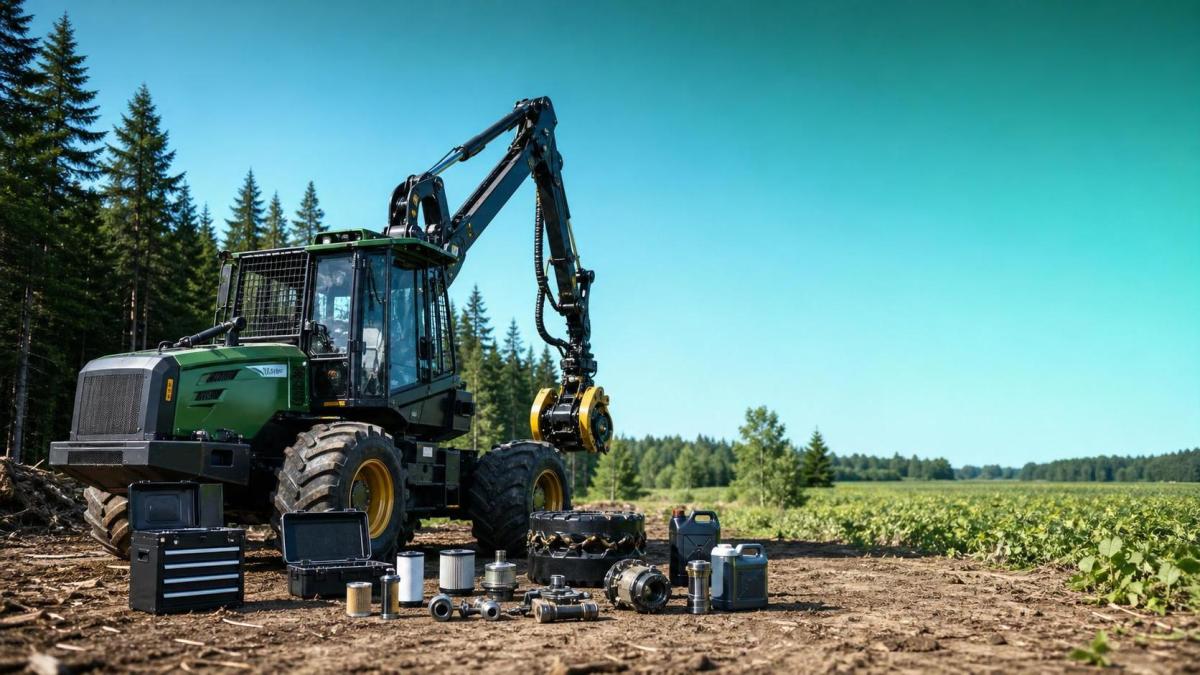
Agri and Forestry operations now face tighter margins, labor shortages, and stricter compliance demands.
That changes how equipment should be evaluated.
A lower sticker price can look attractive in a tender process.
In actual use, however, weak reliability or poor dealer coverage can erase savings very quickly.
From recent market shifts, the stronger signal is clear.
Buyers want Agri and Forestry equipment that performs consistently across seasons, sites, and operator teams.
That also means procurement teams must compare machines beyond brochure specifications.
A disciplined review should connect cost, service, uptime, and lifecycle value into one buying decision.
Start With Total Cost of Ownership, Not Purchase Price
The first rule in Agri and Forestry sourcing is simple.
Initial price is only one line in the full cost picture.
A better comparison model includes every major cost driver over the planned ownership period.
- Fuel or energy consumption under real operating loads
- Routine maintenance intervals and labor time
- Parts pricing and lead times
- Tire, track, blade, chain, or wear component replacement
- Operator training and onboarding costs
- Software subscriptions, telematics, and diagnostic access
- Insurance, financing, and residual value risk
In practice, two similar machines can produce very different cost outcomes.
One may cost less upfront but consume more fuel and require more unplanned service.
Another may carry a premium yet hold value better and run longer between stoppages.
For Agri and Forestry fleets, that difference compounds over thousands of operating hours.
What to Request From Suppliers
Ask suppliers for lifecycle data, not just sales quotations.
- Five-year maintenance schedules with expected parts replacements
- Fuel burn or energy use by application type
- Expected resale value by hour band
- Warranty scope and exclusion details
- Historical uptime records from comparable users
This creates a more reliable Agri and Forestry investment model.
Uptime Is a Revenue Metric, Not Just a Maintenance Metric
Uptime often separates profitable operations from delayed ones.
In Agri and Forestry, downtime does not stay inside the workshop.
It can interrupt harvest windows, planting schedules, hauling plans, and contractor commitments.
That is why uptime should be treated as a direct revenue factor.
A machine that fails during peak season may cost far more than its repair invoice suggests.
It may trigger labor idle time, missed contracts, spoilage, or extra rental costs.
Key Uptime Questions During Evaluation
- What is the mean time between failure in similar Agri and Forestry workloads?
- How fast can field technicians respond during peak demand periods?
- Which faults can be diagnosed remotely?
- Are critical components standardized across the fleet?
- Can operators handle basic corrective actions safely on site?
These questions reveal how resilient the equipment will be under pressure.
They also expose the difference between marketing claims and operational readiness.
Service Support Can Make or Break the Deal
Service support is often underestimated during procurement.
Yet for Agri and Forestry buyers, it is one of the strongest predictors of long-term satisfaction.
A strong machine with weak support can become a recurring operational risk.
This matters even more for companies running across remote or multi-region sites.
In those cases, dealer proximity alone is not enough.
Buyers should examine response capability, technician depth, escalation paths, and parts stocking discipline.
Service Support Checklist
- Regional service footprint and travel time commitments
- Availability of mobile repair units
- Technician certification for specific machine families
- Emergency support hours during seasonal peaks
- Parts fill rate for fast-moving components
- Clear service-level agreements with penalties or remedies
In real buying situations, the best Agri and Forestry suppliers prove support with data.
They can show repair response times, fix rates, and customer retention across similar sectors.
Parts Availability Deserves Its Own Risk Review
Many equipment delays start with one issue.
The needed part is not available when the machine goes down.
For Agri and Forestry fleets, parts support should be reviewed as a supply chain question.
This is especially important when equipment relies on imported components or specialized electronics.
A buyer should know where parts are stored, how they move, and what alternatives exist.
Useful Questions for Parts Planning
- Which parts are stocked locally, regionally, and centrally?
- What are the lead times for critical components?
- Are wear parts shared across multiple models?
- Can buyers build consignment or reserved inventory programs?
- What was the supplier’s fill rate during the last twelve months?
This review helps Agri and Forestry buyers reduce exposure before a machine ever enters service.
Compare Equipment by Application, Not by Generic Category
One common sourcing mistake is comparing machines too broadly.
Agri and Forestry equipment should be matched to actual duty cycles, terrain, climate, and operator skill levels.
A unit that works well in flat row-crop operations may underperform in steep, wet, or heavily wooded conditions.
That is why field-fit matters as much as engine power or rated capacity.
A more application-based comparison leads to smarter Agri and Forestry purchasing decisions.
Supplier Stability and Transparency Matter More Than Ever
Equipment value also depends on the supplier behind it.
In Agri and Forestry procurement, unstable support networks create hidden future costs.
That makes supplier due diligence a practical step, not a formal one.
Review manufacturing continuity, distribution maturity, and policy transparency.
It is also wise to check whether software access, diagnostic tools, and firmware support remain available through the equipment life.
Signals of a Lower-Risk Supplier
- Consistent aftermarket investment
- Transparent warranty and service documentation
- Proven regional distributor network
- Stable product roadmap and backward parts support
- Referenceable users in similar Agri and Forestry operations
A Practical Buying Framework for Better Decisions
A structured scorecard helps teams avoid bias toward headline price.
It also makes Agri and Forestry procurement easier to defend internally.
- Define the operating scenario by task, terrain, season, and annual hours.
- Estimate full ownership cost over three to seven years.
- Score uptime risk using reliability, diagnostics, and repair response.
- Review service support coverage across all operating regions.
- Check parts availability with lead-time data and stocking plans.
- Validate supplier stability through references and policy review.
- Run a weighted comparison before commercial negotiation.
This approach keeps Agri and Forestry buying grounded in operational reality.
It also supports better budget planning and fewer unpleasant surprises after delivery.
Final Takeaway
The best Agri and Forestry purchase is rarely the cheapest machine on paper.
It is the option that delivers lower total cost, stronger uptime, dependable parts flow, and credible service support over time.
When procurement teams ask sharper questions early, they reduce lifecycle risk later.
For any Agri and Forestry investment, a disciplined evaluation framework remains the safest path to durable returns.
Use the next sourcing round to compare equipment on ownership economics, uptime resilience, and support quality before final approval.
Related Intelligence
- Forestry EquipmentChoosing Compact Forestry Machinery for Small Woodlots and Narrow AccessChoose compact forestry machinery that fits small woodlots and narrow access. Compare payload, turning clearance, safety, and running costs to find the right machine for your site.
- Forestry EquipmentAre PTO driven wood chipper vibration levels within ISO 5349-1 hand-arm exposure limits for forestry crews?PTO driven wood chipper vibration often exceeds ISO 5349-1 limits—discover real-world data, actionable mitigation strategies, and how to protect forestry crews now.
- Forestry EquipmentSelecting Timber Processing Equipment for Middle East Heat, Dust, and Wood SpeciesTimber processing equipment for Middle East operations: discover how to select heat-resistant, dust-protected, species-matched systems for reliable output and lower downtime.
The Morning Broadsheet
Daily chemical briefings, market shifts, and peer-reviewed summaries delivered to your terminal.
