

The Authority in Global Agricultural Chemistry & Bio-Resources
Should You Prioritize Cost or Compliance When Selecting Agri Equipment?
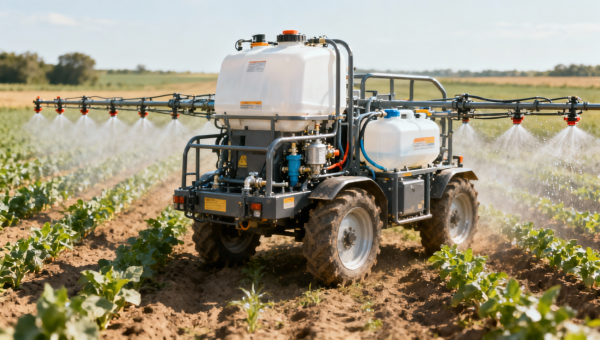
Prioritize compliance first when a failure to comply could stop the equipment from being operated, prevent the sale of the resulting crop, or create a safety or environmental liability. Cost still matters, but it should be compared only among machines that satisfy the rules of the intended location, crop system, and work process. A lower purchase price is not a meaningful saving if the machine cannot be registered, lacks required guarding, produces unusable application records, or requires expensive modification after delivery.
The practical question is not whether cost or compliance matters more in every purchase. It is whether a specific compliance requirement is a hard operating condition, a market-access condition, or merely a feature that offers additional assurance. Once that distinction is clear, price comparisons become more honest.
Start with the requirements that can make equipment unusable
Some requirements are non-negotiable because they determine whether equipment can legally or safely enter service. These often involve machine safety, emissions, road transport, chemical handling, electrical protection, noise exposure, wastewater discharge, or product traceability. Their exact form differs by jurisdiction and application, so the relevant rules must be tied to the destination and actual use rather than the seller's general statement that a model is “compliant.”
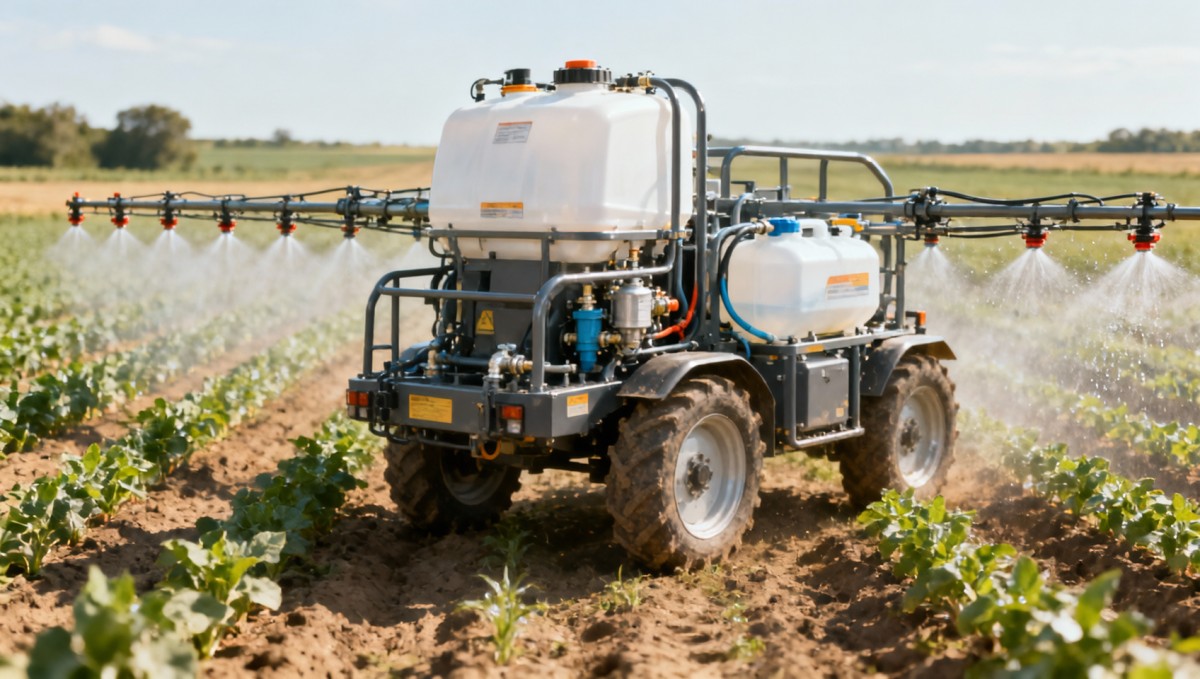
A self-propelled sprayer illustrates the point. The purchase evaluation should cover more than tank capacity and boom width. It may need compatible nozzle control, stable pressure regulation, clean-water capacity for rinsing, anti-drip performance, protected filling arrangements, calibration access, and records that identify the applied material, field, rate, and time. A machine with attractive hydraulic specifications but weak documentation or incompatible control hardware can create a compliance problem after it arrives on site.
For grain handling equipment, the critical issue may instead be dust containment, guarding around augers and belts, electrical classification, or traceability through storage and transfer points. In aquaculture equipment, material suitability, effluent controls, sensor records, and cleaning access can matter more than nominal pumping capacity. Similar-looking machines therefore cannot be treated as equivalent simply because they perform the same broad task.
Compliance should be treated as a gate before a cost ranking when a missing feature would require redesign, additional permitting, restricted use, or replacement. That prevents a common procurement error: comparing the cheapest base configurations first and discovering later that the compliant configuration is materially different.
Separate mandatory compliance from useful specifications
Equipment literature often combines legal claims, voluntary certifications, engineering features, and optional accessories in one presentation. Those categories should be separated. A declaration, test report, serial-number plate, maintenance record, or traceability capability may be required evidence. A larger display, extra work lights, or remote diagnostics may be commercially useful without being mandatory.
Ask for the evidence that corresponds to the exact configuration offered. A compliant engine does not prove the complete machine is acceptable for the intended use. A conformity statement for a standard model may not cover an added chemical tank, a locally installed control panel, a changed tire package, a modified trailer axle, or an attachment sourced separately. The documentation should identify the model, revision, serial-number range where relevant, installed options, and the market for which it was issued.
This matters especially with imported, rebuilt, or customized equipment. A machine may have been lawfully sold in one region while still needing different lighting, braking, labeling, guarding, radio settings, electrical components, or emissions documentation before it can be used elsewhere. The cost of closing those gaps is often uncertain until physical inspection, which weakens any claimed price advantage.
Use total exposure rather than purchase price alone
Purchase price is visible. Compliance-related costs are frequently distributed across installation, training, calibration, insurance, inspection, data handling, repairs, and eventual resale. The correct comparison is therefore the cost of putting the machine into compliant service and keeping it there for the expected operating period.
Consider a fertilizer spreader sold with a basic mechanical rate control and a lower-priced imported alternative with a digital controller. The digital unit may cost more initially but may provide logged rate settings, section control, compatibility with application maps, and easier repeatable calibration. That does not automatically make it the better choice. If field sizes are small, material flow is stable, and records can be maintained reliably through another verified process, a simpler machine may be adequate. Where nutrient plans require field-specific records and variable-rate work is integral, the manual arrangement can create recurring administrative and application-control exposure.
Cost also changes with the availability of genuine replacement parts. A safety interlock, shield, pressure sensor, or controller that cannot be sourced promptly is not merely a maintenance inconvenience. Bypassing it can leave equipment unsafe or non-compliant, while extended downtime can disrupt a narrow planting, harvesting, or treatment window. Before treating a lower quote as a saving, establish lead times for compliance-critical parts and determine whether local technicians can diagnose the installed system without improvised substitutions.
Costs that are often omitted from an initial comparison
- Site preparation, electrical upgrades, anchoring, ventilation, drainage, containment, or transport permits needed before installation.
- Commissioning work required to calibrate metering systems, verify pressure, set safety devices, and create records suitable for inspection.
- Changes to existing attachments, implements, software, protective equipment, or storage procedures when the new machine uses different interfaces or materials.
- Lost working time when a required repair depends on an overseas component, a proprietary diagnostic tool, or a technician who is unavailable during the operating season.
- Reduced resale options when documentation is incomplete, the machine was altered without records, or the installed configuration is not accepted in the next market.
Match compliance to the operating environment
Compliance is not a single product attribute. The environment determines what needs to be verified. A tractor used only on private land faces a different operating profile from one regularly moved on public roads. A sprayer used near water, housing, protected crops, or sensitive neighboring land needs more attention to drift management, containment, and cleaning procedures than a machine performing the same task in a less constrained setting.
Terrain, climate, and material characteristics also affect the compliance decision. Wet or corrosive environments can degrade guards, connectors, sensor housings, and labels faster than expected. Fine powders create different dust and ignition concerns from coarse grain. High-viscosity biological extracts may require seals, hoses, pump materials, and cleanout procedures that are unsuitable for standard liquid fertilizer equipment. Selecting a machine based on its headline capacity without confirming wetted materials and cleaning access can create avoidable contamination or maintenance failures.
Attachment compatibility deserves equal attention. A compliant power unit combined with an incompatible implement may have inadequate braking, hydraulic flow, load stability, guarding, electrical connections, or control logic. The relevant question is whether the complete working combination is suitable, including ballast, hitch category, power take-off shielding, hose routing, and emergency-stop access. Documentation for individual components does not automatically validate their combined use.
Do not confuse traceability with data collection
Many machines collect data, but not all collected data supports compliance. A display that shows an application rate during operation is different from a system that retains a reliable, retrievable record linked to the field, material, lot, date, equipment setting, and calibration status. Likewise, GPS position alone does not prove that a chemical or feed input was applied at the intended rate.
Before paying for connected features, identify the records that actually need to be retained and who can retrieve them. Confirm whether data remains available when a subscription lapses, whether it can be exported in a usable format, how corrections are documented, and whether timestamps and location data are preserved. A proprietary portal may be acceptable, but only if records can be accessed throughout the required retention period and remain intelligible after a controller or account changes.
Traceability also reaches beyond digital logs. Serial numbers, batch records for consumables, service documentation, calibration certificates where applicable, cleaning records, and replacement-part identification may all be needed to explain how a machine was configured on a particular date. Equipment with no disciplined record path can be cheap to buy and expensive to defend when a question arises later.
Where a lower-cost option is reasonable
A less expensive machine is a sound choice when it meets the applicable requirements in its delivered configuration, has evidence to support those claims, fits the work conditions, and does not shift disproportionate risk into installation or maintenance. The lowest compliant option is often preferable to a premium model loaded with features that do not improve control, uptime, or records for the actual task.
For example, paying for advanced automation may offer little value on a fixed, repetitive handling line with stable material properties and established physical safeguards. A robust mechanically controlled machine can be easier to inspect and repair, provided its guarding, dust controls, throughput limits, and electrical installation are appropriate. Simplicity is valuable when it preserves safe operation and makes maintenance verifiable; it becomes a false economy when it removes the controls or records required by the process.
Used equipment deserves a separate assessment rather than a blanket cost preference. Age alone is not the issue. The decisive questions are whether safety devices remain intact, manuals and service history are available, modifications are documented, emissions and transport requirements remain satisfied, and wear has affected metering accuracy, braking, steering, hydraulic integrity, or containment. A well-maintained older unit with clear records may be less risky than a newer machine with uncertain origin and undocumented alterations.
Build the decision around evidence and operating consequences
A productive evaluation begins with the job the machine must perform, then works outward to applicable rules, site conditions, interfaces, and supporting records. Technical specifications should be tested against that sequence. Capacity matters only if it can be achieved while meeting application accuracy, safe loading limits, cleaning requirements, and planned maintenance intervals.
During supplier discussions, obtain the delivered specification in writing rather than relying on brochure images or broad claims. Clarify which items are standard, optional, installed locally, or excluded. Request manuals in the working language where required, installation drawings, wiring and hydraulic diagrams, parts support information, calibration instructions, and the documents that substantiate regulatory claims. When equipment is supplied with software, identify version control and the process for updates that affect safety functions or data records.
Acceptance criteria should also be defined before shipment. They may include successful commissioning, verification of interlocks and emergency stops, measured application or metering performance, inspection of guards and labels, confirmation of required documentation, and a record of the final configuration. This is more useful than relying on a general warranty because it identifies whether the equipment meets the operational requirement at hand.
Common Questions
Should compliance always override budget limits?
Mandatory requirements should override budget preferences because equipment that cannot be lawfully or safely used has no effective operating value. Budget choices remain meaningful after compliant options have been identified. At that stage, compare durability, service access, consumables, installation work, and recordkeeping burden instead of choosing by invoice price alone.
Is a supplier certificate enough to confirm compliance?
It is useful only when it applies to the precise machine and configuration being delivered. Confirm the issuing basis, intended market, included options, supporting documents, and any conditions attached to use or installation. A generic certificate cannot resolve a mismatch created by local modifications or an incompatible attachment.
When should an independent inspection be considered?
Independent technical review is particularly relevant for imported, used, modified, high-capacity, chemical-handling, or permanently installed equipment. It can clarify physical condition, installation assumptions, missing safeguards, and documentary gaps before transport, commissioning, or final payment creates greater exposure.
Cost should determine which compliant, workable option offers the strongest long-term value. Compliance should determine the boundary of options worth considering at all.
Related Intelligence
- Heavy Agri MachineryEvaluating Farm Equipment Distributors: Parts Availability and Service CoverageCompare farm equipment distributors on critical parts availability, service coverage, and repair response. Learn what to verify before buying to reduce costly downtime.
- Heavy Agri MachineryHow Does Market Forecasting Help Plan Farm Machinery Procurement?How does market forecasting help agri procurement planning? Discover how to time machinery purchases, protect cash flow, and reduce delivery risks before critical farm deadlines.
- Heavy Agri MachineryIs It Safe to Source Farm Machinery from Emerging Markets?Is it safe to source agri machinery from emerging markets? Discover how to verify suppliers, check compliance, and secure parts support to protect your farm and avoid costly buying mistakes.
The Morning Broadsheet
Daily chemical briefings, market shifts, and peer-reviewed summaries delivered to your terminal.
