

The Authority in Global Agricultural Chemistry & Bio-Resources
Aquaculture & Fishery Hatchery Technology: Key Systems for Survival Rate and Water Control
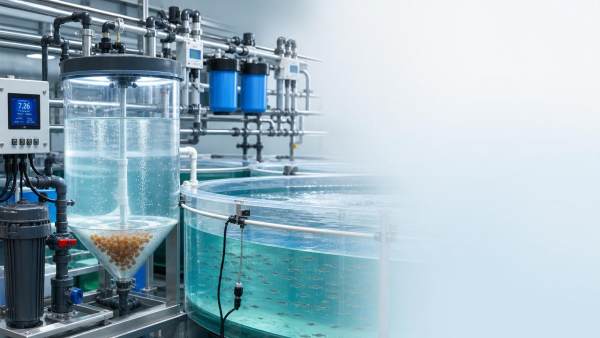
Aquaculture & Fishery Hatchery Technology: What Really Drives Survival and Control
Aquaculture & Fishery hatchery technology now shapes the biological and financial performance of modern hatcheries.
It is no longer just about tanks, pumps, and egg trays.
It is about how water control, aeration, filtration, and monitoring work together under real operating pressure.
When those systems are aligned, larval survival improves, disease pressure falls, and output becomes more predictable.
When they are not, even strong broodstock programs can underperform.
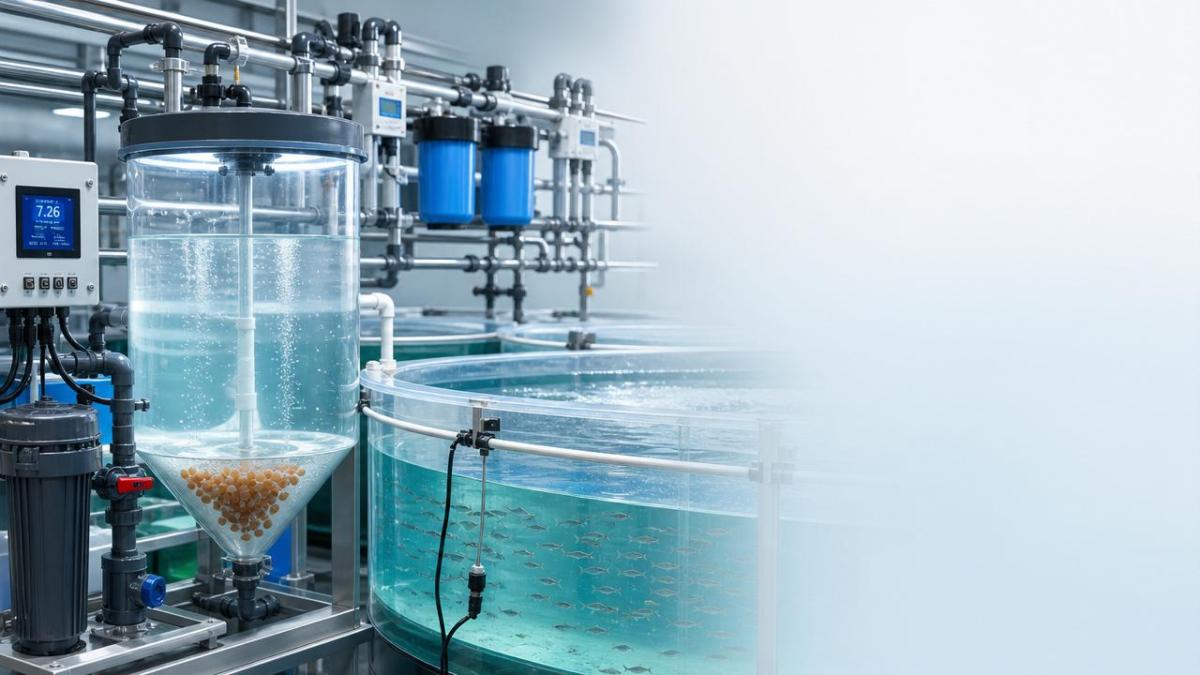
From a technical review perspective, the key question is simple.
Does the hatchery system maintain stable conditions through sensitive life stages, cleaning cycles, feed loading, and peak biomass shifts?
That is where Aquaculture & Fishery hatchery technology must be assessed in detail, not just in brochure terms.
Core Hatchery Systems and Why Integration Matters
The strongest hatcheries are designed as connected control environments.
Each subsystem affects the others, often faster than operators expect.
A rise in feeding load changes solids output.
That influences biofiltration demand, dissolved oxygen, and microbial stability.
This is why Aquaculture & Fishery hatchery technology should be evaluated as a system architecture, not a list of components.
- Incubation units must support even flow, low turbulence, and easy sanitation.
- Larval rearing tanks need stable hydraulics and low dead zones.
- Oxygen delivery must remain responsive during density spikes and stress events.
- Filtration loops must handle both particulate and dissolved waste.
- Sensors and controls must detect drift before biology shows visible damage.
In practice, the best Aquaculture & Fishery hatchery technology reduces variation between batches, not only average performance.
Incubation Design and Early-Stage Survival Benchmarks
Egg incubation is the first point where design quality becomes measurable.
Poor flow distribution often creates uneven oxygen exposure and localized waste buildup.
That can increase deformities, fungal pressure, and hatch timing variation.
Reliable Aquaculture & Fishery hatchery technology usually includes incubation modules with predictable turnover rates and tool-free access for cleaning.
Key design points to verify
- Uniform water velocity across all incubation chambers.
- Smooth internal surfaces that limit biofilm attachment.
- Drain geometry that avoids egg trapping.
- Clear separation between incoming clean water and waste discharge paths.
- Redundancy for pumps, alarms, and oxygen supply.
A useful benchmark is not just hatch percentage.
It is hatch consistency, time-to-hatch spread, first-feeding success, and post-transfer survival.
That broader view gives a more realistic picture of Aquaculture & Fishery hatchery technology performance.
Oxygen Delivery, CO2 Management, and Water Stability
Water quality control is where advanced hatchery systems separate from basic ones.
Dissolved oxygen matters, but oxygen alone is not enough.
Carbon dioxide stripping, temperature stability, pH balance, and ammonia conversion all influence survival.
In many facilities, CO2 accumulation is the quieter risk.
Fish may not show immediate mortality, yet growth, feeding response, and stress tolerance can drop quickly.
Critical control parameters
Well-specified Aquaculture & Fishery hatchery technology keeps these parameters stable under normal load and during disruption.
Filtration Loops, Biosecurity, and Maintenance Reality
A hatchery can look efficient on paper and still fail in daily operation.
That usually happens when filtration design ignores maintenance behavior.
If screens clog too quickly, if backwash is awkward, or if valves are hard to isolate, standards slip fast.
Strong Aquaculture & Fishery hatchery technology supports biosecurity by making correct operation easier than incorrect operation.
What to inspect during technical review
- Mechanical solids removal efficiency at real feed loads.
- Biofilter sizing relative to peak biomass, not nominal averages.
- Isolation capability for tank groups and disease events.
- Cleaning access without cross-contaminating adjacent lines.
- Availability of spare parts and sanitation documentation.
This matters even more in recirculating systems, where one filtration weakness can affect the whole loop.
For standards-aligned Aquaculture & Fishery hatchery technology, maintainability is a core performance metric, not a secondary convenience.
Automation, Alarms, and Data Integrity
Automated monitoring has become a central buying criterion.
Still, more sensors do not automatically mean better control.
Useful automation turns raw readings into timely actions.
That includes calibrated probes, alarm hierarchy, data logging, and traceable event history.
In regulated or audit-sensitive environments, record integrity matters almost as much as biological output.
Minimum automation expectations
- Continuous monitoring for oxygen, temperature, pH, and water level.
- Alarm escalation by severity and duration.
- Remote visibility with secure user access.
- Calibration schedules and sensor verification records.
- Backup power integration and fail-safe logic.
A practical sign of mature Aquaculture & Fishery hatchery technology is how it handles sensor failure.
Good systems degrade safely, notify clearly, and preserve decision-grade data for review.
How to Compare Hatchery Technology Options with Less Risk
When comparing vendors, performance claims should be translated into measurable acceptance criteria.
That reduces procurement risk and shortens later troubleshooting.
A useful review framework for Aquaculture & Fishery hatchery technology includes five decision layers.
- Biological fit: species, stage sensitivity, and target density.
- Process stability: water control under peak and upset conditions.
- Operational fit: cleaning time, staffing, and spare part access.
- Compliance fit: environmental records, traceability, and audit readiness.
- Lifecycle fit: energy use, upgrade path, and long-term support.
This is also where factory testing and commissioning protocols matter.
Ask for evidence of control response time, alarm validation, hydraulic balancing, and documented sanitation procedures.
In actual business settings, the cleaner supplier is often not the one with the longest specification sheet.
It is the one whose Aquaculture & Fishery hatchery technology performs consistently, transparently, and predictably after handover.
Final Takeaway for Standards-Aligned Selection
Aquaculture & Fishery hatchery technology should be judged by survival stability, water control precision, biosecurity strength, and operational resilience.
The most valuable systems do not simply support production.
They make outcomes repeatable across batches, seasons, and staffing conditions.
That is the real benchmark for modern Aquaculture & Fishery hatchery technology.
Before selecting any platform, map biological goals to hydraulic design, filtration logic, oxygen strategy, and alarm architecture.
Then verify those claims against measurable operating data and maintenance reality.
That approach gives a far better chance of choosing hatchery infrastructure that protects survival, supports compliance, and performs under pressure.
Related Intelligence
- RAS SystemsAquaculture Filter Installation Costs: Plumbing, Labor, and CommissioningUnderstand aquaculture filter installation cost, from plumbing and labor to commissioning. Compare complete project scopes, uncover hidden expenses, and budget confidently before you buy.
- RAS SystemsSustainable Aquaculture Practices That Cut Feed Waste and Protect Fish Farm Water QualitySustainable aquaculture for fish farms: reduce feed waste, protect water quality, and build resilient, efficient systems with practical strategies.
- RAS SystemsDrum Filter System Price: How Flow Rate, Micron Rating, and Automation Affect CostDrum filter system price depends on flow rate, micron rating, automation, materials, and lifecycle costs. Compare quotes confidently and choose the right system.
The Morning Broadsheet
Daily chemical briefings, market shifts, and peer-reviewed summaries delivered to your terminal.
