

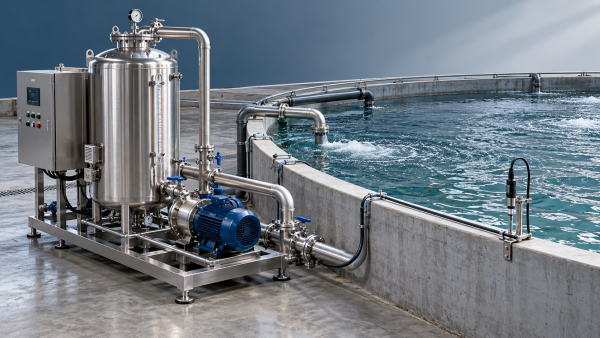
Sizing oxygenation skids for aquaculture starts with peak oxygen demand. Average consumption and equipment nameplate ratings cannot establish whether a system will protect dissolved oxygen.
Technical evaluators must translate biomass, species respiration, feeding schedules, water conditions, and background demand into a defensible oxygen delivery requirement under realistic operating conditions.
The right specification connects biological demand with verified transfer performance, hydraulic capacity, controls, and backup arrangements. Each link must remain adequate during the governing design scenario.
What capacity must an oxygenation skid actually deliver?
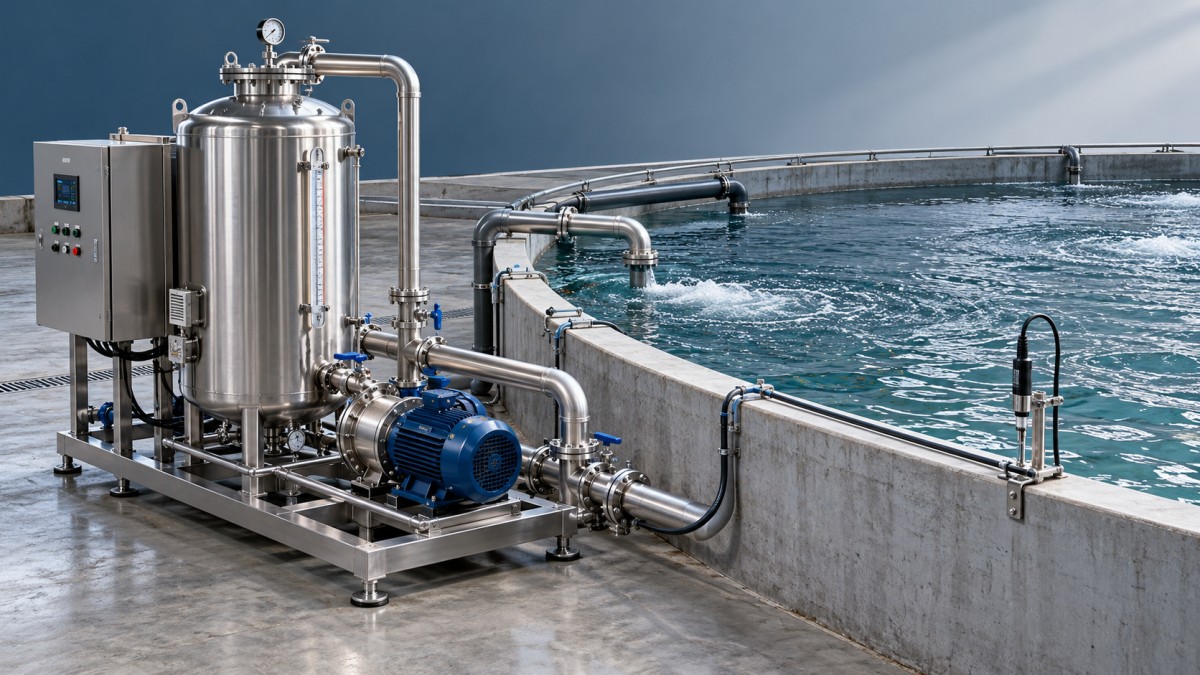
Begin by defining capacity as kilograms of oxygen dissolved into the relevant water stream per hour, at specified inlet conditions and required outlet dissolved oxygen.
Oxygen supplied to a contactor and oxygen retained in water are different quantities. Gas losses, downstream degassing, and operating pressure can materially change useful delivery.
A vendor rating therefore needs a measurement boundary. Determine whether it describes gas consumption, transfer inside the vessel, or oxygen remaining at the culture inlet.
The design requirement should identify peak demand, the minimum acceptable dissolved oxygen, and the conditions under which both must be satisfied throughout the production system.
That minimum depends on species, life stage, stocking conditions, and production objectives. Establish it with biological expertise rather than borrowing a generic aquaculture threshold.
For procurement, request guaranteed net oxygen delivery alongside the associated water flow, gas quality, pressure, temperature, salinity, inlet oxygen concentration, and electrical power requirement assumptions.
Which operating scenario creates the highest oxygen load?
Build a scenario table before calculating equipment size. Maximum standing biomass is important, but the highest demand may occur during a particular feeding or handling period.
Species respiration changes with fish size, temperature, activity, feeding status, and health. Use measurements or applicable biological data that represent the farm’s intended operating envelope.
Evaluate coincident conditions. Combining unrelated worst cases can inflate cost, while overlooking a credible combination of warm water, feeding, and restricted flow can understate risk.
Background demand also matters. Biofilters, suspended solids, organic deposits, and other organisms consume oxygen, although their contribution depends on the system boundary and treatment layout.
In recirculating systems, map where each load occurs and which device supplies it. Separate biofilter aeration may carry demand that the fish oxygenation skid never serves.
Use time resolution appropriate to the process. Daily averages conceal feeding peaks; control design may require minute-scale observations even when capacity calculations use hourly rates.
How do you calculate peak demand without double counting?
For each fish group, multiply biomass by the applicable peak specific oxygen consumption rate. Sum the groups, then add background loads assigned to the skid.
Keep units explicit throughout the worksheet. A respiration rate expressed in grams per kilogram per hour requires conversion before reporting total demand in kilograms per hour.
Feed-based estimates can provide a useful cross-check, particularly when measured respiration data are limited. Their coefficients must match the species, feed, temperature, and accounting boundary.
Do not automatically add a complete feed-based system demand to a complete biomass-based demand. These approaches may already include overlapping fish metabolism or microbial consumption.
Reconcile calculated demand against operating records when available. Oxygen supply measurements need correction for transfer losses, while water measurements require representative flow and concentration data.
Apply a documented allowance for uncertainty after establishing the underlying demand. Distinguish uncertainty in biological inputs from capacity reserved for a specific equipment failure.
A blanket percentage cannot replace scenario analysis. Explain which uncertainties the allowance covers, and avoid applying repeated margins across demand, transfer efficiency, and vendor selection.
Worked example: converting biological load into skid duty
Consider a hypothetical production unit containing 12,000 kilograms of fish. Assume its applicable peak respiration rate is 0.30 grams of oxygen per kilogram per hour.
These figures illustrate the calculation only. They are not recommended design coefficients, and a different species, temperature, feeding regime, or size distribution could change demand substantially.
The 85% figure must represent achievable net transfer under the specified site conditions. A favorable test result at another operating point does not establish this performance.
If the supply gas contains 93% oxygen by volume, total gas flow must account for that purity. Verify whether supplier readings already report oxygen-equivalent flow.
Using approximately 1.429 kilograms per normal cubic meter of pure oxygen gives about 4.78 normal cubic meters per hour of the assumed 93% gas mixture.
This conversion assumes dry gas and normal conditions of 0°C and 1.01325 bar absolute. Specify reference conditions because “standard” volumetric flow conventions vary between suppliers.
The resulting gas requirement sizes the oxygen supply interface. It does not demonstrate adequate water flow, acceptable culture conditions, or resilience during a supply outage.
Can the available water flow carry the required oxygen?
A skid can have sufficient gas capacity while lacking enough water throughput to deliver its promised oxygen mass within acceptable inlet and outlet concentration limits.
At 1,000 cubic meters per hour, a dissolved oxygen increase of 5 milligrams per liter carries 5 kilograms per hour, below the example’s required delivery.
Delivering 5.40 kilograms per hour at that flow requires an increase of 5.40 milligrams per liter, provided the oxygen remains dissolved through the delivery boundary.
Assess whether the resulting outlet concentration is feasible at the contactor pressure and acceptable after pressure release, distribution losses, mixing, and entry into culture tanks.
For a recirculating sidestream, calculate oxygen added across the skid from its concentration increase. Counting the entire outlet oxygen content would count returning oxygen again.
Check pump curves, minimum circulation, pipe losses, fouling, and bypass arrangements. Pressure available at the contactor must remain adequate at the actual operating flow.
Temperature, salinity, pressure, and inlet dissolved oxygen affect transfer performance. Require a performance map across relevant conditions, including reduced flow and elevated inlet oxygen concentration.
Will controls maintain dissolved oxygen through feeding peaks?
Peak capacity protects production only when the system responds quickly enough. Sensor placement, water transport delay, valve response, and mixing influence the actual control outcome.
Use measurements representative of fish exposure, including vulnerable locations within the hydraulic layout. A high reading immediately downstream of oxygen injection can conceal low tank oxygen.
Feed-forward control based on feeding schedules can anticipate predictable demand. Dissolved oxygen feedback then adjusts output as actual biological load and water conditions change locally.
Specify minimum stable oxygen delivery as well as maximum capacity. Poor turndown can cause cycling, overshoot, and unnecessary oxygen consumption during low biomass production periods.
Compare modular arrangements with single large units across the expected load range. Evaluate staging transitions, minimum water flow, and efficiency at ordinary operating points too.
Define sensor calibration, cleaning, failure detection, alarm escalation, and manual operation. Loss of a signal should initiate a documented response appropriate to the farm’s risks.
What must remain available when equipment or utilities fail?
Redundancy should follow the consequence of failure and the available response time. Spare skid capacity alone cannot address every interruption to oxygen delivery at the farm.
Trace common dependencies across generators, vaporizers, regulators, pumps, controls, electrical supplies, and distribution headers. Multiple contactors sharing one failed supply may provide no effective redundancy.
Where N+1 capacity is required, verify that the remaining equipment meets the defined emergency duty after the largest relevant unit becomes unavailable under specified conditions.
Estimate the oxygen reserve in the culture water. Multiply effective water volume by the allowable dissolved oxygen decline, then compare that inventory with net depletion.
For example, 500 cubic meters with an allowable decline of 2 milligrams per liter contains approximately 1 kilogram of usable dissolved oxygen within that band.
At 5.40 kilograms per hour of net depletion, that inventory lasts roughly eleven minutes. Mixing limitations and uneven fish distribution can shorten practical response time.
Size emergency oxygen storage and delivery for the required autonomy, considering usable inventory, vaporization or regulator limits, and maximum withdrawal under expected ambient conditions locally.
What evidence should determine the purchase decision?
Compare oxygenation skids for aquaculture using a common duty schedule. Otherwise, attractive capacity or efficiency figures may represent different water conditions, boundaries, or utility assumptions.
- Require guaranteed net oxygen delivery at defined peak and minimum loads, with explicit gas purity, water conditions, pressure requirements, and allowable performance tolerances.
- Request oxygen consumption and total electrical demand across the operating range, including associated pumps, oxygen generation, and auxiliary equipment within the agreed comparison boundary.
- Specify acceptance measurements for water flow, inlet and outlet dissolved oxygen, gas flow, purity, and power, with instrument accuracy and stabilization requirements stated.
- Demonstrate alarms, automatic staging, backup changeover, and recovery during controlled testing that does not expose stocked production systems to unacceptable oxygen depletion.
- Evaluate maintenance access, cleaning frequency, critical spares, service response, and component replacement time alongside installed cost and expected annual oxygen consumption.
Acceptance testing should reproduce the agreed design conditions where practicable. Any correction from test conditions to guaranteed conditions needs an agreed method and stated uncertainty.
The strongest selection is the system that demonstrably delivers the required dissolved oxygen through peak loads and credible failures, with controllable output and transparent operating costs.
A defensible specification connects biological demand, hydraulic delivery, verified transfer, and emergency response. That connection turns a skid capacity claim into a reliable production decision.