

The Authority in Global Agricultural Chemistry & Bio-Resources
Are Botanical Extracts Classified as Agrochemicals Under New Rules?
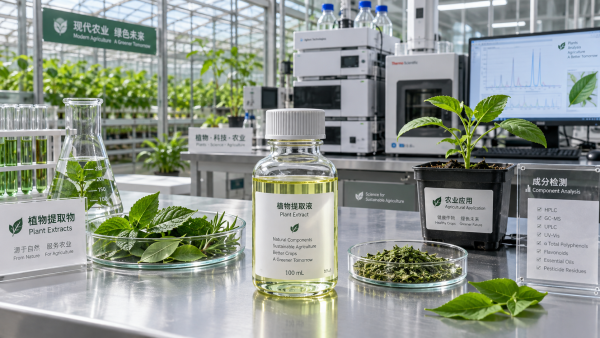
Botanical extracts can be classified as agricultural chemicals, but their plant origin does not determine their legal status. Classification usually depends on the intended function, the claims made for the product, its composition, and the rules in the market where it is sold. An extract promoted for controlling insects may enter a pesticide framework, while a similar extract used for nutrient support or food processing may follow a different route.
For anyone asking “are bio extracts considered agricultural chemicals under new rules,” the first distinction is between a broad commercial description and a legal category. “Agrochemical” can describe many agricultural inputs, but regulatory systems typically use more specific categories, such as pesticides, fertilizers, plant biostimulants, and feed additives. Those categories determine the obligations that matter: authorization, labeling, evidence, permitted uses, and market access.
Do new rules automatically make all botanical extracts agrochemicals?
No. There is no single worldwide rule that turns every botanical extract into an agrochemical. A regulatory change may affect a particular product category, introduce a different authorization route, or change the evidence required for certain claims. Its effect depends on which products and activities fall within its scope.
The phrase “new rules” therefore needs a specific reference: a destination market, a regulatory framework, and a product use. A change to fertilizer requirements may affect an extract sold for plant nutrition without changing the status of that extract as a cosmetic ingredient. Likewise, a revised pesticide requirement may matter for a botanical insect repellent but have little relevance to an extract used only as a food flavoring.
Three separate questions help keep the decision clear: What category does the product enter? Is it authorized or exempt within that category? What conditions govern its sale and use? A product can qualify for a simplified route and still remain subject to restrictions. Classification and permission to sell are related, but they are not interchangeable.
Which uses are most likely to trigger agricultural regulation?
The intended result is a useful starting point. What is the extract supposed to do after application, and what benefit does the seller promise? The following examples show how the same broad ingredient description can lead to different regulatory questions.
This is a screening tool, not a universal classification chart. Product categories and their boundaries differ between markets. A combined claim, such as “improves nutrient uptake and prevents fungal disease,” also needs closer attention because it crosses functions that may be regulated separately.
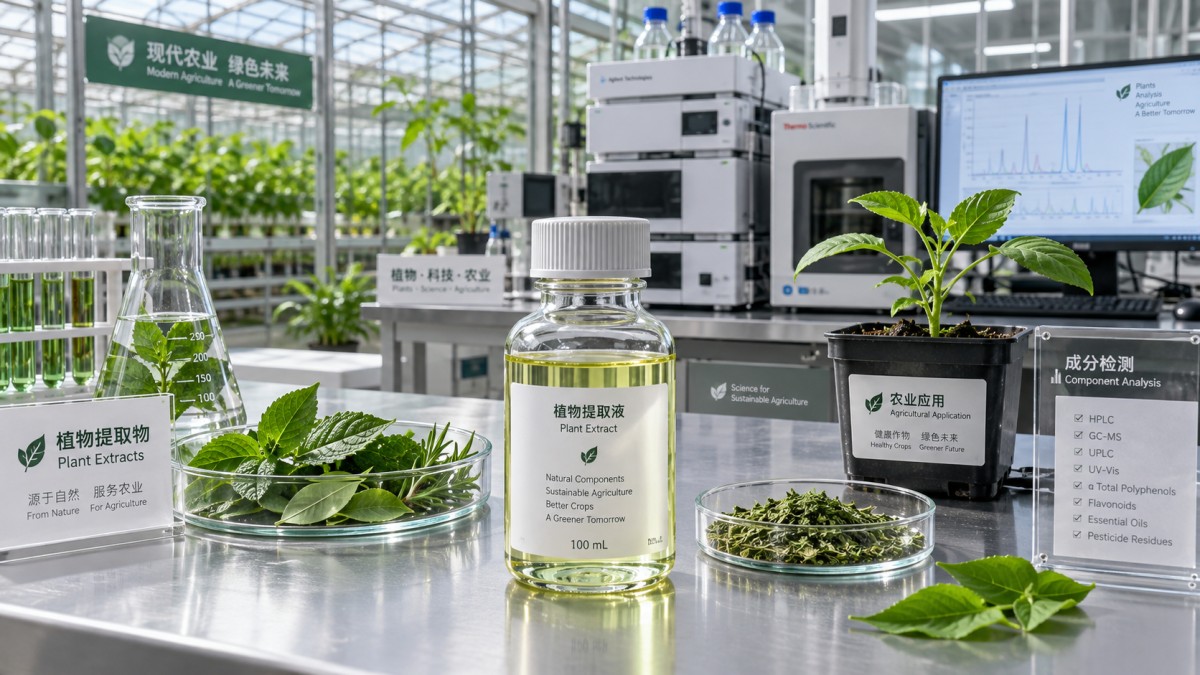
Can the same extract be a pesticide in one product and an ingredient in another?
Yes. Consider a plant extract supplied for fragrance formulation and another product containing that extract promoted to repel crop pests. The source material may be similar, but the marketed purpose is different. That difference can change the applicable regulatory route.
Composition still matters. Extraction solvent, concentration, chemical profile, impurities, and added ingredients may affect whether two materials are comparable for regulatory purposes. A familiar plant name does not establish that every extract made from it has the same properties or legal status.
The distinction between a raw material and a finished formulation also matters. Supplying an extract for further manufacturing is a different activity from selling a ready-to-use crop spray. Authorization covering one material or formulation should not be assumed to cover every downstream product, concentration, or use.
For this reason, a useful classification description includes the plant identity, plant part, extraction method, composition range, intended function, and proposed market. “Natural botanical concentrate” provides too little information to support a reliable decision.
Do product claims matter more than the ingredient name?
Claims often provide the clearest signal of intended use. Statements such as “kills aphids,” “repels insects,” or “controls fungal disease” indicate pest control purposes. Describing the same product as a botanical tonic does not remove those claims.
The review should extend beyond the container label. Websites, brochures, application instructions, distributor listings, and promotional materials may help establish how a product is represented. A label limited to nutrient support can become inconsistent with a sales page promising disease prevention.
Claims about plant health require particular care. “Supports growth under drought conditions” and “protects against a named pathogen” describe different functions. The first may relate to tolerance of an abiotic stress, meaning a nonliving environmental pressure. The second describes protection against a biological threat and may lead toward plant protection regulation.
Removing a claim is only meaningful when the remaining description matches the product’s actual intended use. Renaming a pest control preparation as a biostimulant does not resolve a classification problem if its directions and marketing still present it as a disease treatment.
Are botanical biostimulants treated differently from pesticides?
They can be, where a distinct biostimulant framework exists. Plant biostimulants generally concern specified benefits to plant nutrition processes, such as nutrient use efficiency or tolerance to abiotic stress. Pesticides concern functions such as controlling pests or protecting plants against disease. The exact boundary depends on the relevant legal system.
In the European Union, the fertilising products framework provides a route for qualifying plant biostimulants, while plant protection products fall under a separate framework. An extract must meet the applicable category and product requirements; calling it a biostimulant is not enough.
In the United States, federal pesticide law can become relevant when an extract is intended for pesticidal purposes or certain plant growth regulator functions. State requirements may also affect products sold for fertilizing or biostimulant uses. A classification suitable for one market should therefore not be copied automatically into another.
A dual-purpose formulation needs a deliberate assessment. If both nutrient support and disease control are central to the product, its regulatory pathway must account for both functions. That decision should happen before performance claims, packaging, and distribution arrangements are finalized.
Does “natural,” “organic,” or “biopesticide” mean registration is unnecessary?
No. These terms describe different attributes, and none provides a universal exemption. Natural origin identifies a source. Organic input eligibility concerns suitability under a particular organic production system. “Biopesticide” may identify a biological type of pest control product, but such products can still require authorization.
Organic eligibility and permission to market are separate questions. A product may need pesticide authorization even when it is suitable for an organic farming program. Conversely, a legally marketed agricultural input may not meet an organic program’s conditions.
Some systems provide exemptions or adapted pathways for defined products. Eligibility depends on the actual conditions, which may involve ingredients, formulation, claims, labeling, or other requirements. In the United States, for example, a federal minimum-risk pesticide exemption has specific conditions, and state obligations can remain relevant.
Natural origin also does not establish low risk. Concentrated extracts can affect skin, beneficial organisms, aquatic life, or crop tissues. Their safety assessment should address the preparation and exposure pattern, rather than rely on the source plant’s familiar name.
What documentation is useful before sourcing or formulating an extract?
The most useful documents connect the material’s identity to its intended legal use. A certificate of analysis helps establish batch characteristics, but it does not by itself demonstrate market authorization. A safety data sheet supports hazard communication; it is not proof that a product may be sold for a particular agricultural purpose.
A focused documentation review should cover:
- Material identity: botanical species, plant part, extraction process, composition range, and relevant impurities.
- Proposed function: the benefit claimed, application method, crop or setting, and intended users.
- Regulatory basis: the category and any authorization or exemption relied upon for the destination market.
- Scope of permission: the formulation, uses, and conditions actually covered.
- Supply consistency: specifications, batch traceability, and notification of manufacturing changes.
These documents answer different questions. An authorization for a finished product does not necessarily cover an altered formulation. Evidence for one extraction process may not adequately describe material made using another. A supplier’s general statement that an ingredient is “compliant” is useful only when it identifies the market, use, and basis for that statement.
Why can changes in extraction or formulation affect compliance?
Botanical extracts are mixtures, and their composition can vary with plant material, processing, and storage. Changing the solvent or concentrating a fraction can alter the substances present and their relative amounts. Adding a surfactant may change application behavior and exposure.
These changes can affect whether existing specifications, safety evidence, or authorization conditions still cover the product. They may also influence crop tolerance or the reliability of a performance claim. A formulation should therefore be assessed as a defined product, rather than treated as interchangeable with every preparation from the same species.
Useful change control covers substitutions in raw material, extraction method, concentration, and formulation ingredients. The purpose is to preserve the connection between what was assessed, what is manufactured, and what is sold.
Does authorization in one country allow sale elsewhere?
Generally, it should not be treated as automatic permission. Markets may differ in product categories, recognized ingredients, evidence requirements, labeling language, and permitted uses. Even where authorities recognize certain overseas assessments, the local route and its conditions still matter.
Import permission, product authorization, and permission to apply the product are also separate issues. Customs clearance alone does not establish that an extract may be advertised for crop disease control. Likewise, an authorized agricultural product must be used within its applicable directions and restrictions.
Prepare a market-specific product description before expanding distribution. It should align composition, intended use, claims, and supporting documentation. Translating an existing label without reviewing those elements can carry a classification mistake into the new market.
What should be decided before launch or purchase?
Start with a plain sentence describing the intended use: “This extract is applied to this crop, by this method, to achieve this result.” Add the destination market and the exact formulation. That description creates a practical basis for deciding which regulatory category applies.
Then align the evidence, label, and commercial description with that category. If the intended benefit is pest control, plan around the relevant pesticide pathway. If it is nutrient support or a qualifying biostimulant function, keep the claims within the supported scope. If multiple functions are essential, address them before committing to launch materials.
The decision rests on a defined product and use. Botanical origin is part of its identity; composition, function, claims, and market determine the regulatory questions that must be resolved.
Related Intelligence
- Botanical ExtractsAre Botanical Extracts Classified as Agrochemicals Under New Rules?Are bio extracts considered agricultural chemicals under new rules? Learn how claims, composition, and market rules affect classification—and what to verify before launch.
- Botanical ExtractsChoosing Botanical Extracts for Pharmaceuticals: Potency, Purity, and ComplianceBotanical extracts for pharmaceuticals: learn how to assess potency, purity, traceability, and GMP compliance for confident, regulatory-ready supplier selection.
- Botanical ExtractsBotanical Extracts Market Outlook: Supply, Pricing, and Buyer RisksBotanical extracts market insights on supply, pricing, quality control, and buyer risks—compare suppliers confidently and protect your sourcing strategy.
The Morning Broadsheet
Daily chemical briefings, market shifts, and peer-reviewed summaries delivered to your terminal.