

The Authority in Global Agricultural Chemistry & Bio-Resources
REACH Adds 12 Botanical Extract Ingredients to SVHC List

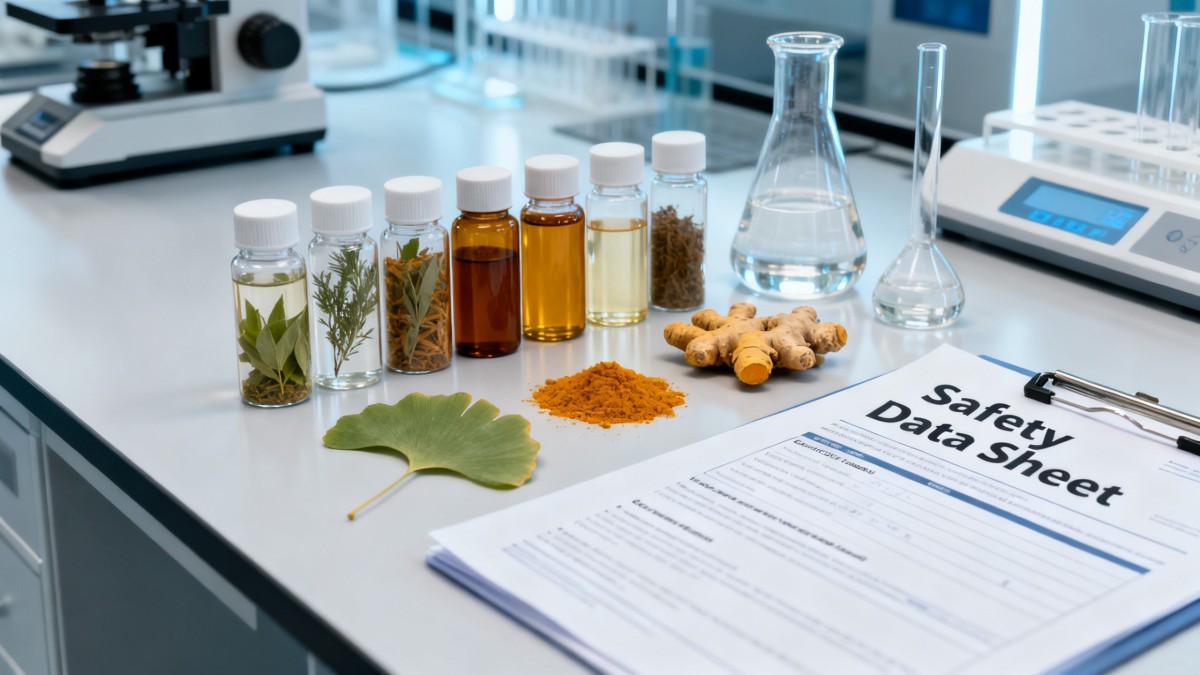
On July 26, 2026, a new REACH-related compliance change moved into a practical implementation stage for exporters of botanical extracts and products containing them. ECHA formally added 12 commonly used plant-derived ingredients, including ingredients associated with echinacea, ginkgo, and curcumin derivatives, to the SVHC Candidate List. From October 2026, exported products containing at least 0.1% of these substances will need SCIP notification and complete safety data sheets for downstream importers. For businesses involved in botanical ingredients, formulation, export documentation, and delivery scheduling, this is worth attention because the rule change directly affects how compliance is prepared before shipment.
What Has Been Confirmed So Far
The confirmed facts are limited but commercially significant. ECHA formally included 12 common botanical extract substances on the SVHC Candidate List on July 26, 2026. The substances mentioned in the provided information include echinacea-related ingredients, ginkgo-related ingredients, and curcumin derivatives. According to the same information, starting in October 2026, exported products containing 0.1% or more of the listed substances must complete SCIP notification obligations and provide full safety data sheets to downstream importers. The adjustment directly affects the compliance route and delivery timeline of Botanical Extracts exporters.
Where the Operational Pressure Is Likely to Appear
Export-facing suppliers may see documentation work move forward in the sales cycle
From an industry perspective, exporters are the first group likely to feel the rule change in operational terms. The reason is straightforward: the new threshold links product composition directly to pre-shipment compliance work. Where listed substances are present at or above 0.1%, attention will likely shift to whether SCIP-related information and safety documentation are complete before goods move. This can affect quotation preparation, contract review, shipment release, and importer handover materials.
Procurement and formulation teams may need closer upstream substance visibility
Analysis shows that raw material procurement and formulation-related functions could also be affected, especially where botanical ingredients are sourced from multiple suppliers or used across multiple product lines. In those cases, the key issue is not only whether a product contains one of the 12 listed substances, but whether the business can verify concentration and document it in a way that supports export compliance. What deserves closer attention is the handoff between supplier declarations, internal material review, and final product documentation.
Import-side commercial coordination may become more document-sensitive
For downstream importers and channel partners, the immediate impact is likely to appear in document expectations rather than in product demand itself. Because the provided information states that full safety data sheets must be supplied, import-side partners may begin checking whether exporters can provide complete and timely compliance files as part of routine transaction support. This may influence order confirmation, acceptance timing, and communication around delivery readiness.
Compliance and support service providers may face tighter timing demands
Observably, testing, compliance support, and related service functions may be drawn into earlier stages of the transaction process. Even without further execution details, the combination of an October 2026 trigger date and a defined concentration threshold suggests that document preparation may become more time-sensitive for affected products. For service providers, the practical issue is likely to be turnaround time, file completeness, and consistency between technical data and trade documents.
What Companies Should Watch Before October
Check which products cross the 0.1% threshold
Analysis shows that the first practical step is product mapping. Companies dealing with botanical extracts or products formulated with them should identify whether any affected ingredients fall within the newly listed group and whether concentration reaches the stated threshold. This is not yet a conclusion about enforcement outcomes, but it is the most direct compliance screening point indicated by the provided information.
Review whether existing files can support SCIP and SDS obligations
What deserves closer attention is the quality and completeness of existing technical documentation. The provided information clearly points to SCIP notification and full safety data sheets for downstream importers. Businesses should therefore review whether current material files, composition records, and product safety documentation are sufficient for those obligations, or whether additional internal verification will be needed before export.
Allow for possible changes in delivery scheduling
Observably, delivery planning deserves early attention because the summary explicitly states that compliance pathways and delivery cycles will be affected. Companies should treat this as a signal to reassess the time needed for composition review, document preparation, importer communication, and shipment release. The available facts do not define how long those steps will take in practice, so this remains an area to monitor rather than a fixed outcome.
Watch for changes in buyer requirements and transaction documents
From an industry perspective, another point to monitor is whether importers, procurement teams, or channel partners begin adjusting their own documentation requests after October 2026. That could show up in updated purchase terms, pre-delivery document requests, or stricter checks on safety data files. The current input does not provide a detailed execution framework, so companies should understand this as a likely compliance management issue, not as a confirmed market-wide result.
How This Change Is Best Understood at This Stage
Analysis shows that this development is more than a general policy signal because it includes a defined listing action, a stated concentration threshold, and a specified compliance obligation beginning in October 2026. At the same time, it would be premature to treat every downstream commercial consequence as settled. It is more appropriate to understand this as a rule change with real near-term operational implications, while the exact execution pace, document review standards, and market response still require observation.
A Practical Reading for the Botanical Extracts Trade
For the botanical extracts trade, the main significance of this event lies in the shift from substance listing to transaction-level compliance work. The issue is not only that 12 plant-derived ingredients were added to the SVHC Candidate List, but that exporters of products containing them may now need to reorganize documentation, importer communication, and delivery preparation around the October 2026 requirement. At present, this is best read as an implemented compliance signal with immediate preparation value, while some execution details still need continued market attention.
Basis of This Article and What Still Needs Verification
This article is based on the user-provided news title, event date, and event summary. For events of this type, relevant source categories usually include official announcements, regulatory authority releases, customs or trade authority information, industry association updates, standard-setting documents, and reporting by authoritative trade media. A specific official source link was not provided in the input, so that point still requires ongoing verification. Observably, the market should continue to watch for later clarification on implementation details, compliance interpretation, documentation expectations, changes in buyer-facing files, and industry feedback from actual execution.
Related Intelligence
- Botanical ExtractsAre Botanical Extracts Classified as Agrochemicals Under New Rules?Are bio extracts considered agricultural chemicals under new rules? Learn how claims, composition, and market rules affect classification—and what to verify before launch.
- Botanical ExtractsChoosing Botanical Extracts for Pharmaceuticals: Potency, Purity, and ComplianceBotanical extracts for pharmaceuticals: learn how to assess potency, purity, traceability, and GMP compliance for confident, regulatory-ready supplier selection.
- Botanical ExtractsBotanical Extracts Market Outlook: Supply, Pricing, and Buyer RisksBotanical extracts market insights on supply, pricing, quality control, and buyer risks—compare suppliers confidently and protect your sourcing strategy.
The Morning Broadsheet
Daily chemical briefings, market shifts, and peer-reviewed summaries delivered to your terminal.
