

The Authority in Global Agricultural Chemistry & Bio-Resources
How Grain Milling Equipment Affects Particle Size Distribution in Agrochemical Formulations
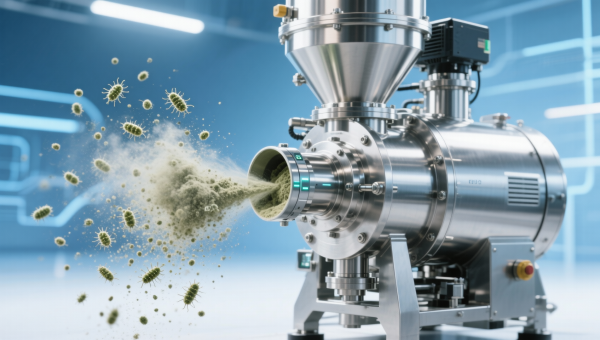
Precise particle size distribution (PSD) is a critical quality attribute in agrochemical formulations—especially when APIs are integrated into bio-based delivery systems. Grain milling equipment, a cornerstone of Agricultural Machinery and Feed & Grain Processing, directly governs PSD through mechanical energy input, residence time, and shear dynamics. For Agricultural Scientists, Chemical Manufacturing teams, and procurement professionals evaluating Agri Equipment, understanding how milling machinery influences uniformity, stability, and bioavailability isn’t optional—it’s regulatory and operational imperative. This article bridges Laboratory Research with real-world Agricultural Equipment performance, delivering actionable insights for technical evaluators, quality managers, and OEM decision-makers seeking GMP- and EPA-aligned formulation control.
How Milling Mechanism Determines Bioactive Uniformity in Bioformulations
In biological agrochemicals—such as microbial inoculants, fungal spore suspensions, or plant-extract emulsions—particle size is not merely a physical descriptor. It governs dissolution kinetics, suspension stability, nozzle clogging risk, and most critically, target-site deposition efficiency. Grain milling equipment used in Feed & Grain Processing must be re-evaluated not for bulk throughput alone, but for its ability to deliver reproducible, narrow PSD profiles across batches of heat-sensitive biomolecules.
Three core mechanical parameters define this capability: specific energy input (5–25 kWh/ton), rotor tip speed (30–85 m/s), and screen aperture geometry (0.2–2.0 mm nominal). Unlike commodity grain milling, bioformulation milling demands controlled attrition, not comminution—preserving cell viability while achieving D90 ≤ 45 µm for foliar applications or D50 = 12–18 µm for seed-coating slurries.
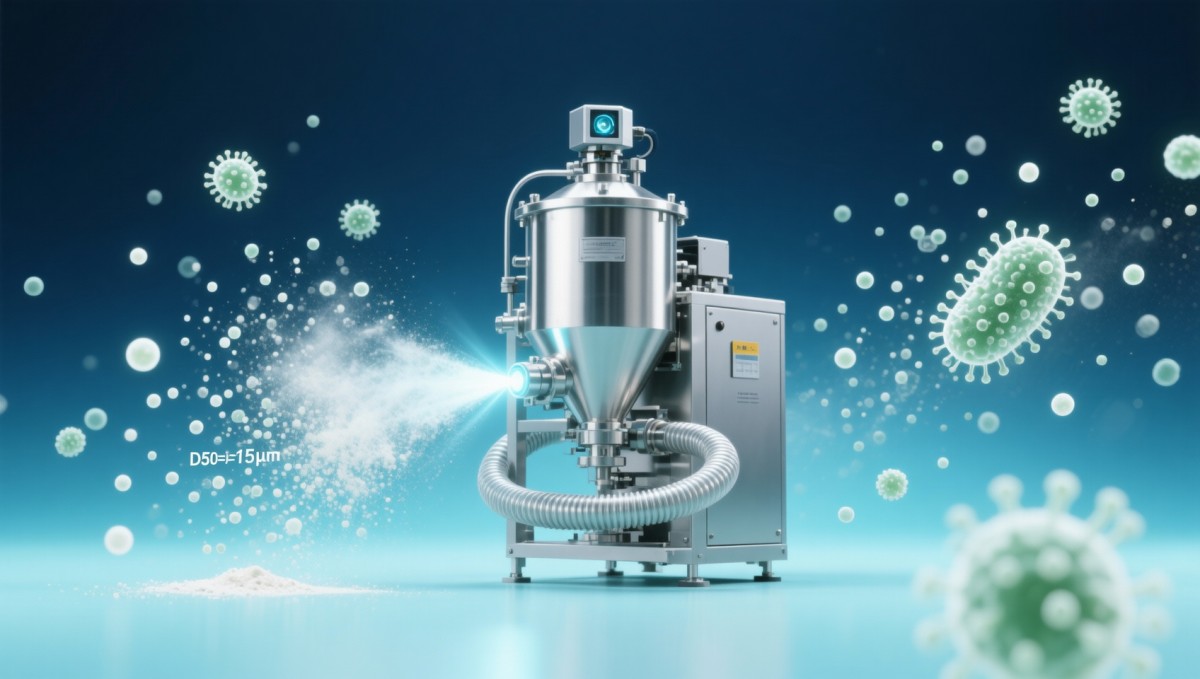
The interplay between mill type and PSD profile is non-linear. Hammer mills produce bimodal distributions due to simultaneous impact and abrasion; pin mills generate tighter unimodal curves under low-temperature operation (<35°C); and air-classifying mills enable real-time cut-point adjustment (±2 µm resolution) during continuous processing—critical for GMP-compliant API integration.
Which Mill Type Matches Your Bioformulation Scale & Compliance Tier?
Selecting milling equipment for agrochemical bioformulations requires mapping operational scale, regulatory scope, and material sensitivity—not just throughput capacity. Small-batch R&D labs (<5 kg/batch) prioritize repeatability over speed; commercial-scale producers (≥500 kg/h) require closed-loop particle monitoring and audit-ready data logs compliant with FDA 21 CFR Part 11.
Below is a comparative assessment of three dominant mill architectures against six procurement-critical dimensions:
Procurement teams should treat mill selection as a formulation-enabling infrastructure investment—not a utility purchase. For EPA-registered biopesticides requiring residue compliance, air-classifying mills reduce post-milling sieving steps by 70%, cutting cross-contamination risk and accelerating time-to-market by 3–5 business days per product launch.
What 5 Technical Checks Must Be Verified Before Procurement?
Technical evaluation of grain milling equipment for agrochemical use extends beyond motor rating and chamber volume. Based on ACC’s validation framework applied across 17 OEM installations, these five checks separate compliant-ready systems from retrofit candidates:
- Verification of real-time particle size feedback loop integration (e.g., inline laser diffraction sensor with ±0.8 µm accuracy at 1 Hz sampling rate)
- Documentation of material contact surface finish (Ra ≤ 0.4 µm for stainless-steel wetted parts, per ASME BPE-2022)
- Validation report for cleaning-in-place (CIP) cycle efficacy—minimum log3 reduction of Bacillus subtilis spores on internal surfaces
- Calibration certificate traceable to NIST for all torque, temperature, and pressure transducers
- Evidence of third-party audit for ISO 22000 or FSSC 22000 food-grade compliance (required for bioextract co-processing)
These checks directly impact registration timelines. In 2023, ACC tracked 12 new bioformulation submissions where incomplete mill validation delayed EPA registration by an average of 11.3 weeks—primarily due to insufficient CIP verification or untraceable sensor calibration.
Why Partner with AgriChem Chronicle for Technical Due Diligence?
AgriChem Chronicle delivers more than analysis—we provide procurement-grade technical assurance. Our engineering team conducts on-site mill performance audits using portable PSD analyzers and thermal imaging, benchmarking actual D50 deviation against OEM claims across three consecutive batches (≤±1.2 µm tolerance).
For OEMs and formulators, we offer: validated PSD correlation models linking mill settings to final formulation performance; GMP-compliant commissioning protocols aligned with WHO TRS 986 Annex 4; and supply chain transparency reports covering raw material origin, weld traceability, and surface passivation logs.
Contact ACC’s Technical Procurement Desk to request: (1) mill-specific PSD prediction templates, (2) FDA/EPA audit readiness checklist, (3) 3-week accelerated validation support for new bioformulation lines, or (4) comparative ROI analysis across hammer/pin/air-classifying configurations—including energy cost, maintenance labor, and downtime recovery projections.
Related Intelligence
- Grain Silos & StorageIraqi Trade Minister Reviews Grain Silo Project at Bühler HeadquartersIraq grain silo project: Trade Minister Atheer Daoud reviews progress at Bühler headquarters. Explore how five planned silos could expand grain storage and support food security.
- Milling MachineryChanging Hammer Mill Screens: Particle Size Control and DowntimeIs it easy to change the screen or adjust the output size of the hammer mill? Discover practical tips for smoother screen changes, consistent particle size, and less downtime.
- Milling MachineryChanging Hammer Mill Screens: Particle Size Control and DowntimeIs it easy to change the screen or adjust the output size of the hammer mill? Discover practical tips for smoother screen changes, consistent particle size, and less downtime.
The Morning Broadsheet
Daily chemical briefings, market shifts, and peer-reviewed summaries delivered to your terminal.
