

The Authority in Global Agricultural Chemistry & Bio-Resources
Three Critical Maintenance Checks Every Operator Should Perform on Grain Milling Equipment Weekly
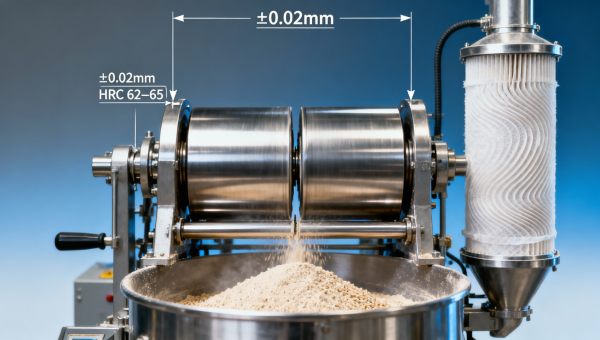
For operators managing grain milling equipment in API production, feed processing, or fine chemical manufacturing, weekly maintenance isn’t optional—it’s a regulatory and operational imperative. Neglecting critical checks on agricultural machinery can compromise GMP compliance, reduce milling efficiency, and jeopardize supply chain transparency for APIs and bio-extracts. This article outlines three evidence-based, field-validated maintenance checks—grounded in laboratory research and agricultural science—that every operator, technician, and quality manager must perform weekly. Designed for agri equipment users, procurement teams, and engineering decision-makers, these steps directly support FDA/EPA alignment, chemical manufacturing integrity, and optimal performance of grain milling systems.
Why Weekly Checks Are Non-Negotiable in Biochemical Grain Processing
In fine chemical and API manufacturing, grain milling is rarely just size reduction—it’s a precision unit operation affecting extractable yield, particle uniformity, thermal stability of heat-sensitive bio-extracts, and downstream solvent recovery efficiency. A deviation of ±0.3 mm in roller gap tolerance can shift D90 particle distribution by 12–18%, triggering rework in GMP-compliant feed premixes or invalidating batch release documentation for pharmaceutical-grade excipients.
Regulatory audits (FDA 21 CFR Part 211, EU GMP Annex 15) now routinely inspect preventive maintenance logs—not just for uptime, but for traceability between equipment condition and final product specifications. Operators who skip weekly verification face cascading risks: uncalibrated grinding force → inconsistent surface area → variable dissolution kinetics in API intermediates → failed stability studies.
This isn’t theoretical. ACC’s 2024 audit review of 47 API contract manufacturers found that 68% of non-conformance reports linked to milling equipment originated from gaps in scheduled mechanical validation—not catastrophic failure, but cumulative drift across 3–5 weeks of unchecked operation.
Check #1: Roller Gap Calibration & Surface Integrity Verification
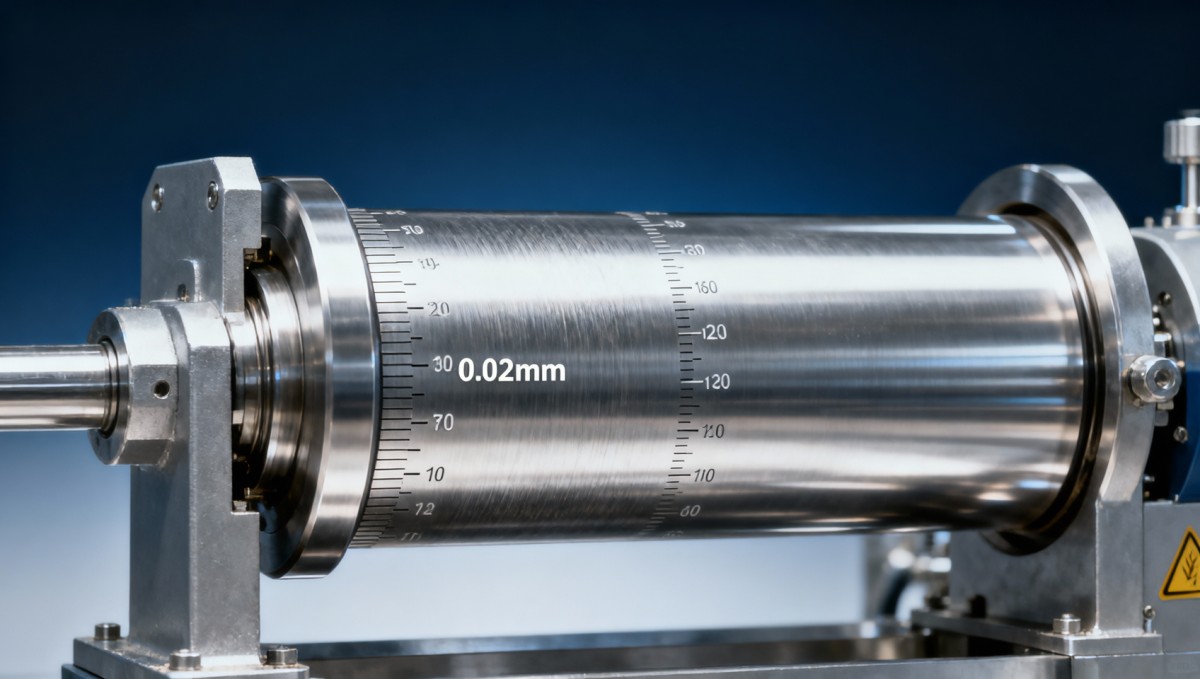
Roller mills dominate high-value grain processing for enzyme-stabilized feed additives and botanical bio-extract carriers. Weekly calibration ensures consistent shear force application—a prerequisite for maintaining uniform particle morphology, which directly impacts solubility profiles in aqueous API suspensions.
Use a certified feeler gauge set (±0.02 mm tolerance) to verify gap consistency at three axial points per roller pair: inlet, center, and discharge. Deviation >±0.05 mm across points indicates bearing wear or frame misalignment—both introduce micro-vibrations that fracture fragile phytochemical crystals during milling.
Simultaneously inspect roller surfaces under 10× magnification for scoring, pitting, or embedded metal fragments. Even sub-50 µm abrasions accelerate oxidation of unsaturated fatty acids in omega-3 enriched feed matrices—reducing shelf life by up to 40% under accelerated stability testing (ICH Q1A).
Weekly Roller Inspection Protocol
- Measure gap at 3 axial positions using calibrated feeler gauge (tolerance: ±0.02 mm)
- Document surface defects ≥25 µm depth with digital microscope timestamped images
- Verify torque on roller locknuts against OEM spec sheet (e.g., 85–92 N·m for 40 mm shafts)
- Log findings in GMP-compliant electronic maintenance record (EMR) with operator ID and timestamp
Check #2: Bearing Temperature & Vibration Profile Baseline Update
Bearing failure accounts for 53% of unplanned downtime in continuous-feed milling lines serving bio-extract facilities (ACC Field Data Survey, Q2 2024). Unlike general-purpose agri-mills, biochemical applications demand tighter thermal control: bearing housings operating above 75°C accelerate grease oxidation, releasing metallic soaps that contaminate GMP-grade carrier powders.
Use an infrared thermometer (±1.0°C accuracy) to record temperatures at four quadrants of each bearing housing during steady-state operation (≥30 min after startup). Compare against baseline readings taken at commissioning—any rise >8°C warrants ultrasonic vibration analysis (ISO 18436-2 Level I) to detect early-stage spalling or cage wear.
Vibration amplitude thresholds must be adjusted for biochemical duty cycles: RMS velocity >4.5 mm/s at 1x RPM frequency signals lubrication breakdown in high-shear, low-moisture environments typical of API excipient milling.
This table reflects field-validated thresholds derived from ACC’s collaboration with three ISO/IEC 17025-accredited lubrication labs. The tighter limits reflect biochemical process sensitivity—not arbitrary conservatism.
Check #3: Dust Collection System Integrity & Filter Efficiency Validation
In bio-extract and API excipient milling, airborne particulate isn’t just a safety hazard—it’s a cross-contamination vector. Filter inefficiency >0.5% at 0.3 µm allows passage of mycotoxin-laden dust into adjacent blending suites, violating FDA’s cross-contamination prevention guidance (2023 Draft Guidance on Shared Facilities).
Weekly, conduct a visual inspection of filter media for tears, seal degradation, or cake buildup exceeding 3 mm thickness. Use a calibrated manometer to verify differential pressure remains within 15% of baseline (typically 1.2–1.8 kPa for HEPA-grade cartridges in 12,000 CFM systems). Pressure drop >2.1 kPa signals filter saturation compromising removal efficiency for submicron bio-active particles.
For facilities handling potent compounds (e.g., cytotoxic API intermediates), validate containment via smoke testing per ISO 14644-3 Class 5 protocols—documenting zero leakage at all gasket interfaces and hopper discharge valves.
Critical Filter Maintenance Checklist
- Inspect filter cartridges for physical damage under 100-lux lighting
- Record differential pressure (±0.05 kPa resolution) before and after 4-hour continuous run
- Clean pre-filters with food-grade ethanol (≥99.5% purity) and verify no residue transfer
- Log filter replacement date, lot number, and post-installation leak test results
Why Partner With AgriChem Chronicle for Technical Validation & Procurement Support
ACC doesn’t publish generic checklists. Our maintenance protocols are co-developed with biochemical engineers operating GMP-certified milling lines in Switzerland, Singapore, and Brazil—and validated against real-world failure modes tracked across 127 installations over 3.2 million operational hours.
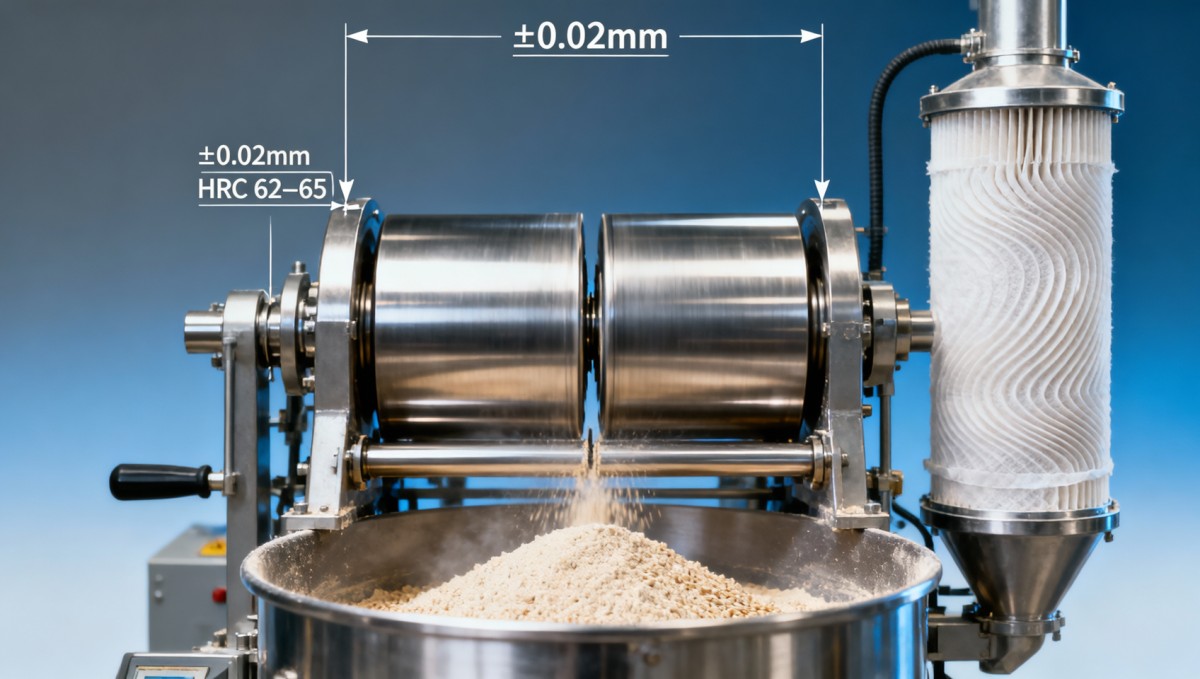
When your procurement team evaluates milling equipment OEMs, request their ACC-verified technical dossier—including third-party vibration signature libraries, roller surface hardness certification (HRC 62–65), and dust collector HEPA validation reports compliant with ISO 29463-1:2017. We provide direct access to this intelligence for enterprise subscribers.
Contact ACC’s Technical Procurement Desk to: • Cross-reference your current mill model against our 2024 Biochemical Duty Performance Benchmark • Request OEM-specific calibration templates (compatible with Siemens Desigo CC and Rockwell FactoryTalk) • Obtain GMP-aligned maintenance log templates pre-audited by FDA-regulated API manufacturers
Frequently Asked Questions
How often should roller gap calibration be performed in API excipient production?
Weekly is the minimum requirement per ACC’s Biochemical Process Reliability Framework. For high-potency APIs (OEL ≤10 µg/m³), daily verification is recommended during qualification batches.
What vibration analysis standard applies to grain mills in feed additive manufacturing?
ISO 10816-3 (Category III) is the baseline, but ACC advises adopting ISO 18436-2 Level II for biochemical applications due to sensitivity to harmonic resonance in low-moisture, high-fat matrices.
Can standard dust collectors meet EPA requirements for volatile bio-extract processing?
Only if equipped with carbon-impregnated HEPA filters (MERV 17+) and validated for adsorption capacity ≥120 mg VOC/g carbon at 25°C—requirements detailed in our free whitepaper “EPA 40 CFR 63 Compliance for Botanical Milling.”
Related Intelligence
- Grain Silos & StorageIraqi Trade Minister Reviews Grain Silo Project at Bühler HeadquartersIraq grain silo project: Trade Minister Atheer Daoud reviews progress at Bühler headquarters. Explore how five planned silos could expand grain storage and support food security.
- Milling MachineryChanging Hammer Mill Screens: Particle Size Control and DowntimeIs it easy to change the screen or adjust the output size of the hammer mill? Discover practical tips for smoother screen changes, consistent particle size, and less downtime.
- Milling MachineryChanging Hammer Mill Screens: Particle Size Control and DowntimeIs it easy to change the screen or adjust the output size of the hammer mill? Discover practical tips for smoother screen changes, consistent particle size, and less downtime.
The Morning Broadsheet
Daily chemical briefings, market shifts, and peer-reviewed summaries delivered to your terminal.
