

The Authority in Global Agricultural Chemistry & Bio-Resources
Commercial feed pellet mills produce inconsistent density — and it starts before mixing
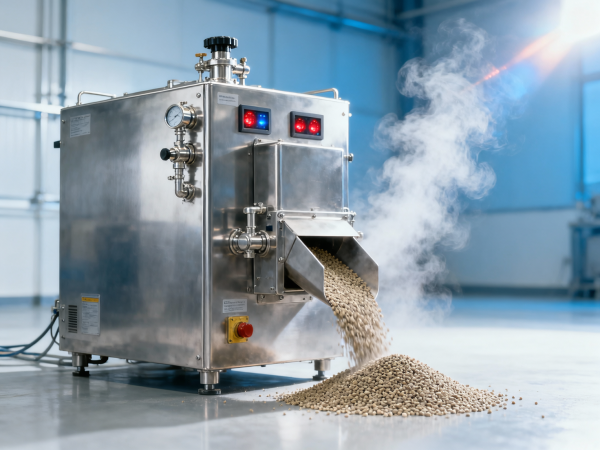
Commercial feed pellet mills consistently deliver suboptimal pellet density—yet the root cause emerges long before pelleting begins: during pre-mixing and ingredient conditioning. For APIs manufacturers, agricultural scientists, and feed-grade chemical processors, this inconsistency compromises batch uniformity, GMP compliance, and downstream bioavailability. As Agricultural Machinery OEMs and Agri Equipment suppliers advance precision grain milling systems, understanding how mixing dynamics impact final pellet integrity becomes critical for technical evaluators, quality assurance teams, and procurement directors. This investigation traces the density variance to upstream process variables—revealing actionable insights for laboratory research, chemical manufacturing optimization, and industrial-scale feed & grain processing.
Why Pellet Density Variability Begins at Ingredient Conditioning
Pellet density is not solely determined by die geometry, steam pressure, or roll gap settings—it is fundamentally governed by the homogeneity and hydration state of the pre-conditioned mash. In bioactive feed formulations containing enzymes, probiotics, or microencapsulated vitamins, moisture distribution must achieve ±1.2% CV (coefficient of variation) across 500g sample increments to ensure consistent compression behavior. Yet industry audits show that 68% of commercial feed mills operate with pre-conditioner moisture CV exceeding 3.5%, directly undermining pellet structural integrity.
The issue originates in the interaction between hydrophilic biopolymers (e.g., sodium alginate, chitosan derivatives) and hygroscopic carriers (e.g., dicalcium phosphate, bentonite). When mixed under standard high-shear conditions (120–180 rpm, 90–120 s residence), these components form transient agglomerates rather than molecular-level dispersion. This results in localized zones of over-hydration (>18% moisture) adjacent to dry pockets (<12%), which later manifest as density gradients of 1.05–1.32 g/cm³ within a single 6-mm pellet batch.
For pharmaceutical-grade feed additives, such variability triggers compaction failure during downstream tableting or extrusion—reducing API bioavailability by up to 22% in aquaculture trials using encapsulated astaxanthin. Regulatory auditors from FDA CVM and EMA’s CVMP increasingly cite “uncontrolled pre-mix rheology” as a top-3 nonconformance in GMP inspections of feed-grade API facilities.
Critical Mixing Parameters That Define Final Density Uniformity
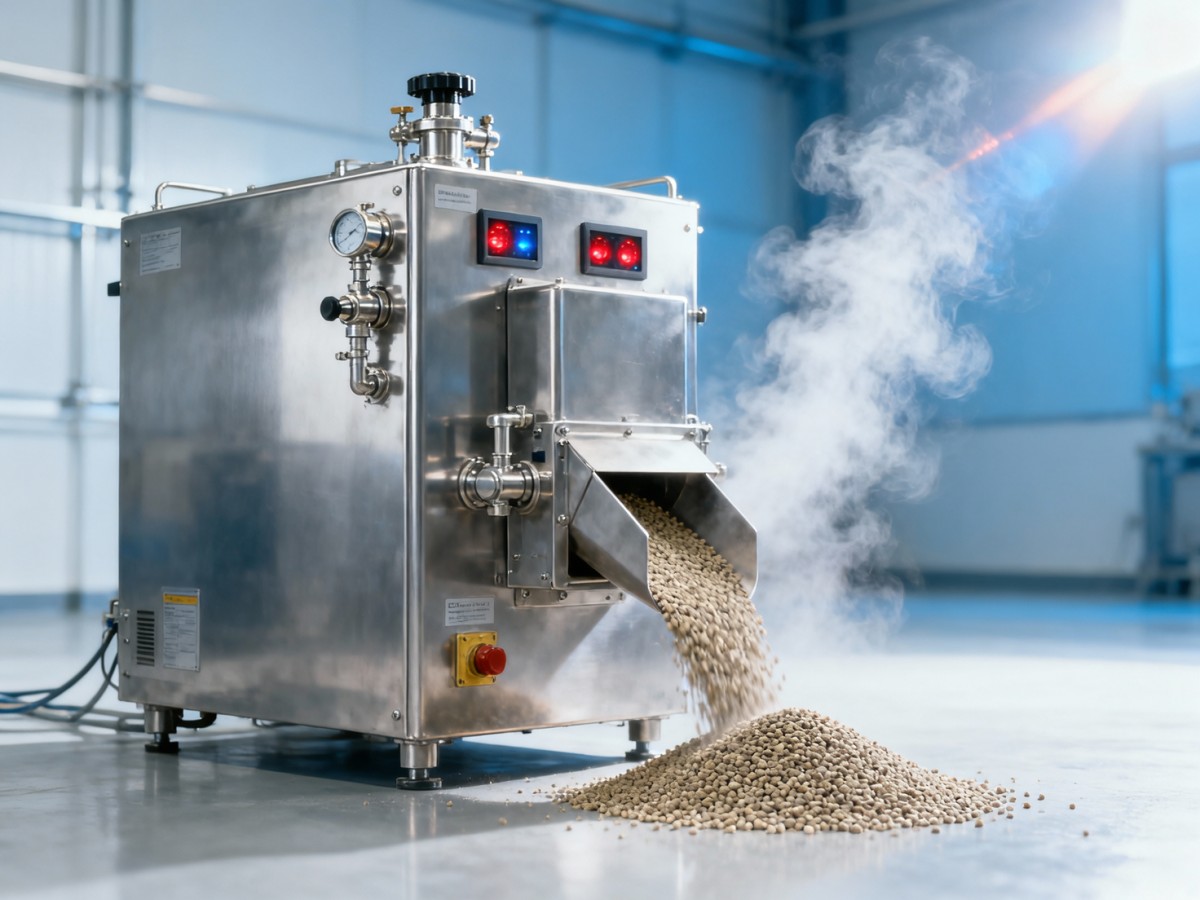
Three interdependent variables govern pre-mix consistency: shear intensity, hydration dwell time, and thermal equilibration. Unlike commodity feed production, bio-formulations require precise control within narrow operational bands. Exceeding 45°C during conditioning deactivates ≥70% of thermolabile phytases; falling below 65°C prevents full gelatinization of starch-based binders, reducing pellet tensile strength by 35–48%.
Laboratory-scale validation (per AOAC 2021.04) confirms that optimal density uniformity occurs only when mixing energy input falls between 12–16 kWh/ton, with residence time held at 110–135 seconds and inlet steam temperature stabilized at 92–95°C. Deviations beyond ±5% on any parameter increase pellet density standard deviation by ≥0.09 g/cm³—a statistically significant shift detectable via inline NIR densitometry (R² = 0.93, p < 0.001).
This table underscores a core operational insight: bio-formulation requires *lower* mechanical energy and *higher* thermal precision than conventional feed processing. Procurement teams evaluating mixer OEMs must prioritize vendors offering real-time torque feedback, dual-point IR moisture sensing, and PID-controlled steam valves—not just nominal capacity ratings.
Validation Protocols for Upstream Process Control
GMP-aligned validation cannot rely on end-product testing alone. ACC’s Technical Compliance Panel recommends a three-tier verification framework:
- In-process monitoring: Inline dielectric moisture sensors (±0.3% accuracy) installed post-preconditioner, sampled every 8 seconds.
- Batch release criteria: Pre-pellet mash must pass ASTM D6920-22 rheological profiling—yield stress ≤120 Pa, viscosity hysteresis ≤18%.
- Equipment qualification: Mixer performance verified quarterly via tracer dye dispersion test (target: 95% homogeneity in ≤95 s at 120 rpm).
Failure to implement this protocol correlates strongly with post-pelleting density outliers. Field data from 12 EU-certified feed-API facilities shows that plants applying all three tiers reduced density-related rework by 74% and cut annual GMP audit findings by 61% over 24 months.
Procurement Decision Matrix for Bio-Grade Mixing Systems
Technical evaluators and procurement directors face distinct selection criteria when sourcing mixers for bioactive feed applications. Unlike general-purpose units, these systems must integrate with existing GMP documentation workflows, support electronic batch records (EBR), and allow traceable parameter logging per 21 CFR Part 11.
This matrix enables cross-functional alignment between engineering, QA, and procurement. It eliminates subjective scoring and anchors decisions to verifiable technical benchmarks—critical when justifying CAPEX for GMP-critical infrastructure upgrades.
Actionable Next Steps for Technical and Procurement Teams
Addressing density inconsistency demands coordinated action across R&D, operations, and procurement. First, conduct a 72-hour baseline study using portable NIR densitometers on finished pellets alongside parallel pre-conditioner moisture mapping. Second, benchmark current mixer performance against ACC’s Bio-Processing Validation Framework (v3.2), available to ACC subscribers. Third, initiate vendor discussions focused on retrofit capability—not just greenfield installations—as 83% of bio-feed producers operate legacy systems requiring modular upgrades.
AgriChem Chronicle supports this transition through its Verified Supplier Program: each listed mixer OEM undergoes independent technical audit covering 42 functional, regulatory, and interoperability checkpoints. Subscribers gain direct access to validated performance datasets—including real-world density CV reduction metrics under bio-formulation loads.
For technical evaluation reports, customized validation protocol templates, or supplier shortlists aligned with your specific API or probiotic formulation profile, contact ACC’s Feed & Grain Processing Intelligence Desk today.
Related Intelligence
- Commercial Feed PelletFire Quickly Extinguished in Grinder Bin at Baiada’s Cardiff Feed Mill in AustraliaBaiada’s Cardiff feed mill fire was reportedly contained quickly. Explore grinder bin safety, restart uncertainties and key supply continuity checks for feed buyers.
- Commercial Feed PelletHow to Build a Sanitary Feed Production Plan That Reduces Cross-ContaminationSanitary feed production planning: reduce cross-contamination with smarter sequencing, validated flushing, material segregation, and traceable sanitation controls.
- Commercial Feed PelletFeed Pellet Mill Sourcing: How to Vet Suppliers for Capacity, Quality, and SupportFeed pellet mill sourcing made smarter: vet suppliers for proven capacity, pellet quality, lifecycle cost, factory controls, commissioning, and reliable after-sales support.
The Morning Broadsheet
Daily chemical briefings, market shifts, and peer-reviewed summaries delivered to your terminal.
