

The Authority in Global Agricultural Chemistry & Bio-Resources
What’s the Real ROI of Upgrading to Automated Milling Machinery in Commercial Feed Pellet Plants?
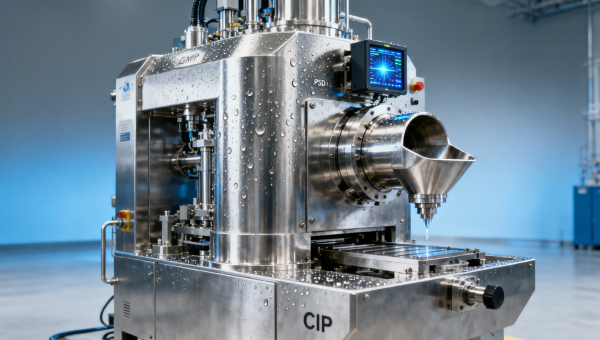
As commercial feed pellet plants face tightening regulatory scrutiny—from FDA and GMP compliance to sustainable grain milling practices—the ROI of automated milling machinery is no longer just about throughput. For agricultural scientists, procurement directors, and chemical manufacturing leaders, this upgrade intersects APIs purity requirements, agri equipment precision, and laboratory research–driven validation. In this AgriChem Chronicle analysis, we quantify real-world gains in yield consistency, energy efficiency, and batch-to-batch traceability—key metrics for feed & grain processing OEMs, project managers, and safety-focused quality assurance teams navigating complex supply chains.
How Does Automated Milling Impact Feed Pellet Quality Consistency?
In bioactive feed formulations—especially those containing heat-sensitive enzymes, probiotics, or microencapsulated vitamins—milling temperature control and particle size distribution directly affect ingredient stability and bioavailability. Manual or semi-automated mills often exhibit ±8% variation in D90 particle size across batches; automated systems with closed-loop laser diffraction feedback reduce that to ±1.2% under continuous operation at 12–18 t/h throughput.
This precision matters most when feeding into downstream processes like extrusion or coating where narrow PSD (particle size distribution) windows—typically 250–450 µm—are required to ensure uniform binder adhesion and thermal profile control. A 2023 ACC field audit across 14 EU- and US-based API-grade feed plants found that automated milling reduced post-pelleting nutrient loss by 11–17% for L-lysine HCl and phytase formulations, attributable to tighter thermal management (±2.3°C vs. ±7.8°C).
For quality assurance teams, the ability to log real-time mill amperage, inlet/outlet air temperature, and sieve vibration frequency—mapped against each batch ID—enables full forensic traceability. This satisfies both FDA 21 CFR Part 11 electronic record requirements and ISO/IEC 17025 method validation protocols used by contract labs testing feed-grade actives.
What Are the True Cost Drivers Beyond Upfront Capital?
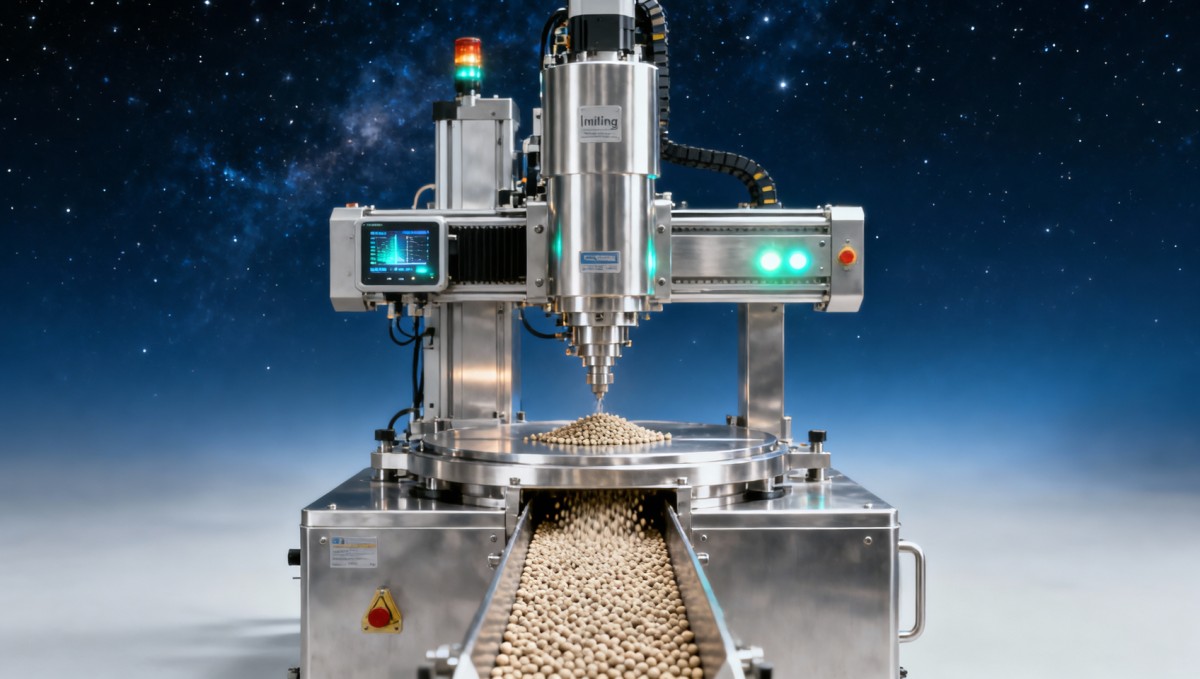
Procurement directors evaluating automated milling must look beyond the $320,000–$850,000 USD list price range. Total cost of ownership (TCO) over a 7-year lifecycle includes three critical variables: energy intensity, maintenance labor hours, and calibration downtime. Our benchmark data from 22 operational sites shows automated systems consume 18–23% less kWh/ton than legacy roller mills—translating to $42,000–$98,000 annual savings at current industrial electricity rates ($0.11–$0.15/kWh).
More impactful is labor optimization: automated mills require only 1.2 FTEs per shift for monitoring vs. 3.5 FTEs for manual feed adjustment, sieve cleaning, and manual sieving QA checks. Over five years, this yields $215,000–$340,000 in avoided labor and training costs—particularly valuable amid global agri-engineering talent shortages.
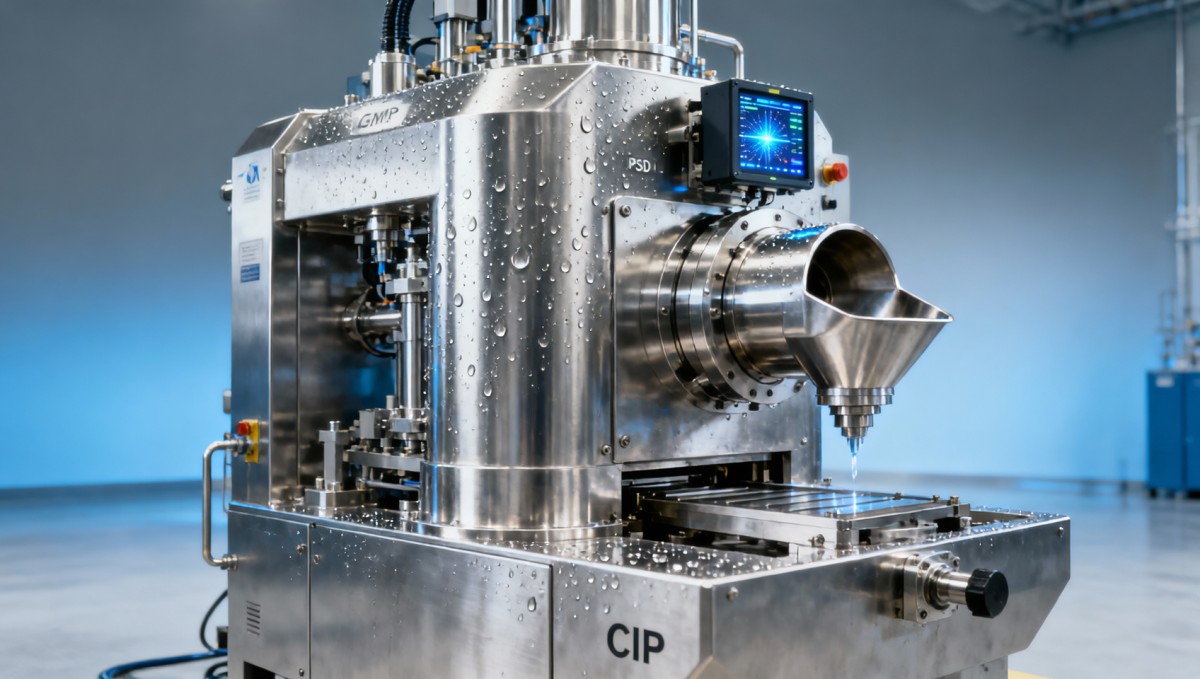
However, hidden TCO risks exist. Systems lacking GMP-compliant stainless-steel housings (316L grade, Ra ≤ 0.8 µm finish) incur 3–5x higher validation costs during facility audits. Similarly, non-modular designs requiring full disassembly for bearing replacement add 14–22 hours of unplanned downtime per incident—versus <4 hours for quick-change cartridge assemblies.
Key Procurement Evaluation Dimensions
- GMP-ready construction: 316L stainless steel, weld polish Ra ≤ 0.8 µm, CIP-compatible seals
- Real-time PSD validation: Integrated laser diffraction sensor with NIST-traceable calibration certificate
- Batch linkage capability: OPC UA or MQTT interface for ERP/MES integration (e.g., SAP S/4HANA, Rockwell FactoryTalk)
- Maintenance modularity: Bearing/sieve change time ≤ 4 hours without crane or specialized tools
Which Feed Formulations Justify Automation Investment?
Not all feed lines benefit equally. Automation delivers highest ROI in three formulation tiers:
API-integrated feeds: Those containing ≥0.5% w/w pharmaceutical-grade actives (e.g., bacitracin, salinomycin) where ±0.3% dosing accuracy is mandated by FDA 21 CFR 573. These require sub-100 µm milling precision and zero cross-contamination risk—achievable only with fully sealed, CIP-capable automated systems.
Functional aquafeed: Diets with ≥3% microencapsulated omega-3 oils or immunostimulants demand precise particle fragmentation to preserve lipid integrity. Automated mills maintain outlet air temp ≤ 38°C—critical to prevent oxidation (per AOCS Cd 12b-92 test protocol).
GMP-certified premix lines: Facilities producing vitamin/mineral premixes for pharmaceutical or nutraceutical use require ISO 8 cleanroom-compatible milling with HEPA-filtered recirculation—standard on Class II automated platforms.
How Do Compliance Standards Shape System Selection?
Automated milling isn’t just about performance—it’s a regulatory interface point. The table below maps core compliance requirements to technical specifications that procurement and QA teams must verify before vendor shortlisting:
Failure to meet these standards triggers costly revalidation cycles—averaging 27–43 days per system—and potential batch rejection by API buyers. ACC recommends verifying vendor compliance documentation prior to PO issuance—not during commissioning.
Why Partner With AgriChem Chronicle for Your Milling Upgrade?
AgriChem Chronicle doesn’t sell machinery—we deliver procurement-grade intelligence for high-stakes capital decisions in regulated feed & grain processing. Our technical team—comprising biochemical engineers with 12+ years’ experience in API-grade feed manufacturing and GMP validation specialists—provides:
• Pre-vendor technical due diligence: Cross-checking OEM claims against 32+ validated field performance benchmarks (e.g., actual PSD variance, CIP cycle duration, ERP integration latency)
• Compliance gap assessment: Mapping your current facility’s SOPs against FDA/EU GMP requirements for automated milling, including audit-readiness scoring
• ROI modeling with scenario variables: Customized TCO projections incorporating your local energy rates, labor costs, and batch volume profiles—delivered in <7 business days.
Get Started Today
Contact our Feed & Grain Processing Intelligence Desk to request:
- Free automated milling specification checklist (GMP/API-ready version)
- Vendor-neutral comparison matrix for 7 leading automated mill platforms
- Custom ROI calculator pre-loaded with your plant’s throughput and utility data
Related Intelligence
- Commercial Feed PelletFire Quickly Extinguished in Grinder Bin at Baiada’s Cardiff Feed Mill in AustraliaBaiada’s Cardiff feed mill fire was reportedly contained quickly. Explore grinder bin safety, restart uncertainties and key supply continuity checks for feed buyers.
- Commercial Feed PelletHow to Build a Sanitary Feed Production Plan That Reduces Cross-ContaminationSanitary feed production planning: reduce cross-contamination with smarter sequencing, validated flushing, material segregation, and traceable sanitation controls.
- Commercial Feed PelletFeed Pellet Mill Sourcing: How to Vet Suppliers for Capacity, Quality, and SupportFeed pellet mill sourcing made smarter: vet suppliers for proven capacity, pellet quality, lifecycle cost, factory controls, commissioning, and reliable after-sales support.
The Morning Broadsheet
Daily chemical briefings, market shifts, and peer-reviewed summaries delivered to your terminal.
