

The Authority in Global Agricultural Chemistry & Bio-Resources
Commercial Peanut Roaster Buying Guide: Batch Size, Heat Source, and Output
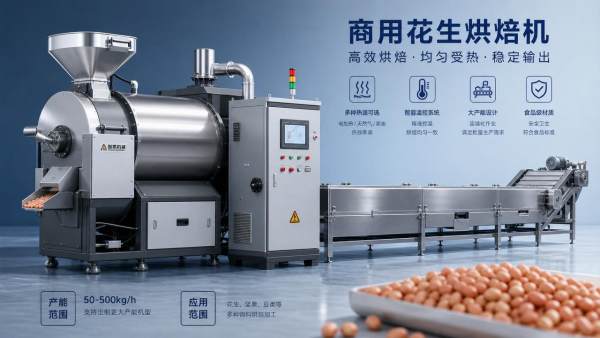
Choosing the right commercial peanut roaster affects product consistency, energy costs, labor efficiency, and long-term production capacity. For procurement teams and plant managers, the decision goes far beyond roasting peanuts—it requires balancing batch size, heat source, output targets, and compliance with operational standards. This guide outlines the key factors that help businesses compare equipment options with greater technical clarity and purchasing confidence.
How should buyers evaluate a commercial peanut roaster before requesting quotations?
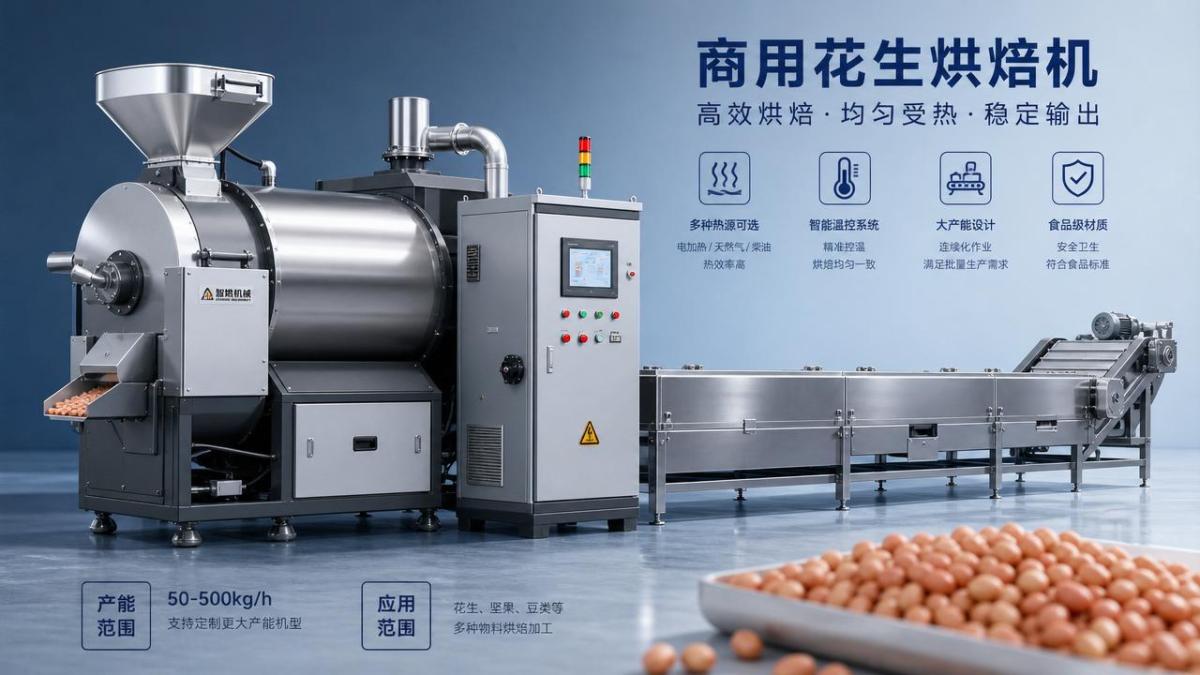
A commercial peanut roaster is not a single-function machine in procurement terms. It sits inside a wider process that may include grading, feeding, roasting, cooling, seasoning, packaging, and quality inspection. For business decision-makers, the correct choice depends on production flow rather than a brochure headline.
In feed, grain processing, and food ingredient operations, roasting equipment directly influences moisture control, color uniformity, flavor development, and downstream packing stability. That is why a commercial peanut roaster should be assessed as part of throughput planning, labor allocation, maintenance strategy, and compliance readiness.
ACC’s editorial perspective is especially relevant here. In primary industries and fine processing sectors, equipment decisions increasingly require documented technical evaluation, transparent supplier data, and a clear understanding of operational risk. Buyers are no longer comparing only purchase price; they are comparing total production consequences.
- Define hourly and daily output targets based on confirmed sales forecasts, not optimistic peak assumptions.
- Check whether the roasting system matches available utilities such as gas supply, electrical load, ventilation, and exhaust treatment.
- Assess cleaning access, operator safety, and maintenance downtime, especially if multiple product grades will be roasted.
- Request evidence of material contact suitability, temperature control logic, and spare parts availability before commercial approval.
What procurement teams often overlook
Many buyers focus on rated capacity but ignore yield loss, heat-up time, discharge time, and cooling bottlenecks. A machine advertised at a certain batch volume may still underperform in real operations if loading, unloading, or recipe changes slow the cycle. Effective output matters more than nameplate output.
Another common gap is inconsistency between product specification and machine design. Split peanuts, coated peanuts, in-shell peanuts, and oil-rich varieties do not behave the same during roasting. A commercial peanut roaster suitable for one product mix may create uneven color or scorching in another.
Batch size versus actual output: what numbers should matter most?
Batch size is one of the most searched parameters when sourcing a commercial peanut roaster, but it should never be read in isolation. Buyers should convert batch size into hourly output, shift output, and annual utilization assumptions. This gives a more realistic basis for capital expenditure decisions.
For example, a larger batch system may appear efficient, yet if it requires longer heating and cooling intervals, the final hourly throughput may not significantly exceed that of a smaller but faster-turnover unit. This is especially important for plants handling mixed SKUs or seasonal demand fluctuations.
The table below helps procurement teams translate batch size into practical output planning for a commercial peanut roaster.
This comparison shows why larger is not automatically better. A commercial peanut roaster should fit the pace of upstream feeding and downstream cooling, seasoning, and packaging. If those linked stages remain undersized, a bigger roaster only shifts the bottleneck.
A practical output checklist
- Calculate net roasted output per hour after deducting loading, discharge, cleaning, and start-up time.
- Match batch turnover to labor shift structure and maintenance windows.
- Include seasonal demand peaks, but do not size equipment only for rare surge periods.
- Confirm whether future expansion will rely on a second line or a larger single machine strategy.
Which heat source makes sense for your commercial peanut roaster?
Heat source selection is one of the most consequential choices in any commercial peanut roaster project. Gas, electric, and hybrid configurations each affect energy cost, temperature responsiveness, installation complexity, and site compliance. The right answer depends less on theory and more on local utility realities.
Plants with stable gas infrastructure often prefer gas-fired roasting because operating cost can be favorable at scale. Electric systems may appeal where emissions controls are tighter, floor layouts are simpler, or precise digital temperature management is prioritized. Hybrid approaches may support resilience where supply interruptions are a concern.
The table below compares common heat-source options for a commercial peanut roaster from a buyer’s perspective.
For enterprise buyers, the best heat source is the one that fits plant infrastructure and compliance obligations with the least long-term friction. ACC consistently sees equipment projects delayed not by machine quality, but by utility mismatches discovered too late in the approval process.
Questions to ask suppliers about heating design
- How is heat distributed across the roasting chamber, and what measures reduce hot spots?
- What is the expected warm-up time under normal operating conditions?
- Can the control system record and repeat validated temperature profiles?
- What ventilation, exhaust, or combustion safety provisions are required on site?
What technical specifications deserve closer review?
When comparing a commercial peanut roaster, technical review should go beyond the headline capacity and heating mode. Decision-makers should examine temperature range, control precision, residence time, drum or chamber design, airflow pattern, cooling method, and material-contact construction.
These details influence not only roasting quality but also repeatability across shifts and operators. For businesses supplying retailers, ingredient processors, or export channels, variation in roast level can trigger customer complaints, repacking costs, or inventory downgrades.
Core parameters that influence real-world performance
- Temperature control: Stable control supports color consistency and reduces scorch risk in oil-rich peanut lots.
- Agitation or tumbling uniformity: Even movement improves roast consistency across the full batch.
- Cooling integration: Fast and controlled cooling helps preserve target roast and limits overdevelopment after discharge.
- Cleanability: Accessible internals reduce contamination risk and shorten changeover downtime.
- Control interface: Recipe storage, alarm logs, and operator visibility support quality management and training.
Why materials and build quality matter
Material-contact components should be suitable for food processing environments and practical sanitation procedures. Stainless steel is commonly preferred for exposed contact surfaces, while external frame and insulation design affect heat retention and workplace safety. Buyers should ask where exactly each material grade is used, not assume uniform construction throughout.
A commercial peanut roaster used in higher-volume operations should also be reviewed for bearing access, drive system maintenance, sensor replacement, and spare parts lead time. Downtime costs often exceed the initial savings from buying an under-documented machine.
How do application scenarios change the best roaster choice?
The ideal commercial peanut roaster for a contract processor may be a poor choice for a vertically integrated snack brand or a feed ingredient supplier. Use case defines priorities. Some businesses need fast recipe switching. Others need uninterrupted throughput and low cost per ton.
The table below maps common operating scenarios to equipment priorities, helping buyers narrow specifications earlier in the sourcing process.
This scenario view helps prevent overbuying or misbuying. A commercial peanut roaster should serve the plant’s business model, not just its technical wish list. In complex procurement environments, scenario-fit usually predicts long-term satisfaction better than raw specification alone.
What about compliance, documentation, and supplier transparency?
For decision-makers operating in regulated or export-oriented markets, documentation quality is part of equipment quality. Even when a commercial peanut roaster is mechanically sound, missing drawings, material declarations, operating instructions, or utility specifications can slow internal approval and site commissioning.
Depending on the destination market and product application, buyers may need to review food-contact suitability, electrical conformity, safety protection design, emissions considerations, and cleaning procedures. Requirements vary, but documentation discipline should never be treated as optional.
Documents worth requesting early
- General arrangement drawing with dimensions, utility connection points, and service access zones.
- Material list for product-contact parts and any relevant sanitation or surface-finish information.
- Power load, gas demand, exhaust requirement, and recommended installation conditions.
- Operation and maintenance guidance, including wear parts and suggested service intervals.
- Factory testing scope or acceptance criteria where available.
ACC’s coverage across primary processing and fine industrial sectors consistently highlights the same lesson: transparent technical documentation reduces procurement friction. It helps internal engineering teams, safety officers, and financial approvers work from the same evidence base.
Common buying mistakes and FAQ for commercial peanut roaster projects
Is the highest output commercial peanut roaster always the best investment?
No. The best investment is the machine that matches actual demand, plant utilities, labor structure, and downstream capacity. Oversized systems may increase idle energy loss, complicate scheduling, and tie up capital without improving effective output.
How important is heat source compared with batch size?
Both matter, but heat source has deeper implications for installation and operating cost. A well-sized commercial peanut roaster can still become a poor fit if the site lacks stable gas access, electrical capacity, or suitable exhaust arrangements.
What is a realistic way to compare suppliers?
Use a weighted comparison model. Score output realism, temperature control approach, maintenance accessibility, documentation quality, spare parts support, lead time, and utility fit. Unit price should be one factor, not the only factor.
What mistakes create the most avoidable delays?
The most common are incomplete utility checks, unclear product specifications, ignoring cooling and discharge flow, and waiting too long to review compliance documents. These issues often surface after purchase approval, when correction is more expensive.
Why work with ACC when evaluating commercial peanut roaster options?
AgriChem Chronicle supports institutional buyers, OEMs, and industrial operators with a decision framework grounded in technical clarity and cross-sector processing insight. Our coverage connects machinery evaluation with compliance expectations, supply-chain transparency, and operational practicality across feed, grain, and primary processing environments.
If your team is comparing a commercial peanut roaster for expansion, replacement, or new-line investment, ACC can help structure the evaluation around the issues that actually affect procurement outcomes: batch size validation, heat-source fit, output planning, documentation review, and supplier screening logic.
Contact us to discuss parameter confirmation, application-based product selection, estimated delivery cycles, customization considerations, utility matching, documentation expectations, and quotation comparison criteria. For buyers facing time pressure or internal approval complexity, that early clarification can reduce both technical risk and commercial delay.
Related Intelligence
- Milling MachineryChanging Hammer Mill Screens: Particle Size Control and DowntimeIs it easy to change the screen or adjust the output size of the hammer mill? Discover practical tips for smoother screen changes, consistent particle size, and less downtime.
- Milling MachineryChanging Hammer Mill Screens: Particle Size Control and DowntimeIs it easy to change the screen or adjust the output size of the hammer mill? Discover practical tips for smoother screen changes, consistent particle size, and less downtime.
- Milling MachineryHow Should Milling Machinery Be Maintained to Extend Its Service Life?Learn how to maintain processing machinery to extend service life with practical milling maintenance tips on cleaning, lubrication, and wear checks to reduce downtime.
The Morning Broadsheet
Daily chemical briefings, market shifts, and peer-reviewed summaries delivered to your terminal.
