

The Authority in Global Agricultural Chemistry & Bio-Resources
GMP Compliance for Vendor Comparison: What to Check Before Shortlisting Suppliers
Why does GMP compliance matter so much when comparing suppliers?
GMP compliance for vendor comparison matters because regulated supply chains fail in small, documented ways before they fail in obvious ones.
A supplier may offer attractive pricing, stable output, and fast lead times, yet still create hidden quality exposure.
That is especially true in Fine Chemicals & APIs, bio-extracts, feed inputs, and other categories where batch consistency drives downstream safety.
In practical terms, GMP compliance for vendor comparison is not just about having a certificate on file.
It is about whether a supplier can prove controlled manufacturing, clean records, trained staff, validated methods, and disciplined change management.
That proof matters across sectors covered by AgriChem Chronicle, where agricultural, biochemical, and processing supply chains increasingly overlap.
A raw material used in a pharmaceutical intermediate needs one depth of control.
A component supporting aquaculture or feed processing may need a different standard mix, but the comparison logic remains similar.
The real question is simple: can this supplier support quality, traceability, and continuity when pressure rises?
Shortlisting should happen only after that question is tested with evidence, not assumptions.
Which GMP documents should be checked before a supplier reaches the shortlist?
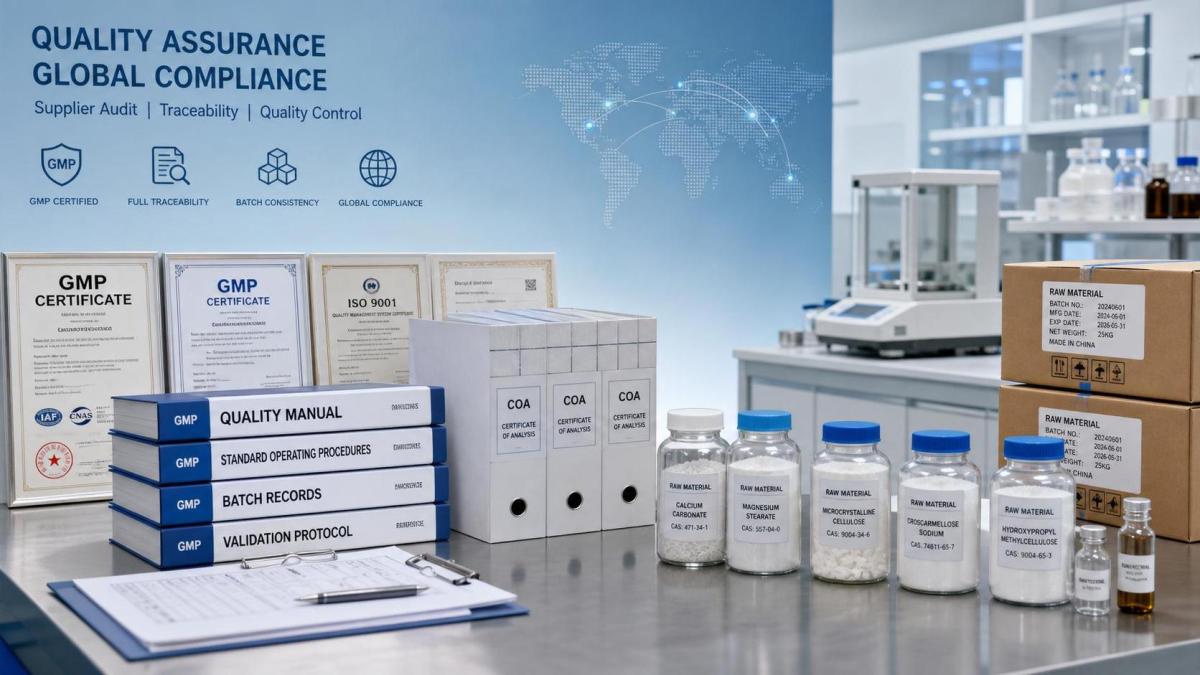
The first review should focus on current, verifiable documents rather than polished presentations or generic capability statements.
A useful starting point is the document set below.
This stage is where GMP compliance for vendor comparison becomes concrete.
If a supplier cannot provide basic compliance documents promptly, the risk is already visible.
More often, the issue is not absence but inconsistency.
Dates do not align, approval signatures differ, or records suggest weak document control.
Those details should influence the shortlist more than a low initial quote.
How can you tell whether a supplier is audit-ready, not just audit-aware?
Many suppliers understand GMP language.
Fewer can demonstrate audit readiness under real scrutiny.
The distinction matters because vendor comparison often stalls at the point where polished claims meet operational detail.
An audit-ready supplier usually answers quickly, stays consistent across departments, and can trace a batch from raw material receipt to final release.
That includes electronic systems, warehouse segregation, sampling controls, retained samples, and complaint handling.
A practical review should test a few operational threads.
- Can the site explain how deviations are escalated and closed?
- Is there evidence of training linked to actual procedures?
- Can the quality unit block release without commercial pressure?
- Are critical utilities, cleaning, and validation reviewed periodically?
- Does the supplier separate approved, quarantined, and rejected materials clearly?
In GMP compliance for vendor comparison, speed of response also tells a story.
Delayed answers may reflect internal approval discipline.
They may also expose weak ownership of quality records.
Either way, it deserves attention before shortlisting.
Is certification enough, or do process controls matter more in a close comparison?
Certification is necessary, but it rarely settles a close decision.
Two suppliers may both hold valid GMP credentials, yet one may operate with stronger process discipline and lower long-term supply risk.
That is why GMP compliance for vendor comparison should move from paper status to process behavior.
Look closely at how the site controls the variables that usually create failures.
The strongest differentiators are often operational
For example, validated cleaning limits matter if products share lines.
Supplier qualification matters if critical intermediates come from external sources.
Environmental monitoring matters where contamination risk is material.
In feed, extracts, and biochemical processing, traceability back to source lots can be just as decisive.
A close comparison should also consider whether the supplier manages scale changes well.
A site that performs well at pilot or mid-scale may struggle at commercial volumes.
This is where ACC-style technical reporting becomes useful.
Cross-sector intelligence often highlights whether a site has repeatable capability or only isolated compliance success.
What red flags usually appear before a supplier fails due diligence?
Most failures do not begin with a dramatic audit finding.
They begin with small signals that seem manageable when reviewed one by one.
In aggregate, they point to weak GMP maturity.
Common red flags include the following.
- Scope mismatch between the GMP certificate and the actual product offered.
- Repeated changes in manufacturing site without clear change control history.
- Certificates of analysis that look reformatted from batch to batch.
- Unclear ownership of out-of-specification investigations.
- Quality agreements delayed until commercial terms are finalized.
- Heavy reliance on brokers for compliance answers.
A useful habit is to compare verbal statements with controlled documents.
If the operational story changes depending on who answers, shortlist risk is increasing.
GMP compliance for vendor comparison should expose those gaps early, before qualification costs rise.
How should GMP compliance be weighted against cost, lead time, and supply continuity?
This is where many sourcing decisions become distorted.
Low cost can look decisive until requalification, batch rejection, or regulatory remediation wipes out the savings.
In regulated categories, GMP compliance for vendor comparison should act as a threshold, not a negotiable scoring bonus.
Once that threshold is met, commercial factors can differentiate suppliers more safely.
A practical weighting model
A simple model works well during shortlisting.
This approach prevents compliant suppliers from being undercut by offers that only appear cheaper on paper.
It also supports cleaner internal approvals because the shortlist logic is evidence-based.
What should happen next once the shortlist is formed?
A shortlist should trigger deeper validation, not a rush to award business.
The next step is to convert comparison findings into a structured qualification plan.
That plan should define audit scope, sample review, technical fit, quality agreement terms, and change notification expectations.
It also helps to separate critical suppliers from acceptable alternatives.
Not every compliant source deserves the same dependency level.
In sectors shaped by GMP, FDA, EPA, and traceability demands, robust vendor comparison is really a supply security exercise.
That is why GMP compliance for vendor comparison deserves a disciplined review standard across chemical, agricultural, and processing environments.
A useful closeout is to document three things clearly: mandatory compliance criteria, acceptable operational variance, and non-negotiable red flags.
Once those are written down, comparing suppliers becomes faster, cleaner, and far less exposed to avoidable surprises.
For ongoing market tracking, technical journals with verified compliance and manufacturing analysis can help keep the benchmark current.
That context is often what turns a basic shortlist into a resilient sourcing decision.
Related Intelligence
- APIs & IntermediatesWood Preservative Prices in the USA: Bulk Costs by Chemical TypeSearching for “wood preservatives price USA”? Compare bulk chemical types, uncover hidden delivery costs, and learn how to choose compliant treatments at the best value.
- APIs & IntermediatesLiaoning Fine Chemicals Institute for New Industrialization Opens in ShenyangLiaoning Fine Chemicals Institute for New Industrialization opens in Shenyang. Explore its plans to link research, pilot-scale development and enterprise services to drive chemical innovation.
- APIs & IntermediatesBuyer-Oriented Category Guides: How to Compare Options Beyond PriceUse buyer oriented category guides to compare quality, lifecycle costs, compliance, and supplier reliability beyond price. Discover how to reduce purchasing risk and choose lasting value.
The Morning Broadsheet
Daily chemical briefings, market shifts, and peer-reviewed summaries delivered to your terminal.
