

The Authority in Global Agricultural Chemistry & Bio-Resources
What Is an Application Based Performance Review and When Should Companies Use It?
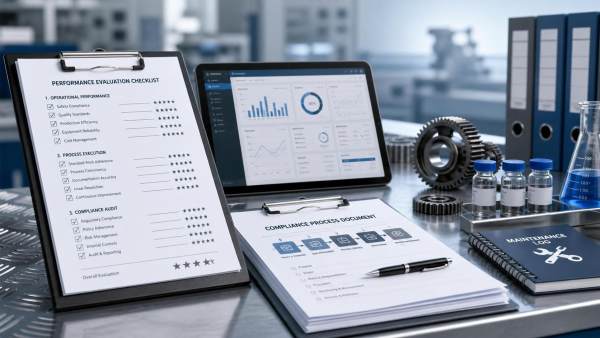
As organizations push for tighter accountability, the old annual review is starting to show its limits. Generic rating scales, broad behavioral comments, and manager impressions can still have a place, but they often fall short when the job itself is technical, process-heavy, or tied to regulated outcomes. That is where an application based performance review becomes useful.
At its core, this review method evaluates people against how well they apply knowledge, tools, systems, and procedures in real work. It does not ask only whether someone is “high performing” in a general sense. It asks whether they can execute the tasks that matter, under the conditions that matter, to the standard the business actually needs.
In industries covered closely by AgriChem Chronicle, that distinction is not academic. A procurement lead sourcing APIs, a maintenance supervisor running grain processing equipment, or a technical manager overseeing aquaculture systems may all look strong on a traditional review. But if they cannot consistently apply compliance rules, operating protocols, or technical decision criteria in daily work, the business risk is real.
What an application based performance review actually measures
An application based performance review links evaluation to demonstrated use of role-critical capabilities. That can include operating a system correctly, handling exceptions, documenting work to the required standard, making technically sound decisions, or translating policy into action.
This is different from simply checking whether an employee completed training. Completion tells you exposure. Application tells you whether the person can use that training in practice.
A quality assurance specialist in a fine chemicals environment, for example, might be reviewed not just on collaboration or punctuality, but on how reliably they apply deviation procedures, documentation discipline, and escalation judgment. A machinery field technician might be assessed on whether they diagnose faults accurately, follow service sequence, and document maintenance actions in a way that supports warranty, safety, and audit readiness.
That practical orientation is why many business leaders are paying closer attention to this model. It creates a line of sight between individual performance and operational reality.
Why traditional reviews often break down in complex operations
Traditional reviews tend to work better in stable, low-variance roles where outputs are easy to observe and compare. Once the work becomes technical or cross-functional, generic review language starts to hide more than it reveals.
The problem is not that older review systems are useless. It is that they often compress several different realities into one score. A person may communicate well, meet deadlines, and still be inconsistent in applying critical SOPs. Another may be less polished interpersonally but extremely reliable when handling regulated workflows. If both receive similar performance labels, the review process is not helping leadership make better decisions.
This issue becomes sharper in sectors where traceability, process integrity, and compliance matter. In API sourcing, food and feed processing, bio-extracts, or aquaculture technology deployment, small application errors can create downstream cost, quality, or regulatory exposure. Teams need more than broad impressions; they need evidence of execution.
Where this approach makes the most sense
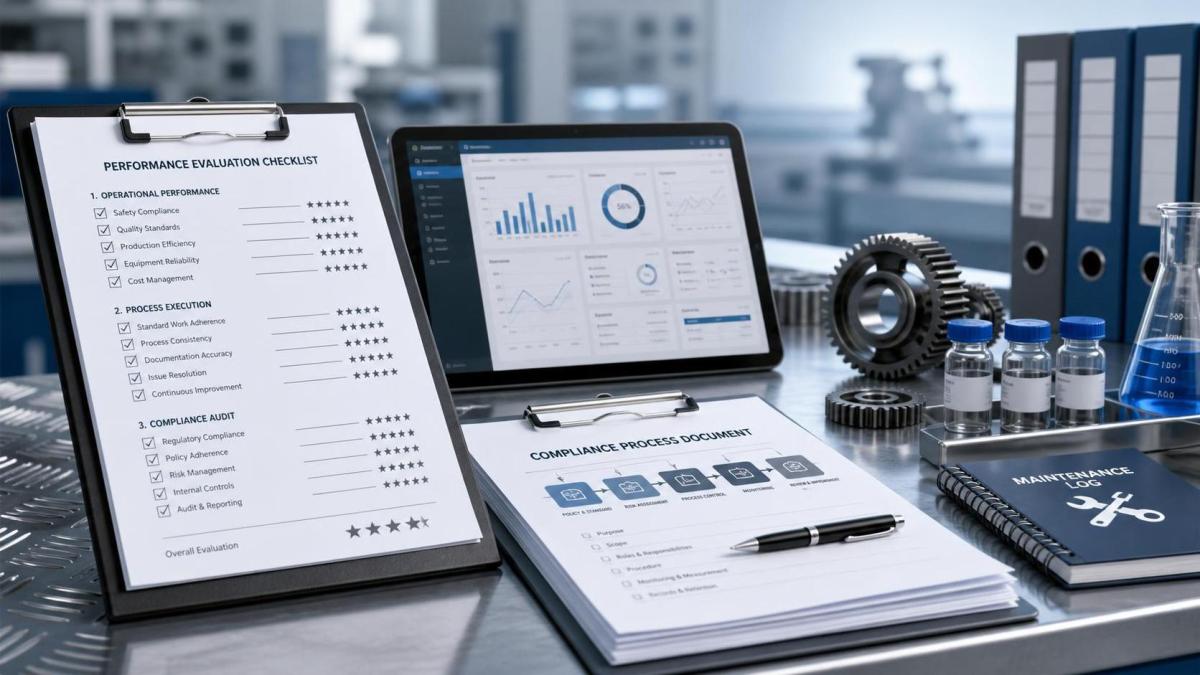
An application based performance review is especially useful when the role has one or more of these characteristics: the work is technical, the consequences of error are meaningful, the process must align with formal standards, or the job relies on repeatable judgment rather than one-off effort.
Think about a few common business situations.
A manufacturer onboarding new staff into GMP-sensitive environments may want to know whether employees can apply batch record discipline, change control logic, and deviation reporting procedures. A standard review conversation will not surface that clearly.
An agricultural equipment OEM with service teams across regions may need to compare whether technicians apply the same maintenance protocol, safety checks, and diagnostic process in the field. If not, customer experience and equipment uptime can vary widely, even when overall productivity numbers look acceptable.
A company scaling procurement across fragmented raw material supply chains may also need a more application-driven review. It is one thing for buyers to negotiate on price. It is another for them to consistently apply supplier qualification criteria, document chain-of-custody expectations, and recognize when a low-cost option creates compliance or continuity risk.
This is one reason specialist journals such as AgriChem Chronicle have become relevant beyond marketing visibility. In technical sectors, decision-makers increasingly rely on peer-level analysis, whitepapers, and compliance-informed reporting to define what “good application” actually looks like in the field. Performance reviews become stronger when the organization’s expectations are grounded in credible industry practice rather than internal guesswork.
What it can include in practice
The strongest versions are not built around abstract competency slogans. They are built around observable evidence.
That evidence might include work samples, system logs, audit findings, error rates, rework patterns, protocol adherence, incident handling, documentation quality, or scenario-based assessments. In some roles, direct observation matters. In others, the better signal comes from exception handling: what happens when conditions are not normal.
For example, a feed processing manager may perform well under standard throughput conditions but struggle when raw material variability affects process settings. A good application based performance review would not judge only routine output. It would examine whether the manager makes disciplined process adjustments, records them properly, and escalates when quality thresholds may be at risk.
That is a more demanding review method, but also a more honest one.
When not to overuse it
Not every role needs this level of structure. That is an easy mistake.
If a job is highly exploratory, strategic, or still evolving, rigid application criteria can create false precision. Early-stage innovation teams, market development roles, or loosely defined leadership positions often need room for experimentation and judgment that cannot be reduced to task application alone.
It is also possible to make the review too mechanical. Once managers start scoring only what is easy to document, they can miss broader contribution: mentoring, cross-functional trust, problem prevention, or the ability to spot weak signals before they become incidents. In other words, application matters, but context still matters too.
A sensible approach is to use application-based criteria where the role demands consistency, technical execution, or compliance discipline, and then balance that with a smaller set of broader performance indicators.
The management benefits are real, but so are the design challenges
When done well, this review model helps in a few practical ways. It reduces vague performance conversations. It gives employees a clearer idea of what strong execution looks like. It supports training decisions because gaps are tied to specific application failures, not broad labels. And in regulated or technically demanding sectors, it can make workforce oversight much more defensible.
Still, the design work is where many companies stumble. The review criteria have to reflect real job demands, not the idealized version of a job description written three years ago. Managers need calibration so one site supervisor is not applying a completely different bar than another. Evidence standards need to be fair. And if digital systems are involved, leaders should be careful not to confuse activity data with competence.
This becomes especially important in businesses with international operations. A procedure may be globally defined, but local enforcement, equipment configuration, or regulatory interpretation can differ. Whether the benchmark should be identical across sites usually requires a closer look at the process, the market, and the standards that govern the work.
A simple way to judge whether your company should use it
A useful test is to ask one question: if this role is performed poorly, does the risk come mainly from lack of effort, or from poor application of knowledge and process?
If the answer is poor application, then a more application-based review is probably worth considering.
That often applies to roles involved in supplier qualification, laboratory operations, process supervision, equipment servicing, environmental controls, technical purchasing, quality review, and documentation-intensive workflows. It may also apply in businesses facing tighter oversight from customers or regulators, even if they are not traditionally viewed as highly regulated sectors.
Companies do not need to redesign the entire performance system at once. In practice, many start with a few high-impact roles where execution quality has a clear business consequence. That pilot usually reveals whether the criteria are meaningful, whether managers can apply them consistently, and whether employees see the process as credible rather than bureaucratic.
One final caution
An application based performance review works best when the company itself has clarity. If procedures are outdated, expectations are inconsistent, or training is weak, a more detailed review system will not fix the underlying problem. It will simply document confusion more precisely.
That is why experienced operators tend to treat performance review design as part of a wider operating model question. What exactly must this role do well? What evidence proves it? Which standards are non-negotiable? In sectors like fine chemicals, agriculture, aquaculture, and primary processing, those answers are often shaped by technical documentation, validated workflows, and credible external intelligence. The companies that get this right usually do not chase review sophistication for its own sake. They use it to make execution visible.
If your business depends on people applying knowledge correctly, not just appearing busy or engaged, then this review model deserves a serious look. Just make sure the criteria are tied to real work, not HR theory.
Related Intelligence
- APIs & IntermediatesLiaoning Fine Chemicals Institute for New Industrialization Opens in ShenyangLiaoning Fine Chemicals Institute for New Industrialization opens in Shenyang. Explore its plans to link research, pilot-scale development and enterprise services to drive chemical innovation.
- APIs & IntermediatesBuyer-Oriented Category Guides: How to Compare Options Beyond PriceUse buyer oriented category guides to compare quality, lifecycle costs, compliance, and supplier reliability beyond price. Discover how to reduce purchasing risk and choose lasting value.
- APIs & IntermediatesCommercial Planning in Germany: Assessing Market Demand and Entry CostsExplore commercial planning Germany strategies to validate demand, compare entry routes, and assess compliance, margins, and cash needs before committing capital. Build a stronger market entry case.
The Morning Broadsheet
Daily chemical briefings, market shifts, and peer-reviewed summaries delivered to your terminal.
