

The Authority in Global Agricultural Chemistry & Bio-Resources
Agrochemicals Category Intelligence: Tracking Cost Drivers and Supply Risk

A lower agrochemical quote can conceal greater supply exposure, while a price increase may reflect costs that have already started to ease. Procurement teams need to establish what is changing at the production site, how that change reaches the purchased product, and whether an alternative source can deliver within the required application window. A broad chemical price index cannot answer those questions on its own.
Effective agrochemicals category intelligence connects product-specific cost drivers with evidence of supply availability. Its immediate value is practical: deciding whether to challenge an increase, secure volume, qualify another source, or retain purchasing flexibility. That judgment depends on the active ingredient, formulation, manufacturing route, approved supply chain, and destination market. Two products serving a similar agronomic purpose can have very different cost structures and disruption risks.
Build the cost picture around what you actually buy
Start by separating technical-grade active ingredients from formulated products. An active ingredient purchase exposes the buyer directly to synthesis economics, purification requirements, and manufacturing availability. A formulated product adds other variables: active loading, solvents or carriers, surfactants, formulation processing, packaging, and potentially different transport requirements. A movement in technical material prices therefore does not translate automatically into the same percentage movement in the finished product.
Comparisons also need a consistent commercial basis. Price per kilogram of product can mislead when concentration, specification, packaging, freight terms, or payment conditions differ. Where appropriate, convert offers to cost per unit of active ingredient, then compare the total delivered cost of products that meet the required specification and authorized use. Agronomic suitability and application economics still require a separate assessment; equivalent active content alone does not establish equivalent field performance.
For each significant purchase, map the costs that can plausibly move its price:
- Reaction inputs: starting materials, intermediates, reagents, catalysts, and process chemicals associated with the manufacturing route.
- Conversion: utilities, labor, solvent recovery, equipment utilization, yield losses, and waste treatment.
- Finishing: purification, formulation ingredients, processing, quality release, and packaging.
- Delivery and commercial terms: transport, insurance, applicable duties, currency exposure, financing, and inventory carrying costs.
The weighting matters more than the length of the list. An electricity-intensive process may respond strongly to power costs, while another product is more sensitive to a specialized intermediate with limited supply. Waste treatment constraints can affect both conversion cost and usable capacity. Packaging movements may matter for small packaged formulations but explain little of a bulk technical material increase.
Ask suppliers to connect adjustment requests to these cost blocks. Full disclosure of proprietary process economics may be unrealistic, but a credible explanation should identify the affected inputs, the relevant period, and the approximate share of the purchased product’s cost exposed to the change. “Raw materials are up” provides too little information to support a negotiation.
Timing deserves equal attention. A producer using previously purchased inputs may experience a different cost trajectory from one buying on short contracts. Distributors may hold inventory acquired at several price levels. Establish whether an increase reflects replacement cost, historical inventory cost, or an expected future expense. Each basis supports a different discussion about its effective date and duration.
Follow the manufacturing route before following the commodity index
Broad indicators such as energy, freight, and major chemical feedstocks help identify pressure, but their connection to a particular agrochemical must be established. A change several steps upstream can be absorbed, delayed, or amplified by intermediate availability, production yields, and capacity utilization. Procurement should treat a benchmark as supporting evidence for a cost mechanism.
Different active ingredients require different monitoring. For a phosphorus-based herbicide, relevant phosphorus intermediates and conversion conditions may warrant investigation. For a molecule dependent on a specialized heterocyclic intermediate, availability at that intermediate stage could outweigh movements in a broad petrochemical index. The appropriate indicators follow the actual production route, which may differ between manufacturers of the same active ingredient.
A useful cost model can remain relatively simple. Begin with the agreed price and divide the explainable portion into a few material cost blocks. Record which indicator represents each block, what evidence supports the relationship, and how long changes should take to appear in purchase prices. Leave unsupported portions visible rather than forcing the entire price into convenient public indices.
For example, if a supplier attributes an increase to higher solvent costs, examine solvent consumption, recovery, and the solvent’s share of conversion cost. A substantial increase in the solvent price may justify only a modest movement in the finished product. The same reasoning applies when energy costs fall: the reduction should be assessed against the energy-sensitive share of production.
Keep currency and freight separate from manufacturing costs where contracts allow. Otherwise, a delivered-price negotiation can obscure whether the underlying material has become more expensive or the delivery economics have changed. It also becomes harder to remove a temporary surcharge when its original cause subsides.
Price declines require interpretation too. They can reflect cheaper inputs, competitive pressure, excess stock, or a supplier seeking cash. Those explanations have different implications for continuity. Before using a low offer to reset the purchasing plan, check batch age, remaining shelf life, source documentation, shipment readiness, and the supplier’s ability to repeat the delivery.
Trace supply risk beyond the name on the quotation
Two approved vendors do not necessarily provide two independent sources. They may purchase technical material from the same plant, depend on the same intermediate producer, or use the same formulation site. Vendor count is therefore a weak measure of resilience unless procurement understands where the supply paths converge.
Map the chain far enough to expose material dependencies: critical intermediate, active ingredient manufacturer, formulation site, release testing, and delivery route. The depth of investigation should reflect the consequence of failure. A product with a narrow application window and few authorized alternatives deserves more attention than a readily replaceable item with flexible demand.
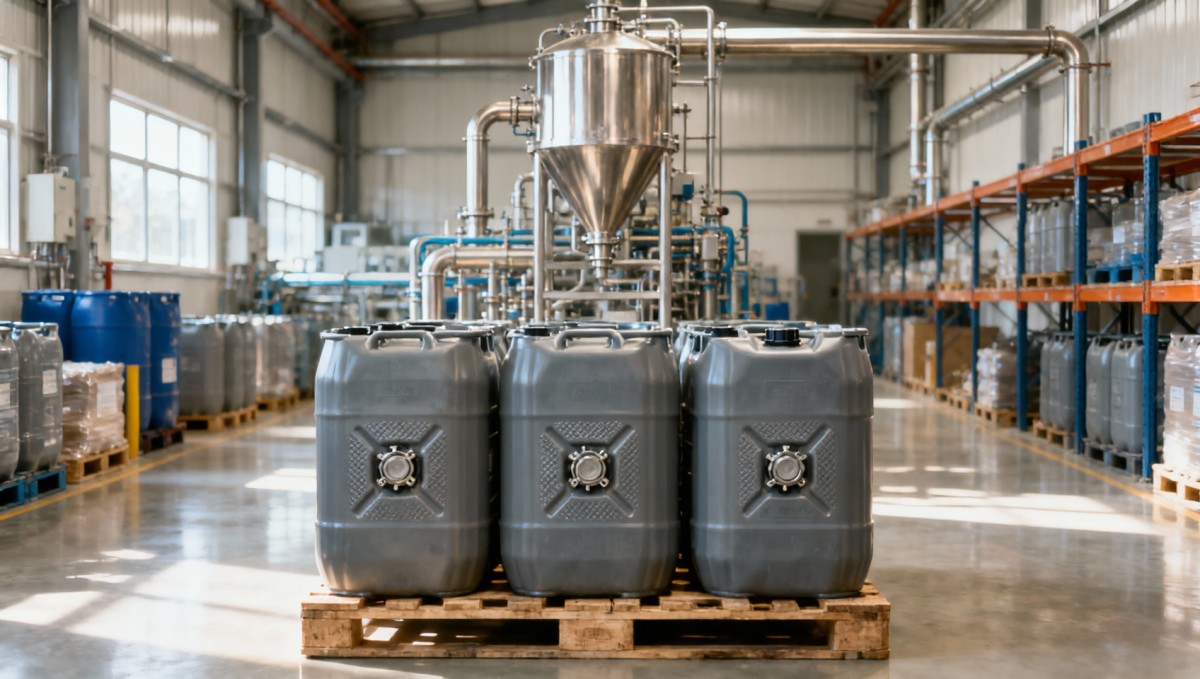
At each stage, identify the constraint that could interrupt usable supply. A plant may report available production capacity while lacking an essential intermediate. Finished goods may be physically available but awaiting testing or documentation. An alternative factory may be technically capable of production while still requiring regulatory review or buyer qualification before its material can be accepted.
Regulatory exposure must be assessed by destination market, product, and source. Approval of an active substance does not by itself establish that every formulation, manufacturing source, or intended use is permitted. A source change may require documentation, assessment, or authorization under the applicable framework. Procurement should involve regulatory and quality colleagues early enough to establish a realistic substitution timeline.
Environmental and operating restrictions also need a site-specific reading. A policy announcement does not establish that every producer will lose output. The purchasing consequence depends on the facility’s permits, process, treatment capability, and operating status. Distinguish announcements from confirmed production effects, and distinguish a shutdown from a temporary reduction in output.
Several operational signals justify closer investigation:
- Lead times extend across successive orders without a clear scheduling explanation.
- Partial deliveries recur, or suppliers shorten the validity of volume commitments.
- Manufacturing sites, batch origins, specifications, or shipping points change unexpectedly.
- Quality release becomes slower, with more rework, repeat testing, or documentation gaps.
- Payment requests change materially, particularly when combined with weaker delivery performance.
No single signal proves that a disruption is imminent. Together, however, they can show that the supplier’s operating position has changed. Follow up with specific evidence requests: available quantities, production dates, batch status, outstanding release steps, and shipment milestones. A general assurance of “normal supply” offers little basis for managing a time-sensitive requirement.
Assess concentration at the point where substitution becomes difficult. Several geographically dispersed formulators may all depend on one technical source. Conversely, a supplier operating in a concentrated production region may have credible backup arrangements elsewhere. The relevant question is how much usable volume remains available if the exposed node fails.
Turn the evidence into contract and inventory decisions
Cost pressure and supply pressure call for different responses. If input costs rise while capacity and delivery remain dependable, the negotiation can focus on adjustment mechanisms and timing. If a critical intermediate becomes constrained, securing deliverable volume may take priority. Combining these issues into one discussion about “market conditions” makes it harder to judge either the price request or the supply commitment.
For significant contracts, define how adjustments work before volatility creates a dispute. Specify the relevant indicators, review period, calculation basis, currency treatment, and conditions for removing temporary surcharges. Where indexed pricing is appropriate, adjustments should work in both directions. Any lag should correspond reasonably to purchasing and production cycles.
A fixed price offers budget certainty only for quantities the supplier can deliver. Review volume commitments, order acceptance, delivery schedules, allocation provisions, and available remedies alongside the headline price. For products needed within a narrow seasonal window, an early confirmed shipment may carry more operational value than a cheaper delivery arriving after demand has passed.
Inventory decisions should reflect the time needed to restore supply. Consider detection time, replacement lead time, transport variability, testing, and any source approval work. Then weigh that exposure against shelf life, storage conditions, working capital, and the risk that demand or permitted use changes before the material is consumed. Increasing stock across an entire category can create expensive surplus without protecting the most vulnerable products.
Alternative sourcing also needs a calendar. A second quotation has limited value if qualification cannot finish before the next purchasing window. Establish what samples, impurity information, stability evidence, formulation checks, and regulatory steps are needed for the proposed source. Reserve commercial volume only after the relevant teams understand the acceptance conditions and likely timing.
A focused monitoring sheet can bring these decisions together. For each priority product, record the principal cost driver, exposed manufacturing node, confirmed lead time, inventory position, alternative-source status, and next contractual review. Label observations by their evidence: a supplier statement, an operating notice, a batch document, or delivery performance. This helps prevent an unconfirmed explanation from becoming the basis for a purchasing commitment.
The review becomes useful when each material change leads to a defined action. Falling input costs can trigger a price review; repeated delivery slippage can trigger earlier orders or a qualification effort; improving availability can support a reduction in buffer stock. Before the next negotiation, procurement should be able to explain what is driving the price, where supply could fail, and how quickly an acceptable replacement could arrive. Those answers determine how much commitment—and how much flexibility—the business should buy.
Related Intelligence
- AgrochemicalsUSDA Announces Over $500 Million for Eight Fertilizer Production ProjectsUSDA announces over $500 million for eight fertilizer production projects. Explore how expanded domestic supply could affect farm costs and agricultural supply chains.
- AgrochemicalsAgrochemicals Category Intelligence: Tracking Cost Drivers and Supply RiskExplore agrochemicals category intelligence to track cost drivers, uncover supply risks, and strengthen sourcing decisions. Learn how to negotiate smarter and secure reliable supply.
- AgrochemicalsChina’s Phosphate Fertilizer Exports Near Zero, Tightening Global SupplyChina’s phosphate fertilizer exports near zero in 2026 as sulfur shortages tighten global supply. Explore the risks for importers, prices and sourcing strategies.
The Morning Broadsheet
Daily chemical briefings, market shifts, and peer-reviewed summaries delivered to your terminal.