

The Authority in Global Agricultural Chemistry & Bio-Resources
Evaluating Climate Control Suppliers: Capacity, Controls and Support
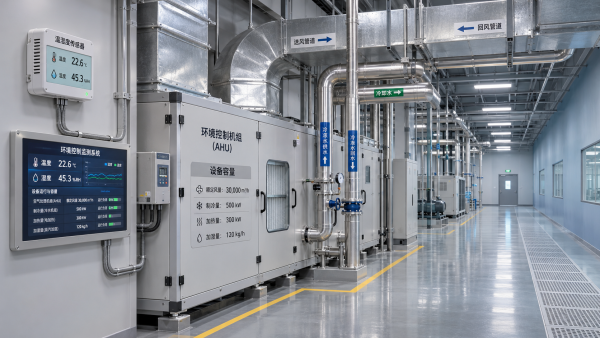
Choosing a climate control supplier involves more than comparing equipment specifications or upfront prices. Procurement teams must assess whether a provider can deliver the required heating, cooling and humidity capacity, integrate reliable controls, and support operations throughout the system’s service life. The strongest proposal is not necessarily the one with the largest capacity or the most features; it is the one that shows how performance will be achieved, verified and maintained under the conditions that matter at the site.
This distinction matters across the sectors covered by AgriChem Chronicle. A fine-chemicals facility may need environmental conditions that support a controlled process, while a grain processor may be more concerned with moisture, dust and seasonal throughput. An aquaculture operator may need to consider both room conditions and their interaction with water-system equipment. Each application starts with a different risk, even when suppliers use similar terms to describe their systems.
Start with the operating problem, not the equipment list
Before issuing a request for quotation, define what must be controlled, where it must be controlled and what happens if conditions move outside the acceptable range. Temperature and relative humidity are common starting points, but the relevant requirements may also include air distribution, pressure relationships, ventilation, filtration or the removal of process-generated moisture.
A useful specification distinguishes between a room setpoint and the conditions at the product or process. A sensor near a return-air grille may report an acceptable temperature while a storage area, production line or occupied work zone experiences something different. Ask internal operations and quality teams where conditions should be measured, how much variation is acceptable and how quickly an excursion needs attention.
The brief should also describe operating hours, occupancy, production schedules, door openings, cleaning practices and known heat or moisture sources. Where future expansion is plausible, state whether the supplier should price it now or show how capacity can be added later. Without a common design basis, quotations can appear comparable while covering different problems.
Test capacity against real design conditions
Nominal equipment capacity is only a starting point. Actual output depends on operating conditions and the wider system, including airflow, entering air conditions, available utilities and distribution losses. Ask each supplier to state its design assumptions and show the resulting heating, cooling, humidification and dehumidification requirements separately where relevant.
Cooling deserves particular scrutiny because total cooling capacity includes both sensible cooling, which changes air temperature, and latent cooling, which removes moisture. A proposal that meets the temperature load may still struggle to control humidity. Conversely, a system sized around a rare peak can cycle inefficiently or control poorly during normal low-load operation unless its components and controls can adjust appropriately.
Request a load calculation or a clear summary of it, including outdoor design conditions, internal loads, ventilation assumptions and any allowances for uncertainty. For an existing site, compare those assumptions with available operating records. If the supplier proposes a large safety margin, ask what risk it covers and how the system will behave when that extra capacity is not needed.
Some conditions are easy to miss during a site visit. A processing room may release moisture only during washdown; a storage space may experience short periods of high infiltration when goods are moved; a greenhouse or agricultural building may have a load profile that changes substantially with weather and production stage. Suppliers should explain which operating modes were included and which were excluded.
Ask what happens when equipment is unavailable
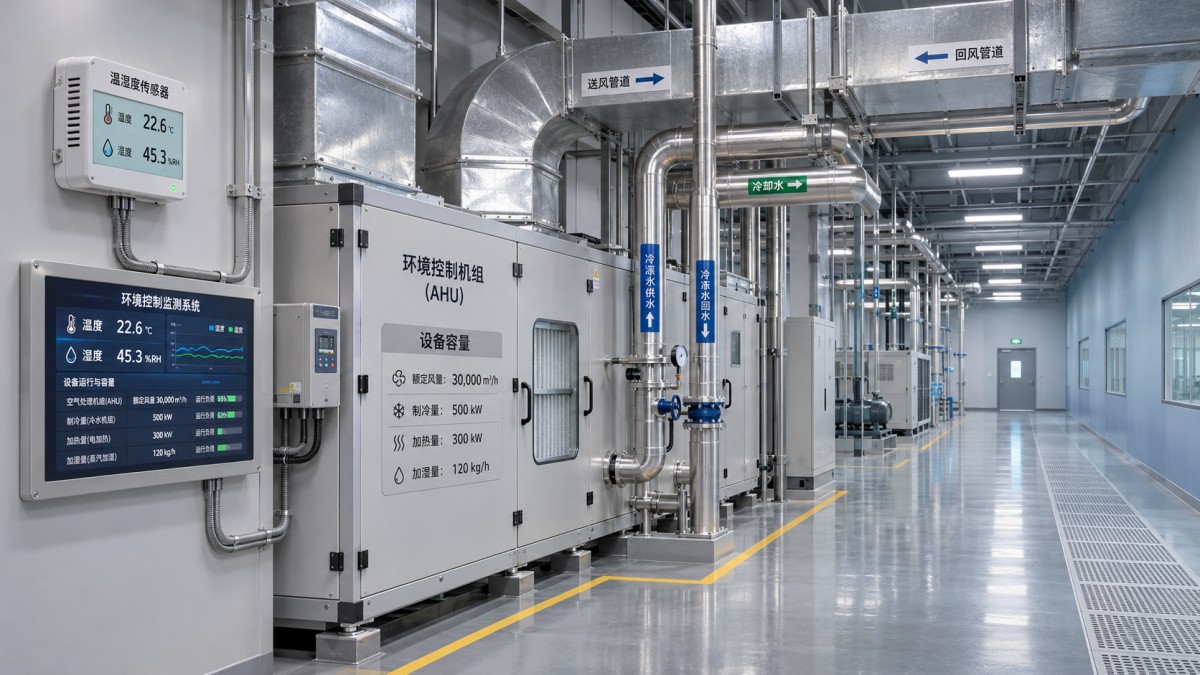
Redundancy is not simply a matter of buying two units. Determine which failure would interrupt the process, whether the remaining equipment could sustain an acceptable condition and for how long, and what manual action would be required. Critical sensors, pumps, power supplies and controls can be single points of failure even when cooling equipment is duplicated.
The right level of backup depends on the consequence of an excursion and the time available to recover. A noncritical warehouse and a temperature-sensitive production area should not automatically receive the same design. Ask suppliers to identify their proposed failure modes and the assumptions behind any standby arrangement.
Controls determine whether capacity is usable
Equipment can be correctly sized and still perform badly if the control strategy is unclear. Request a written sequence of operations, not just a controller brochure. It should describe how the system starts, stages or modulates equipment, responds to changing humidity, handles alarms and returns to normal operation after a power interruption.
Sensor selection and placement deserve the same attention as the control software. Ask which measurements govern the system, where sensors will be installed, how they will be calibrated and what happens if a sensor fails or produces an implausible reading. Where multiple zones have different needs, establish whether each zone can be controlled independently or must follow a common setpoint.
For integration with a building management system or process platform, confirm the communication protocol, the points available for monitoring and control, and responsibility for configuring the connection. A supplier’s claim that a system is “compatible” is not enough. The interface may expose temperatures but not alarms, operating modes or the historical data needed by the site.
Also establish who owns configuration files, passwords, trend data and backups. Remote access can shorten troubleshooting, but it should be subject to the site’s cybersecurity rules, access approval and audit requirements. If the supplier alone can change essential settings, procurement should understand the resulting service dependency before signing.
Separate documentation from demonstrated performance
Supplier capability for climate control becomes credible when claims can be checked against the proposed design and acceptance process. Manufacturer data sheets, load calculations and component lists are useful, but they do not by themselves prove that an installed system will maintain conditions across the intended space.
Agree on commissioning and acceptance criteria before purchase. Depending on the project, these may cover airflow balancing, sensor checks, control sequences, alarm tests, recovery after interruption and observations under representative operating conditions. Specify the measurement locations, instruments, test duration, pass criteria and the party responsible for correcting deficiencies. Also decide what happens if seasonal conditions prevent a particular test at handover.
In regulated pharmaceutical or fine-chemical environments, the facility owner should determine the applicable quality and validation requirements with its quality and engineering teams. The supplier can then identify which design records, calibration information, test protocols and other documents it will provide. Equipment documentation should not be mistaken for proof that the complete facility or process complies with a particular regulatory framework.
For agricultural and primary-processing sites, the decisive evidence may look different: suitability for dust, corrosion, washdown exposure or intermittent operation may matter more than extensive validation paperwork. Ask for evidence relevant to the actual environment rather than rewarding the thickest document package.
Examine the delivery chain behind the quotation
A climate control supplier may design the system while relying on other companies for fabrication, controls, installation or commissioning. That arrangement is not inherently a weakness, but unclear ownership is. Identify the contracting party, major subcontractors and the person accountable for coordinating interfaces with electrical, plumbing, building and process contractors.
The delivery schedule should distinguish equipment manufacture from installation, commissioning and final acceptance. Confirm what could delay each milestone: approved drawings, long-lead components, site access, utility availability or software integration. A short equipment lead time has limited value if the supplier cannot commit to commissioning resources when the site is ready.
Check the availability of replacement components and the process for approving substitutions. For imported equipment, consider shipping, customs, local technical support and the availability of parts compatible with the installed version. Where a proposed component is obsolete or difficult to source, ask for an alternative and understand whether the change affects performance, documentation or warranty coverage.
Price support over the life of the system
A low initial bid can transfer substantial work to the site team. Compare quotations on a common scope that includes design, installation, controls integration, commissioning, training, documentation and maintenance provisions. Make exclusions visible rather than assuming they are included elsewhere.
For service, ask what response commitments mean in practice. A remote acknowledgement, a diagnostic call and an engineer arriving on site are different events. Establish coverage hours, escalation routes, travel arrangements, spare-parts responsibility and any conditions that could limit support. Where downtime carries material risk, discuss a site-specific spares list and the skills needed for routine troubleshooting.
Warranty terms also require close reading. Clarify when coverage starts, what is excluded, whether labour and travel are covered, and how responsibility is divided when a third-party component or installer is involved. Preventive maintenance requirements should be realistic for the operating environment and clear enough to budget before award.
Operating cost estimates are useful only when their assumptions are comparable. Ask bidders to identify the load profile, energy prices, operating hours and maintenance activities used in their calculations. Treat estimated consumption as a forecast, not a guarantee, unless the contract defines a measurable performance commitment and the conditions under which it applies.
Make the comparison decision-ready
A practical evaluation brings procurement, engineering, operations and, where appropriate, quality assurance into the same review. Start by screening out proposals that cannot meet mandatory operating or documentation requirements. Then compare the remaining bids against the same design basis, noting both price and unresolved assumptions.
Before selecting a supplier, resolve the questions that could change the result: Is dehumidification included at the specified operating conditions? Are sensors and controls included in the integration scope? Who performs balancing and acceptance testing? What service is actually available at the site? Which components are subject to long lead times?
Record the answers in the final technical and commercial agreement, including any deviations from the original request. That step is more useful than relying on a broad promise of performance: it gives both parties a shared basis for delivery, testing and support when the system is under real operating pressure.
Related Intelligence
- Climate Control & VentilationLivestock Climate Control in Southeast Asia: Ventilation for Hot, Humid FarmsLivestock climate control Southeast Asia: discover ventilation and cooling strategies for hot, humid farms, plus practical tips to reduce heat stress.
- Climate Control & VentilationEvaluating Climate Control Suppliers: Capacity, Controls and SupportEvaluate supplier capability for climate control with practical guidance on capacity, controls, commissioning and lifecycle support. Make a confident procurement decision.
- Climate Control & VentilationLivestock Climate Control System Prices: Equipment and Installation CostsLivestock climate control price depends on equipment, installation and operating costs. Learn how to compare quotes, avoid hidden expenses and plan your budget.
The Morning Broadsheet
Daily chemical briefings, market shifts, and peer-reviewed summaries delivered to your terminal.