

The Authority in Global Agricultural Chemistry & Bio-Resources
Battery Cage Systems: A Buyer Checklist for Layer Farm Projects
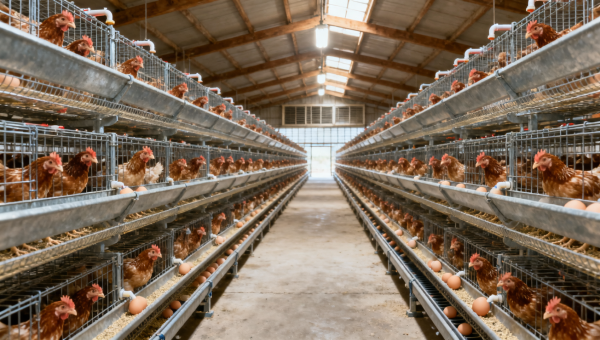
A low equipment quotation can become an expensive layer-house project if it excludes manure removal, electrical installation, backup power, or the building alterations needed to make the system work. Procurement teams should compare complete operating arrangements, not cage counts alone. The first decision is whether the proposed housing system is permitted and commercially acceptable; the next is whether the farm can operate, maintain, and service it under local conditions.
A useful battery cage purchasing checklist connects bird accommodation, building design, automation, and contract acceptance. Each requirement should have an owner, a supporting document, and a verification method. Otherwise, apparently comparable quotations may cover very different projects.
Confirm legal and market eligibility before requesting prices
Do not assume that equipment offered for sale is acceptable at the installation site. Conventional cages, enriched cages, and cage-free housing are different categories, and the distinctions can determine whether a project is viable. For example, EU Council Directive 1999/74/EC prohibited the use of unenriched cages from 1 January 2012 and establishes separate requirements for enriched cages. That is a jurisdiction-specific rule, not a worldwide specification. Source: Council Directive 1999/74/EC, Articles 5 and 6.
The buyer should obtain a written assessment of applicable housing, animal-welfare, building, environmental, and electrical requirements from qualified local advisers. Egg purchasers may also impose housing conditions beyond the legal minimum. Confirm those conditions against the intended sales contract rather than relying on a supplier’s general statement that equipment is “compliant.”
Treat eligibility as a pass-or-fail gate. A lower purchase price cannot compensate for a system that cannot receive approval or supply the intended customer. Where future market requirements remain uncertain, include conversion constraints and potential stranded-equipment costs in the investment review.
Issue a project brief that makes quotations comparable
Suppliers need the same design basis. Specify the planned flock, bird strain and expected mature weight, flock-placement schedule, available building dimensions, and required operating arrangements. Identify whether the project is a new house or a retrofit: columns, roof bracing, uneven floors, and existing services can restrict an otherwise plausible layout.
Separate the flock target from the supplier’s stated equipment capacity. Ask for the calculation behind that capacity, including usable cage area, birds per compartment, feeding access, and drinking provision. Have the proposed stocking arrangement checked against applicable rules and the relevant breeding-company guidance.
- Site conditions: seasonal temperature and humidity, dust exposure, water quality, drainage, and corrosion risks.
- Utilities: available voltage and frequency, electrical reliability, water supply, storage, and backup arrangements.
- Operating model: staffing, maintenance capability, egg collection schedule, and manure handling route.
- Project boundaries: responsibility for civil works, ventilation, wiring, unloading, installation, and commissioning.
Require every quotation to list exclusions and assumptions. “Automatic system” is not a sufficiently precise scope description: feeding may be automated while manure handling, egg transfer, or parts of water management remain outside the offer.
Choose the layout around access, airflow, and material movement
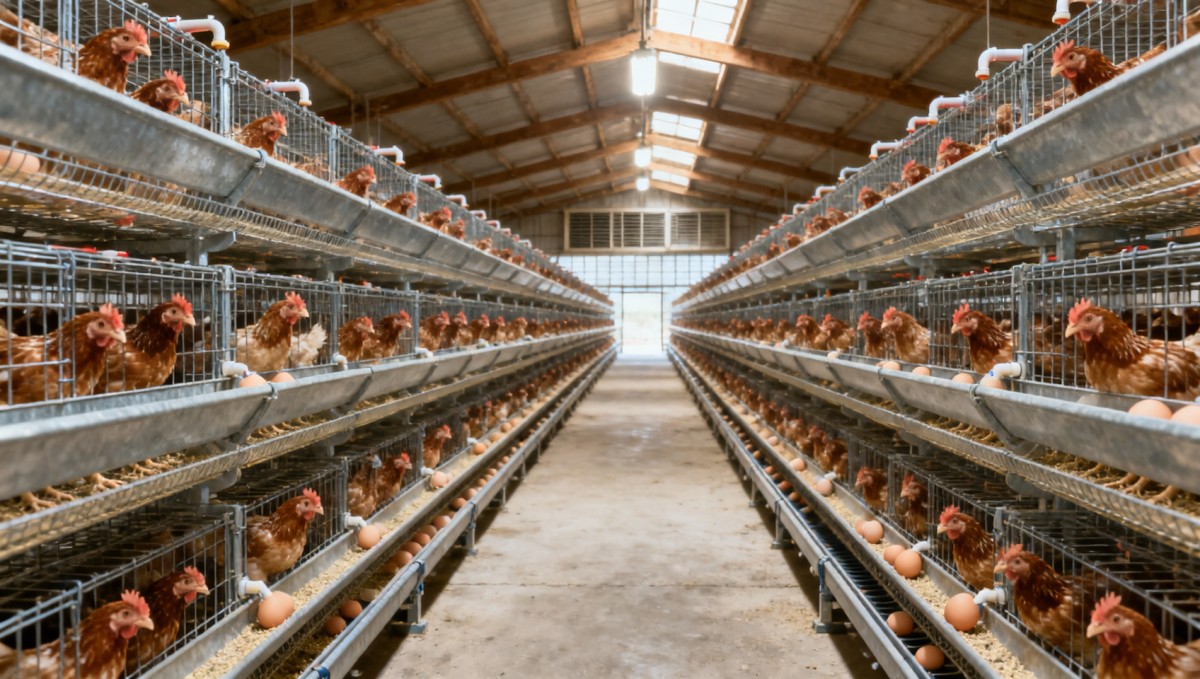
A-type and vertically stacked arrangements should be evaluated through a dimensioned house layout, not a catalogue photograph. Compare overall installed height, row spacing, maintenance access, manure clearance, and the space needed at both ends of the house. Equipment density is only useful when staff can inspect birds and reach components safely.
When reviewing an A-type battery cage configuration, request drawings showing how feeding, drinking, egg collection, and manure removal fit together. The equipment description establishes a starting point for comparison; it does not establish suitability for a particular building, climate, or approved stocking arrangement.
Check the route from the cage to the egg room and from the manure collection point to storage or transport. Transfers, changes in elevation, and restricted turning space deserve attention because they create interfaces between equipment packages. Assign responsibility for those interfaces before ordering.
Ventilation also needs a coordinated design. Have the ventilation designer review the proposed rows, tiers, obstructions, and bird placement rather than sizing equipment from floor area alone. FAO’s poultry housing guidance discusses the relationship between housing, ventilation, and environmental management; it should inform the review, not replace site-specific engineering. Source: FAO, Poultry Development Review, 2013, “Poultry housing and management in developing countries.”
Turn equipment descriptions into measurable requirements
Descriptions such as “heavy-duty wire,” “durable coating,” and “high-quality motor” do not provide an acceptance basis. Procurement documents should identify what is supplied, how it will be checked, and what happens if it differs from the agreed specification.
For corrosion protection, ask whether coating occurs before or after fabrication, which surfaces are covered, and what inspection records will accompany delivery. Avoid treating a coating label as a service-life guarantee. Expected durability needs assessment against the farm’s moisture, cleaning practices, chemical exposure, and maintenance conditions.
Physical samples help resolve ambiguities. Inspect representative doors, mesh joints, fasteners, feed trough connections, and belt material. Record the approved sample or drawing revision in the purchase contract so that inspection is not based on memory or sales photographs.
Evaluate automation by its failure and recovery procedures
The relevant question is not simply how many functions are automated. It is what happens when a motor stops, a sensor fails, water pressure drops, or power is interrupted. Ask the supplier to explain how each fault is detected, what stops automatically, and how staff restore operation.
For feeding, establish how operators check distribution and adjust delivery. For drinking, review filtration, pressure regulation, flushing access, and the route for investigating leaks or inadequate supply. For egg collection, examine transfer points and the response to belt stoppages. For manure removal, clarify how operators identify misalignment or obstruction without entering hazardous areas.
Require a documented safe-isolation procedure, accessible emergency controls, and guarding appropriate to the installed machinery. A local competent person should review the arrangement against applicable requirements. The IFC poultry-production guidance identifies occupational hazards associated with machinery and electrical equipment, but the document is not a certificate of equipment safety. Source: IFC, Environmental, Health, and Safety Guidelines for Poultry Production, 30 April 2007, Section 1.2.
Backup arrangements should cover essential farm functions as a coordinated system. Define which equipment must remain available during an outage and have the electrical designer assess generator capacity, motor starting, changeover, and restart sequencing. A quotation that includes a control panel does not necessarily include a complete power-continuity solution.
Compare installed lifecycle cost, not equipment price per bird
Use one cost boundary for every bidder. Include equipment, freight, insurance, import charges where applicable, foundations, electrical work, installation, commissioning, training, and initial spare parts. Keep supplier prices separate from buyer-side allowances so omissions remain visible.
Operating-cost comparisons should use disclosed assumptions for labor, electricity, consumables, maintenance, and replacement parts. Request the equipment duty cycles and load information behind estimates. Rated motor power alone does not establish daily energy consumption.
Test uncertain costs with alternative scenarios rather than presenting one precise payback figure. Consider delayed spare-part delivery, higher electricity prices, additional maintenance labor, or a commissioning delay. Evaluate egg-handling losses only with clearly defined evidence or assumptions; do not accept an unsupported claim that one layout guarantees a particular reduction in breakage.
Also identify recurring dependencies. Proprietary controllers, unusual bearings, or belts available only through one channel may affect repair options. Ask which parts can be sourced locally, which require supplier programming, and whether replacement components remain compatible with the original controls.
Make inspection, commissioning, and handover contractual
Acceptance should occur in stages, with checks appropriate to each stage. Factory inspection can verify component identity and fabrication, but it cannot prove that the complete house will operate correctly. An unloaded site run can reveal alignment or control issues, but it cannot establish flock performance.
- Before shipment: verify quantities, drawing revisions, representative dimensions, finishes, component identities, and packing arrangements.
- After installation: check alignment, fasteners, belt tracking, water-system integrity, controls, alarms, and protective functions.
- During commissioning: test integrated operation, agreed fault scenarios, shutdown and restart procedures, and operator competence.
- At handover: resolve outstanding defects and deliver manuals, drawings, spare-parts lists, training records, and warranty documents.
Define test conditions and acceptance criteria before signing. If operational assessment with birds is included, specify its timing, responsibilities, and limitations. Separate equipment defects from factors such as feed, flock health, water supply, and house management when allocating responsibility for results.
Warranty language should state when coverage starts, which parts and labor are included, who pays travel and freight, and how claims are handled. Link payment milestones to documented deliverables and agreed acceptance stages, subject to the contract and applicable law.
Use a decision record that exposes unresolved risks
The final comparison should distinguish mandatory requirements from preferences. Legal eligibility, approved housing requirements, essential utility compatibility, and safe operation belong in the mandatory group. Other factors—capital cost, maintenance access, delivery schedule, service arrangements, and expansion flexibility—can be weighted according to the farm’s priorities.
Record the evidence behind each score and identify unanswered questions. A detailed drawing or witnessed test deserves more weight than an unverified brochure statement. Before award, close critical gaps in scope, interfaces, and acceptance criteria. The strongest purchasing decision is the one the farm can defend with a workable layout, a complete cost boundary, and a clear plan for operating and maintaining the installed system.
Related Intelligence
- Poultry Housing & CagingBattery Cage Systems: A Buyer Checklist for Layer Farm ProjectsUse this battery cage buyer checklist to compare compliance, layouts, automation, and lifecycle costs. Avoid hidden project expenses and choose the right system for your layer farm.
- Poultry Housing & CagingCage Materials and Support Loads in Housing for 1,000 Laying HensPlanning dimension poulailler pour 1000 poules pondeuses? Discover cage materials, support loads and layout checks to help create safe, efficient housing for 1,000 laying hens.
- Poultry Housing & CagingLayer Cage Wire and Galvanizing: Durability Checks for Farms in ZambiaComparing chicken layers cages for sale in zambia? Discover essential wire, weld and galvanizing checks to choose durable cages, reduce repair costs and buy with confidence.
The Morning Broadsheet
Daily chemical briefings, market shifts, and peer-reviewed summaries delivered to your terminal.