

The Authority in Global Agricultural Chemistry & Bio-Resources
Commercial Hydroponic Growing Systems: Key Specs to Compare Before Investment
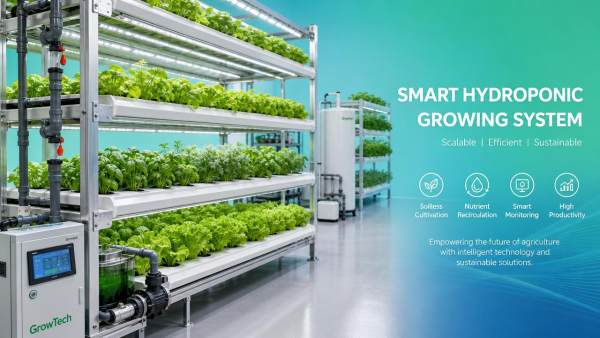
Investing in hydroponic growing systems commercial buyers can trust requires more than comparing price tags. For business evaluators, the real decision lies in technical performance, scalability, compliance, labor efficiency, and long-term operating cost. This guide outlines the key specifications that matter before capital is committed, helping institutional buyers identify systems that align with production goals and procurement standards.
In institutional agriculture, a poorly matched system can lock an operator into excessive utility consumption, unstable crop output, and avoidable retrofit costs within 12 to 24 months. By contrast, a well-specified commercial hydroponic platform supports predictable throughput, cleaner audit trails, and easier expansion from one greenhouse zone to multiple production blocks.
For procurement teams, the challenge is not simply choosing between NFT, DWC, drip irrigation, or vertical rack formats. It is determining which technical package delivers the right balance of yield density, climate resilience, nutrient control, maintenance burden, and supplier support for the intended crop and operating model.
Why Specification Comparison Matters in Commercial Hydroponics
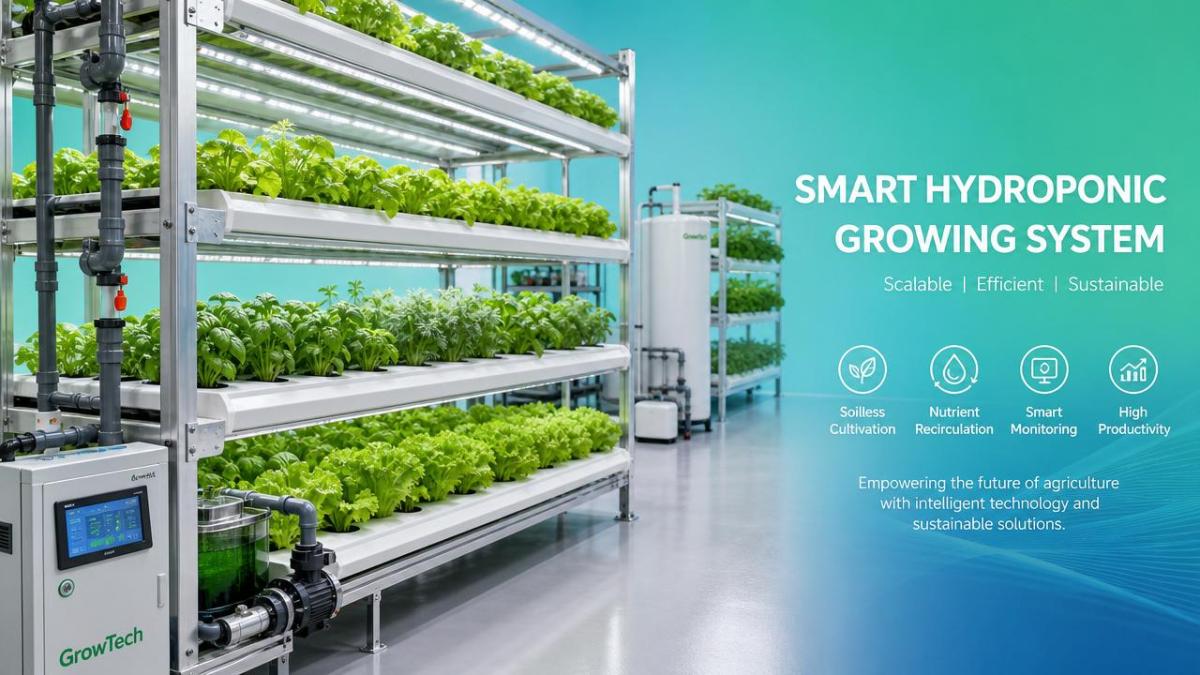
When evaluating hydroponic growing systems commercial operators plan to use at scale, specification gaps can affect every cost center. A system that appears competitive on upfront capital expenditure may later require 15% to 30% more labor hours, higher water turnover, or more frequent pump and sensor replacement.
Business evaluators should therefore compare systems across at least 4 dimensions: production efficiency, infrastructure compatibility, compliance readiness, and serviceability. These factors are especially relevant for greenhouse owners, controlled-environment agriculture investors, food processors with captive produce lines, and institutional buyers seeking year-round supply reliability.
The Cost of Under-Specification
Under-specification often shows up in reservoir sizing, structural loading, and automation coverage. For example, a nutrient delivery loop sized for 8 irrigation zones may become unstable when expanded to 12 zones without upgraded pumps, filtration, and control logic. That can increase crop variability and reduce harvest consistency over a 6- to 8-week cycle.
Structural limits matter as well. Vertical or layered hydroponic installations can impose significant live loads once water, channels, trays, and mature biomass are added. Buyers should ask for frame material data, corrosion resistance details, and safe loading thresholds in kilograms per square meter rather than relying on generic durability claims.
Core Questions Before Supplier Shortlisting
- What crop types is the system optimized for: leafy greens, herbs, vine crops, or propagation?
- What is the designed operating range for pH, EC, flow rate, and water temperature?
- How many labor touchpoints per day are still manual after installation?
- Can the system scale by 25% to 50% without replacing core infrastructure?
- What spare parts and technical support response times are contractually available?
Key Technical Specs to Compare Before Investment
The most important hydroponic growing systems commercial buyers compare are not always the most visible. Tray count and rack height matter, but control precision, water movement design, sanitation access, and redundancy planning often determine whether a system performs reliably over 3 to 5 years.
1. Crop Throughput and Plant Density
Buyers should request expected plant-site density per square meter, target crop cycle duration, and projected harvest weight per cycle. Leafy greens systems may emphasize high-density channels and 25- to 35-day turns, while fruiting crops typically require lower density, more root volume, and stronger trellis integration.
If two systems occupy the same footprint but one delivers 18% more usable plant sites with equivalent airflow and service clearance, that difference can materially change revenue per square meter. Density, however, should never be assessed without factoring disease pressure and access for cleaning.
2. Nutrient Delivery Precision
A commercial system should define operating ranges for EC, typically around 1.2 to 3.0 mS/cm depending on crop, and pH, often between 5.5 and 6.5. It should also specify dosing accuracy, mixing uniformity, and recirculation response time across all production zones.
Look for details on injector type, sensor calibration interval, filtration stages, and alarm thresholds. If a supplier cannot explain how nutrient imbalance is detected within 5 to 10 minutes of a deviation, the automation layer may be too basic for commercial risk control.
3. Water Use, Oxygenation, and Biosecurity
Water efficiency is a selling point in most hydroponic growing systems commercial projects, but buyers should ask for quantified replenishment rates, drain recovery logic, and disinfection options. UV, ozone, and filtration each serve different purposes, and their suitability depends on crop sensitivity and recirculation strategy.
Dissolved oxygen and water temperature also affect root health. In many facilities, nutrient solution temperatures above 22°C to 24°C can increase pathogen risk. Systems with poor circulation or limited reservoir turnover may perform well in pilot setups but struggle under summer load conditions.
The table below shows how procurement teams can compare several high-impact specifications across common system formats used in controlled-environment agriculture.
The main takeaway is that commercial comparisons should convert supplier claims into measurable operating parameters. If a quotation omits load thresholds, dosing tolerances, or sanitation design, procurement teams are not yet comparing complete systems on an equal basis.
4. Automation, Monitoring, and Data Visibility
Automation does not need to mean full autonomy, but commercial buyers should know exactly which tasks remain manual. Typical monitored points include reservoir level, EC, pH, water temperature, pump status, and irrigation timing. Higher-tier systems may add remote alerts, historical trend logs, and zone-by-zone control.
For multi-site operators or procurement managers reporting to finance teams, data visibility matters almost as much as agronomic performance. If performance data can be exported weekly or monthly, it becomes easier to benchmark crop output, labor input, and utility cost against the original investment case.
5. Materials, Cleanability, and Service Life
Commercial hydroponic equipment should use materials suited to high-humidity, nutrient-exposed environments. Stainless steel, food-grade polymers, UV-stable components, and corrosion-resistant fittings generally outperform low-cost alternatives over long production cycles. Ask for cleaning protocols and expected replacement intervals for pumps, hoses, emitters, and seals.
A system that requires partial disassembly every 7 days for sanitation may be unsuitable for large operations if labor availability is tight. Conversely, modular channels, tool-free access panels, and segregated drainage paths can significantly reduce downtime during cleaning and maintenance windows.
Operational and Commercial Evaluation Criteria
Beyond engineering specifications, hydroponic growing systems commercial procurement depends on how the installation will function inside a real operating business. Evaluators should examine utility integration, workforce skill requirements, supplier accountability, and the total cost profile across the first 36 months.
Infrastructure Fit and Utility Demand
The system must fit available power quality, water source consistency, drainage design, and climate infrastructure. A technically advanced grow system may still be a poor choice if the site cannot support its electrical load, chilled water requirement, or backup power expectations during outage scenarios lasting 2 to 6 hours.
Procurement teams should request a pre-installation checklist covering inlet water quality, pressure range, floor leveling tolerance, ambient temperature envelope, and integration with greenhouse controls. These details reduce commissioning delays and change orders that often emerge late in the project cycle.
Labor Model and Training Requirement
Some systems reduce planting, inspection, and harvest handling steps better than others. Buyers should compare daily labor routines across seeding transfer, nutrient correction, channel cleaning, scouting, and harvesting. Even a reduction of 1 to 2 labor minutes per square meter per day can be meaningful at scale.
Training depth matters as well. A supplier that provides 2 to 3 days of commissioning training, SOP documentation, and remote troubleshooting support typically lowers startup risk. Without structured training, the learning curve can lead to early nutrient mistakes, sanitation lapses, and lower crop uniformity.
The following matrix helps business evaluators connect technical features to commercial decision criteria rather than reviewing equipment in isolation.
This kind of side-by-side review prevents short-term capex bias. In many commercial purchases, the most cost-effective system over 36 months is not the cheapest quotation at day 1, but the one with better uptime, lower correction labor, and clearer support commitments.
Compliance, Documentation, and Risk Controls
Institutional buyers increasingly require transparent documentation for materials, sanitation procedures, maintenance schedules, and water management logic. While hydroponic equipment does not follow the same framework as pharmaceutical APIs, the procurement discipline is similar: traceability, repeatability, and documented control points reduce operational ambiguity.
At minimum, evaluators should ask for installation drawings, operating manuals, cleaning procedures, parts lists, and warranty scope. For larger deployments, it is prudent to define acceptance criteria in 3 stages: mechanical completion, control system verification, and first-cycle production performance.
Common Procurement Mistakes
- Choosing based on footprint capacity alone without checking labor and sanitation access.
- Assuming all recirculating systems have equivalent biosecurity performance.
- Ignoring spare-part lead times for pumps, probes, valves, and controllers.
- Overlooking whether expansion requires replacement of the central dosing skid.
- Accepting generic warranty language without response-time definitions.
A Practical Shortlist Framework for Business Evaluators
A structured review process helps teams compare hydroponic growing systems commercial suppliers on a defensible basis. Instead of moving from brochure to price negotiation, buyers should score each offer against operating requirements, technical risk, and implementation readiness.
Recommended 5-Step Evaluation Process
- Define crop mix, annual volume target, and available production footprint.
- Map site utilities, climate control capacity, and staffing limitations.
- Issue a technical requirement sheet covering at least 10 specification items.
- Compare quotations using 3-year operating cost and service risk, not capex alone.
- Validate commissioning scope, training plan, and acceptance criteria before award.
This process is especially effective for organizations that need internal approval from finance, operations, and quality teams. A documented scoring model also creates a clearer audit trail, which is valuable when projects involve phased capital deployment or cross-border equipment sourcing.
What Strong Supplier Proposals Usually Include
The strongest proposals are specific. They normally include utility assumptions, crop suitability boundaries, equipment lists, preventive maintenance expectations, recommended consumables, and a commissioning timeline with milestones. They also define what is included in base scope versus optional automation, sanitation, or climate integration packages.
For commercial buyers, clarity is a risk-reduction tool. If one proposal explains expected probe calibration every 2 to 4 weeks, spare pump availability, and operator training hours, while another relies on broad claims, the first supplier is usually easier to evaluate and contract with confidence.
Commercial hydroponic investment works best when technical and commercial criteria are reviewed together. The right decision depends on measurable crop throughput, stable nutrient management, cleanability, expansion logic, labor efficiency, and documented supplier support. For business evaluators, these specifications form the real basis of long-term value, not the initial quotation alone.
If your team is assessing hydroponic growing systems commercial projects for greenhouse expansion, controlled-environment farming, or institutional produce supply, a structured comparison can shorten approval cycles and reduce execution risk. Contact us to discuss specification benchmarking, request a tailored evaluation framework, or explore more solutions for commercial growing system procurement.
Related Intelligence
- Smart GreenhouseGreenhouse Equipment for Vertical Farming: Choosing Lighting and VentilationChoose greenhouse equipment for vertical farming with confidence. Compare lighting, airflow, and moisture control to improve crop uniformity and manage costs. Explore the guide.
- Smart GreenhouseSelecting Greenhouse Propagation Equipment for Hot, Humid Southeast Asian NurseriesGreenhouse propagation equipment Southeast Asia: discover how to select resilient irrigation, ventilation, benches, and automation for hot, humid nurseries.
- Smart GreenhouseWhat Are the Biggest Challenges in Agri-Tech Adoption in 2026?What are the biggest challenges in agri tech adoption for 2026? Explore cost, data, connectivity, skills, compliance, and ROI barriers.
The Morning Broadsheet
Daily chemical briefings, market shifts, and peer-reviewed summaries delivered to your terminal.
