

The Authority in Global Agricultural Chemistry & Bio-Resources
Forestry Equipment Types Explained: Which Machines Fit Harvesting and Land Clearing
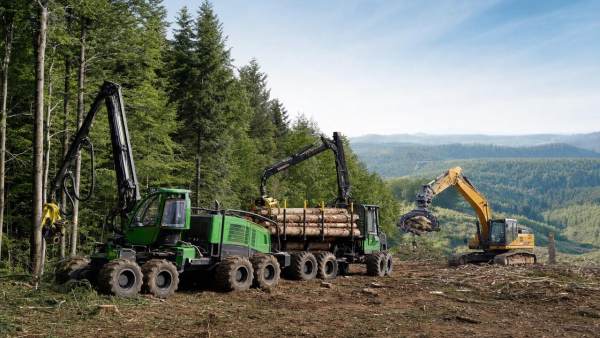
Forestry equipment choices start with the job, not the machine list
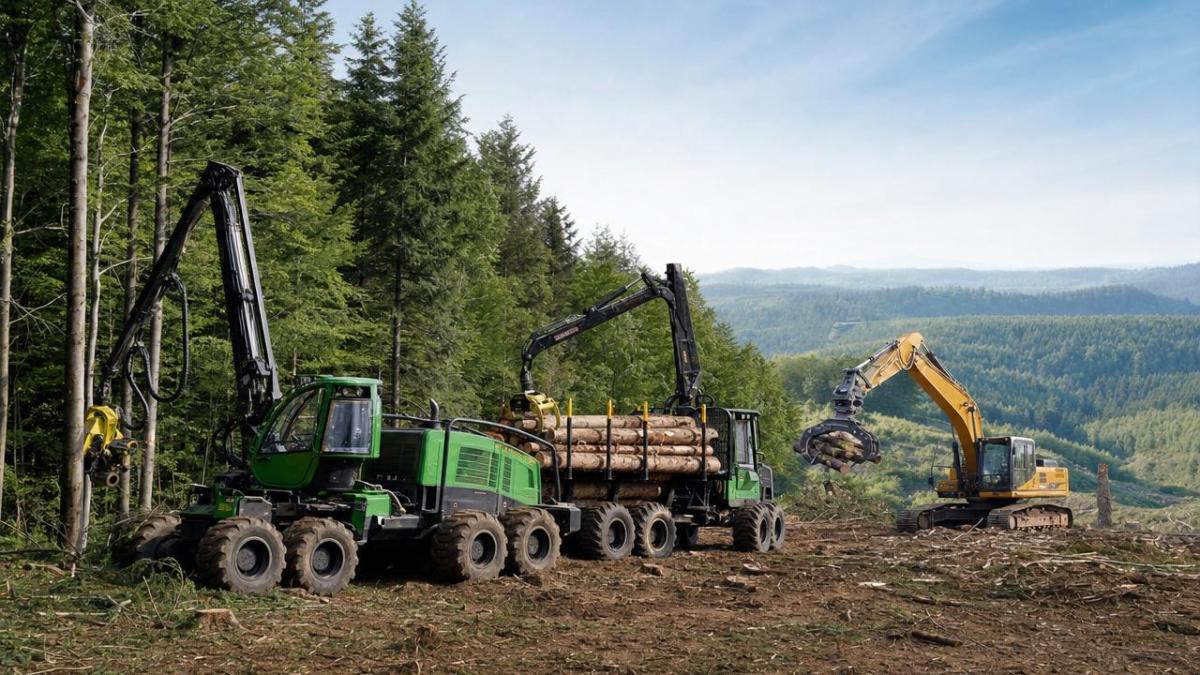
Choosing forestry equipment is rarely about finding the biggest machine. It is about matching output, terrain, safety, and recovery goals to the site in front of you.
That matters in both timber harvesting and land clearing. A setup that performs well in dense plantation thinning may fail on rocky right-of-way work.
In practical terms, the wrong forestry equipment drives higher fuel use, more soil disturbance, longer cycle times, and avoidable maintenance stops.
Across primary industries, machine selection is also becoming more data-driven. Technical documentation, operator protection, emissions compliance, and attachment compatibility now carry more weight.
That editorial lens is familiar within AgriChem Chronicle’s coverage of agricultural and forestry machinery. The same discipline used in regulated supply chains applies here: verify capability against conditions.
Why different forestry equipment is needed for different field conditions
Two sites may both be labeled forest work, yet require very different machine combinations. The main reason is that objectives change before machine specifications do.
One project may prioritize clean stem recovery for sawlogs. Another may focus on fast biomass reduction, access road opening, or vegetation control near utilities.
Terrain also changes the answer. Steep grades, wet soils, tight stand spacing, and mixed timber diameters all alter which forestry equipment can work efficiently.
Transport logistics matter too. A machine fleet that is ideal on a large industrial tract may be inefficient on smaller parcels requiring frequent mobilization.
A useful way to judge forestry equipment is to ask four questions early:
- Is the site focused on harvesting value or removing cover quickly?
- Will trees be processed at the stump, roadside, or landing?
- How much traction, reach, and guarding are required?
- What level of finish is expected after the work is complete?
In harvesting work, production flow matters more than single-machine power
In high-volume harvesting, forestry equipment should be viewed as a system. Felling speed means little if extraction and processing cannot keep pace.
When feller bunchers make sense
Feller bunchers are often chosen for fast directional cutting in stands with enough room for bunching and downstream skidding or forwarding.
They fit operations where stem handling speed is more important than in-head processing. Broad tracts, moderate slopes, and repetitive cutting patterns suit them well.
Where harvesters outperform simpler cutting systems
Harvesters become more attractive when delimbing, measuring, and bucking accuracy matter at the stump. They reduce extra handling and improve log sorting consistency.
That can be important in mixed-spec timber, export-sensitive supply chains, or sites where landing space is limited. More processing upstream can simplify the rest of the flow.
Skidders and forwarders solve different extraction problems
Skidders drag stems, which can work well in tougher ground and larger-tree operations. Forwarders carry processed logs, reducing soil disturbance and product contamination.
The difference sounds basic, but it changes the whole site plan. If surface protection or selective harvesting is important, forwarders often deserve closer consideration.
Land clearing usually rewards attachment flexibility and material handling control
Land clearing looks similar from a distance, yet project expectations vary widely. Some jobs need a clean development pad. Others need corridor access with minimal disturbance.
That is why forestry equipment for clearing often centers on excavators, dozers, mulchers, and purpose-built carriers with the right guarding and hydraulic capacity.
Mulchers fit reduction-focused clearing
Mulchers are effective when the goal is to reduce brush, small timber, and residue in place. They are common in firebreak work, easement upkeep, and pre-construction clearing.
The best fit depends on material size and finish expectations. Fine mulch coverage is useful in some erosion-sensitive areas, but not every site needs that level of processing.
Excavators with forestry attachments suit mixed tasks
An excavator with a shear, grapple, rake, or mulching head can be more versatile than dedicated forestry equipment on projects with uncertain ground conditions.
This matters on utility corridors and redevelopment sites. The work may shift from tree removal to stump handling, sorting, loading, and debris control in the same day.
Dozers still matter when finish grade is part of the objective
Dozers are not always the primary cutting tool, but they remain essential where pushing, piling, grading, and access creation are central to the scope.
If forestry equipment is selected without considering the final ground condition, rework usually follows. Clearing efficiency alone does not finish a site.
Different scenarios change what should be compared
The same forestry equipment can look cost-effective on paper and still be the wrong choice operationally. Comparing scenarios side by side makes that clearer.
This is where forestry equipment evaluation becomes more than a spec-sheet exercise. Site purpose drives the machine mix more than brand category alone.
The most common forestry equipment mistakes happen before the machine arrives
A frequent mistake is choosing forestry equipment by horsepower alone. Power helps, but traction, guarding, cooling, and hydraulic flow often determine real performance.
Another mistake is treating harvesting and clearing as interchangeable. They overlap, but residue handling, finish expectations, and value recovery are not the same.
Undercarriage choice is also underestimated. Wheeled forestry equipment may travel faster, while tracked machines often provide better flotation and slope confidence.
Attachment compatibility deserves closer review than it often gets. Hydraulic demand, pin geometry, guarding, and control integration can turn a flexible plan into a costly retrofit.
Compliance can be missed as well. Noise limits, fire suppression requirements, operator protection standards, and emissions rules may affect where certain forestry equipment can work.
A practical way to match forestry equipment to site objectives
In actual planning, a short decision framework is more useful than a long generic checklist. The aim is to eliminate poor fits early.
- Define the output first: merchantable logs, biomass, cleared access, or finished ground.
- Map tree size range, stem density, and residue volume across the site.
- Check slope, soil bearing pressure, and seasonal moisture risk.
- Confirm whether forestry equipment must process, extract, stack, load, or all four.
- Review service access, parts support, and operator familiarity before finalizing the fleet.
Where data is available, compare expected cycle times rather than only daily production claims. Reliable forestry equipment planning is built on sequence, not isolated peak numbers.
It is also worth checking how the site may evolve. A machine selected for immediate clearing may later need to support residue handling or maintenance passes.
What to clarify before moving from comparison to deployment
Before committing to forestry equipment, clarify the conditions that change ownership and operating cost over time, not just entry price.
That includes wear part life, hose routing protection, cooling performance in dusty conditions, and the ease of switching attachments between tasks.
For harvesting fleets, the key question is whether each machine supports the next stage without creating bottlenecks. For clearing fleets, the question is whether one carrier can cover multiple tasks safely.
The most effective forestry equipment decisions usually come from documenting site conditions, comparing machine roles, and testing assumptions against maintenance realities.
A sensible next step is to build a simple site matrix covering terrain, material size, desired finish, transport limits, and compliance requirements. That makes machine selection far more defensible.
Related Intelligence
- Forestry EquipmentChoosing Compact Forestry Machinery for Small Woodlots and Narrow AccessChoose compact forestry machinery that fits small woodlots and narrow access. Compare payload, turning clearance, safety, and running costs to find the right machine for your site.
- Forestry EquipmentAre PTO driven wood chipper vibration levels within ISO 5349-1 hand-arm exposure limits for forestry crews?PTO driven wood chipper vibration often exceeds ISO 5349-1 limits—discover real-world data, actionable mitigation strategies, and how to protect forestry crews now.
- Forestry EquipmentSelecting Timber Processing Equipment for Middle East Heat, Dust, and Wood SpeciesTimber processing equipment for Middle East operations: discover how to select heat-resistant, dust-protected, species-matched systems for reliable output and lower downtime.
The Morning Broadsheet
Daily chemical briefings, market shifts, and peer-reviewed summaries delivered to your terminal.
