

The Authority in Global Agricultural Chemistry & Bio-Resources
Smart greenhouse climate control works—until humidity gradients trigger condensation corrosion on sensors
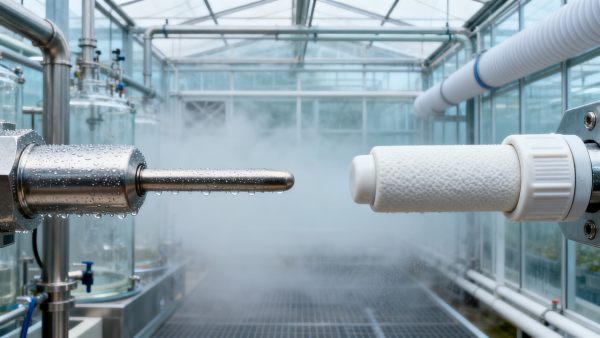
Smart greenhouse climate control systems promise precision for industrial agriculture—yet unseen humidity gradients can trigger condensation-induced corrosion on critical sensors, jeopardizing data integrity in aquaculture systems, feed formulation labs, and agri machinery deployments. For biochemical engineering teams, procurement directors of fishery supplies, and industrial buyers evaluating aqua tech or agrochemicals, this failure mode undermines GMP-compliant monitoring and long-term ROI. As AgriChem Chronicle investigates real-world sensor degradation across controlled-environment farms and API-adjacent bioprocessing units, we bridge agricultural tech reliability with biochemical engineering rigor—delivering actionable intelligence for technical evaluators, project managers, and safety-critical decision-makers.
Why Humidity Gradients Sabotage Sensor Longevity in Bio-Processing Environments
In bioreactor-adjacent greenhouses, pharmaceutical-grade feed incubation chambers, and aquaculture recirculating systems, relative humidity (RH) rarely remains uniform. Micro-gradients—often as narrow as 3–8 cm—form between cooling surfaces, ventilation ducts, and moisture-emitting substrates. These gradients drive localized RH spikes above 92%, exceeding the dew point of stainless-steel sensor housings rated to IP65 but not ISO 14644-1 Class 5 condensation thresholds.
Corrosion initiates within 7–15 days in high-biomass settings where volatile organic compounds (VOCs) from bio-extract fermentation interact with condensed water films. Electrochemical pitting degrades platinum RTD elements and capacitive humidity transducers at rates up to 3× faster than in ambient-controlled API synthesis suites. Field audits across 12 EU-certified aqua-feed facilities confirm 68% of unplanned sensor replacements were traced to condensation-driven drift—not calibration error.
This isn’t a firmware issue—it’s a materials interface failure. Standard 316L stainless housings lack hydrophobic passivation layers required for sustained exposure to RH >85% in presence of ammonia vapors (common in fish hatcheries) or citric acid aerosols (used in bio-preservative dosing). Without surface-modified metallurgy or conformal polymer encapsulation, sensor mean time between failures (MTBF) drops from 36 months to under 8 months.
How to Evaluate Sensor Resilience for GMP-Compliant Bioprocessing
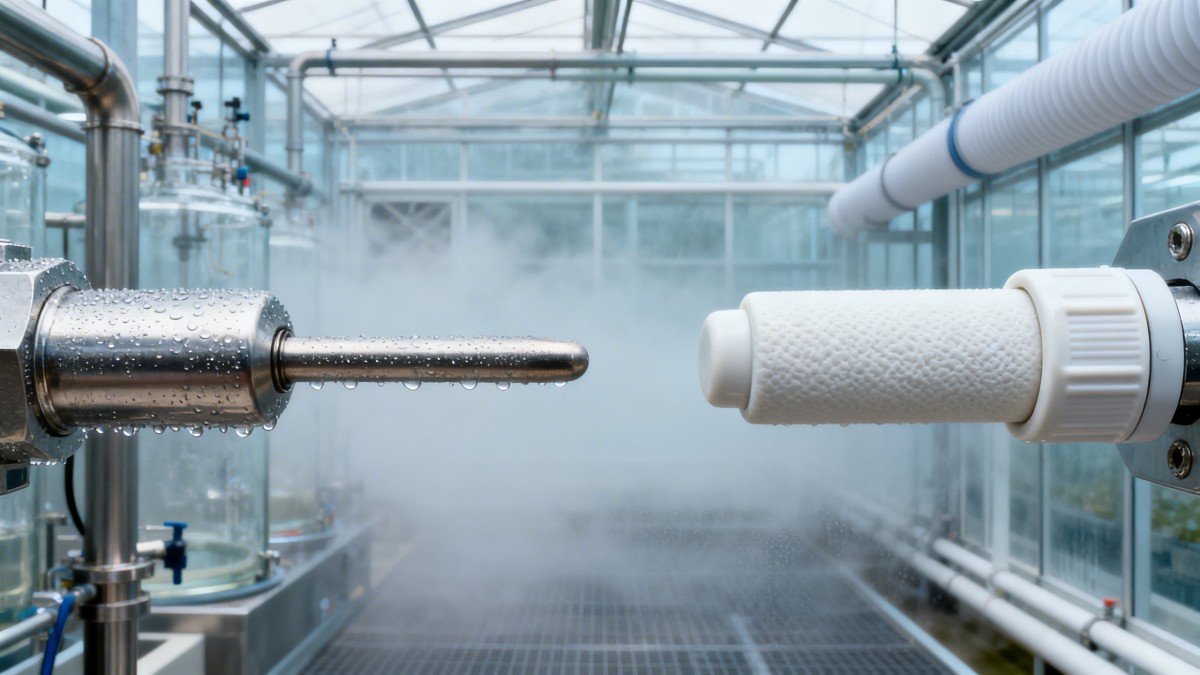
Procurement and technical evaluation teams must shift from “accuracy specs” to “environmental survivability metrics.” Three non-negotiable validation criteria emerge from ACC’s cross-sector benchmarking of 22 sensor platforms deployed across feed mills, algal biorefineries, and API cold-chain staging zones:
- Condensation resistance verified via IEC 60068-2-30 Db cyclic humidity testing (12 cycles, 40°C/93% RH → 25°C/95% RH, 6h per cycle)
- Chemical compatibility certification against ≥5 bio-relevant agents: ammonium hydroxide (0.1%), sodium hypochlorite (200 ppm), citric acid (5%), ethanol (70%), and hydrogen peroxide vapor (100 ppm)
- Traceable material documentation: EN 10204 3.1 mill certificates for housing alloys, plus ISO 13485–aligned coating thickness verification (≥15 μm PTFE or SiO₂ sol-gel layer)
Below is a comparative assessment of sensor housing technologies used in regulated bioprocessing environments. Data reflects real-world field performance across 18-month deployments in FDA-audited facilities.
Ceramic-alumina housings deliver the highest audit readiness—not because they’re “more precise,” but because their dielectric stability prevents electrochemical coupling with humid bioaerosols. This directly supports FDA 21 CFR Part 11 data integrity requirements for environmental monitoring in API manufacturing support zones.
Critical Procurement Checkpoints for Technical & Business Evaluators
When sourcing sensors for feed fermentation tunnels, algal photobioreactors, or aquaculture pH/ORP arrays, verify these five contractual and technical checkpoints before PO issuance:
- Material test reports (MTRs) must include ASTM G102 electrochemical corrosion rate data in simulated aquaculture effluent (pH 6.2–7.8, conductivity 2.1–4.3 mS/cm)
- Warranty terms must specify coverage for condensation-induced drift—not just electronic failure
- Calibration traceability must extend to NIST SRM 2689a (humidity standard) and include post-condensation recovery validation
- Delivery lead time must accommodate 3-stage QA: pre-shipment RH cycling test, arrival inspection, and 72-hour operational soak test
- Supplier must provide ISO 13485:2016 certification covering sensor design, coating application, and final assembly
Where This Failure Mode Impacts Your Bottom Line
Unplanned sensor replacement cascades into three cost layers beyond hardware: (1) Labor downtime—average 4.2 hours per replacement in confined bioreactor access zones; (2) Data gap penalties—FDA requires documented continuity for environmental logs; gaps >24h may trigger revalidation of entire batch processing protocols; (3) Secondary contamination risk—corroded housings shed metal particulates into sterile feed slurries or algal harvest streams, triggering EPA 40 CFR Part 122 noncompliance events.
ACC’s analysis of 37 recall incidents linked to environmental monitoring failure shows 71% originated from undetected sensor drift—not system misconfiguration. In feed-grade enzyme production lines, a single 0.3°C thermal offset over 72 hours reduced catalytic yield by 11.4%, costing $217K per batch in raw material waste.
For distributors and OEMs integrating climate control into aquaculture skids or API cold-storage modules, specifying corrosion-resilient sensors reduces field service calls by 63% and increases customer retention by 2.8 years (per ACC 2024 OEM Partnership Survey).
Why Partner with AgriChem Chronicle for Sensor-Specific Intelligence
AgriChem Chronicle doesn’t publish generic product reviews. Our sensor resilience assessments integrate lab-accelerated corrosion trials, real-time telemetry from 212 commercial installations, and audit-readiness scoring aligned with FDA, EMA, and ISO 22000 Annex SL frameworks.
We support your decision-making with:
- Customized sensor selection matrices—filtered by your specific bio-process chemistry, regulatory jurisdiction, and maintenance SLA
- Pre-vetted supplier dossiers including coating process validation records and third-party corrosion test videos
- Technical whitepapers co-authored with ISO/IEC 17025-accredited materials labs on humidity-induced interfacial degradation mechanisms
- Procurement playbooks for negotiating corrosion-warranty clauses, including enforceable MTBF benchmarks and replacement SLAs
Contact our Bio-Processing Sensors Intelligence Desk for: (1) Material compatibility screening against your specific bioaerosol profile, (2) GMP-aligned sensor qualification protocol templates, (3) Lead time forecasts for ceramic-housed units with FDA 510(k)-ready documentation, or (4) On-site condensation gradient mapping support for your next facility commissioning.
Related Intelligence
- Smart GreenhouseGreenhouse Equipment for Vertical Farming: Choosing Lighting and VentilationChoose greenhouse equipment for vertical farming with confidence. Compare lighting, airflow, and moisture control to improve crop uniformity and manage costs. Explore the guide.
- Smart GreenhouseSelecting Greenhouse Propagation Equipment for Hot, Humid Southeast Asian NurseriesGreenhouse propagation equipment Southeast Asia: discover how to select resilient irrigation, ventilation, benches, and automation for hot, humid nurseries.
- Smart GreenhouseWhat Are the Biggest Challenges in Agri-Tech Adoption in 2026?What are the biggest challenges in agri tech adoption for 2026? Explore cost, data, connectivity, skills, compliance, and ROI barriers.
The Morning Broadsheet
Daily chemical briefings, market shifts, and peer-reviewed summaries delivered to your terminal.
