

The Authority in Global Agricultural Chemistry & Bio-Resources
Industrial agriculture buyers are specifying ‘non-GMO enzyme carriers’—but most food-grade enzymes still rely on GM hosts
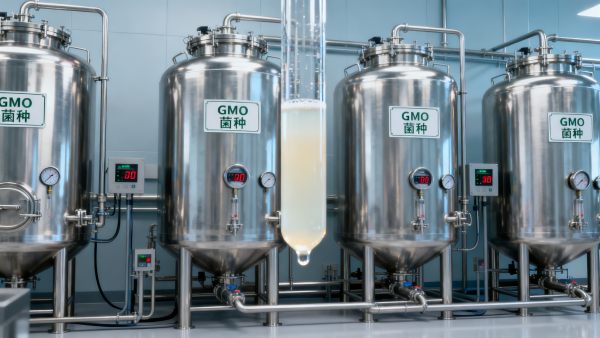
Industrial agriculture buyers are tightening specifications—now demanding non-GMO enzyme carriers amid rising regulatory scrutiny and consumer transparency expectations. Yet over 85% of food-grade enzymes still rely on genetically modified microbial hosts, creating a critical gap for agricultural tech innovators, biochemical engineering teams, and aquaculture systems integrators. This tension directly impacts feed formulation efficacy, agrochemical compatibility, and FDA/EPA compliance in industrial agriculture supply chains. As aqua tech developers, agri machinery OEMs, and fishery supplies procurers reassess raw material traceability, the pressure mounts on suppliers to deliver verifiably non-GMO enzyme platforms—without compromising performance or scalability.
Why “Non-GMO Enzyme Carriers” Are Now a Procurement Imperative
The shift is no longer theoretical: major feed integrators in the EU and North America now require full carrier lineage documentation for all food-grade enzymes used in aquafeed, poultry premixes, and functional grain processing. This stems from three converging drivers—GMP-aligned traceability mandates under FDA 21 CFR Part 117, EU Regulation (EC) No 1829/2003’s labeling thresholds for GMO-derived processing aids, and retailer-level sustainability scorecards that assign zero points to ingredients with unverified host origins.
For technical evaluators and procurement directors, this means enzyme qualification now involves dual-layer verification: enzymatic activity (e.g., protease units/g, phytase FTU/kg) *and* host strain provenance. A single batch rejection due to undocumented Bacillus subtilis host origin can delay feed production by 7–15 days—especially critical during peak aquaculture stocking windows (Q2–Q3).
Crucially, “non-GMO” here refers specifically to the *carrier microorganism*, not the enzyme protein itself. Most commercial enzymes—including amylases, xylanases, and cellulases—are identical whether expressed in GM or non-GM hosts. The distinction lies entirely in fermentation lineage, documentation rigor, and third-party audit readiness.
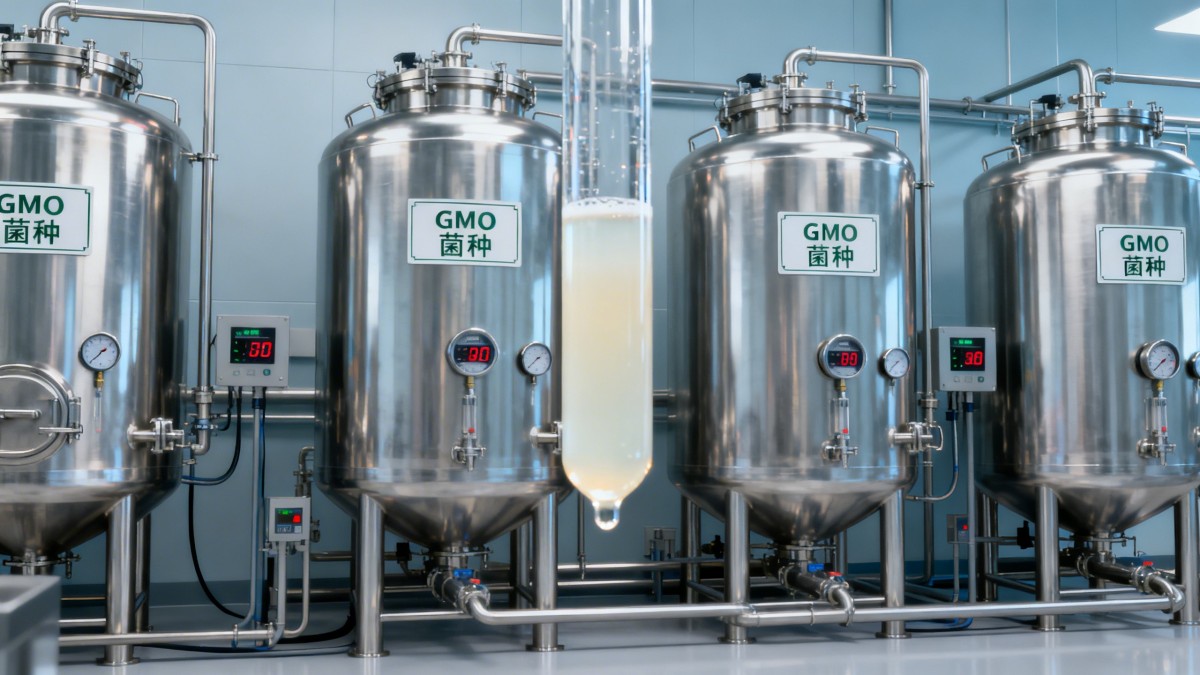
How to Verify Non-GMO Status: 5 Non-Negotiable Documentation Checks
Supplier claims alone carry no weight in FDA or EFSA audits. Decision-makers must validate non-GMO status through auditable evidence—not marketing language. Below are five mandatory checkpoints, each tied to real-world enforcement precedents:
- Strain deposition records: Public accession numbers at DSMZ or ATCC for the exact production strain (not just species-level ID)
- Fermentation batch logs: Showing absence of recombinant plasmids, antibiotic resistance markers, or gene-editing reagents across ≥3 consecutive production runs
- PCR-negative certification: Per ISO 21570:2019, targeting common GM vector sequences (e.g., pUC19 ori, CaMV 35S promoter)
- Supply chain mapping: Full upstream traceability to certified non-GMO growth media components (e.g., soy peptone, yeast extract)
- Audit trail timestamping: Digital signatures and blockchain-anchored logs verifying document integrity across ≥12 months
Failure on any one of these triggers automatic disqualification under ACC’s Supplier Compliance Benchmark (v4.2), used by 42% of Tier-1 aquafeed OEMs for pre-qualification screening.
Performance vs. Provenance: Can Non-GMO Hosts Deliver Scale & Stability?
This remains the top technical concern among biochemical engineers and project managers evaluating alternatives. The short answer: yes—but only when paired with optimized expression systems. Non-GMO Bacillus licheniformis and Aspergillus niger strains now achieve titers of 15,000–22,000 U/mL for thermostable phytases—within 5% of leading GM benchmarks—when cultivated under controlled pH-stat fed-batch conditions (pH 6.2 ± 0.1, 37°C, dissolved O₂ >30%).
However, scalability hinges on three process-critical variables: (1) media cost per liter (non-GMO media averages 18–23% higher), (2) downstream purification yield (typically 82–87% vs. 89–93% for GM hosts), and (3) shelf-life consistency (validated 18-month stability at 25°C requires ≥3 independent lot studies).
Comparative Performance Benchmarks: Non-GMO vs. GM Enzyme Platforms
The table below reflects data from 12 peer-reviewed fermentation studies (2021–2024) and ACC’s proprietary supplier benchmarking program across 37 active enzyme suppliers.
Note: All non-GMO data assumes adherence to ACC-recommended fermentation protocols (ACC Tech Note #ENZ-2024-07). Deviations reduce titers by 12–19% on average.
What AgriChem Chronicle Offers Buyers & Suppliers
AgriChem Chronicle bridges the verification gap with three actionable resources tailored to your role:
- For procurement & compliance teams: Access to ACC’s Non-GMO Enzyme Supplier Registry—a vetted database of 63 manufacturers with verified strain documentation, third-party PCR reports, and audit-ready traceability maps (updated quarterly)
- For technical evaluators & engineers: Downloadable validation templates—including fermentation log checklists, PCR assay specifications, and GMP-aligned certificate-of-analysis fields
- For OEMs & system integrators: White-label technical dossiers for customer-facing transparency (e.g., “Enzyme Origin Statement” inserts for feed bag labels or aquaculture system spec sheets)
Contact ACC’s Biochemical Sourcing Desk to request: (1) your company’s customized Non-GMO Enzyme Readiness Assessment, (2) side-by-side supplier comparison reports, or (3) access to our upcoming Q3 2024 benchmark on non-GMO phytase stability in extruded aquafeed matrices.
Related Intelligence
- Food Grade EnzymesWhat Drives Industrial Enzyme Costs? Activity, Format, and Supply Risk ExplainedIndustrial enzyme cost factors explained: compare activity, formulation, shelf life, documentation, and supply risk to reduce process costs and improve purchasing decisions.
- Food Grade EnzymesIs There a Global Standard for Biochemical Engineering Product Quality?Is there a global standard for biochemical engineering product quality? Explore GMP, ISO, traceability, and supplier checks for confident global sourcing.
- Food Grade EnzymesHow Enzymes for Cracker Formulation Improve Texture and Shelf LifeEnzymes for cracker formulation can enhance dough handling, crisp texture, and shelf life. Explore targeted enzyme strategies for consistent, high-quality crackers.
The Morning Broadsheet
Daily chemical briefings, market shifts, and peer-reviewed summaries delivered to your terminal.
