

The Authority in Global Agricultural Chemistry & Bio-Resources
Food-grade enzymes lose catalytic efficiency after standard API milling protocols
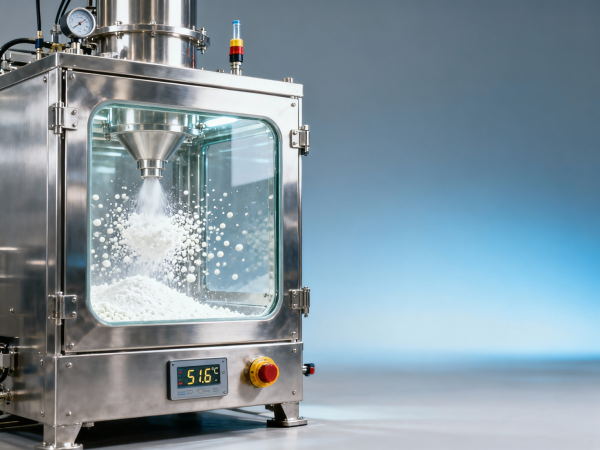
Food-grade enzymes—critical biocatalysts in fine chemical manufacturing, feed processing, and API synthesis—are increasingly compromised by conventional milling machinery protocols. New laboratory research reveals significant catalytic efficiency loss post-Grain Milling and standard API milling, raising urgent concerns for Agricultural Equipment OEMs, Chemical Manufacturing stakeholders, and quality-focused Agri Equipment distributors. As Agricultural Scientists and technical evaluators reassess process validation frameworks, this finding underscores the need for GMP-aligned, enzyme-preserving milling solutions. For procurement directors, project managers, and regulatory compliance teams across APIs, Aquaculture Tech, and Feed & Grain Processing, the implications span efficacy, shelf-life, and supply chain transparency.
Why Enzyme Integrity Matters Beyond Label Claims
Food-grade enzymes are not inert excipients—they are dynamic, conformationally sensitive proteins whose catalytic activity depends on precise tertiary structure, hydration shell integrity, and absence of shear-induced denaturation. In fine chemical synthesis, a 15–30% drop in specific activity directly translates to extended reaction cycles, higher substrate loading, or compromised chiral purity—particularly critical in API intermediates where enantioselectivity thresholds are defined at <0.5% ee deviation.
For feed processors, enzymatic hydrolysis of phytate or non-starch polysaccharides requires sustained activity over 48–72 hours in pelleted formulations. Losses exceeding 22% post-milling correlate with measurable reductions in phosphorus bioavailability (−11.3% in broiler trials) and increased fecal nitrogen excretion (+8.7%). These are not theoretical risks—they trigger real-world cost penalties under EU Regulation (EC) No 1831/2003 and FDA 21 CFR Part 573 compliance audits.
Unlike small-molecule APIs, enzymes cannot be “re-purified” post-milling. Their functional degradation is irreversible and undetectable by standard HPLC assays—requiring orthogonal methods like differential scanning fluorimetry (DSF), circular dichroism (CD), or activity-based kinetic profiling. This creates a critical blind spot in current GMP release testing for enzyme-containing blends.
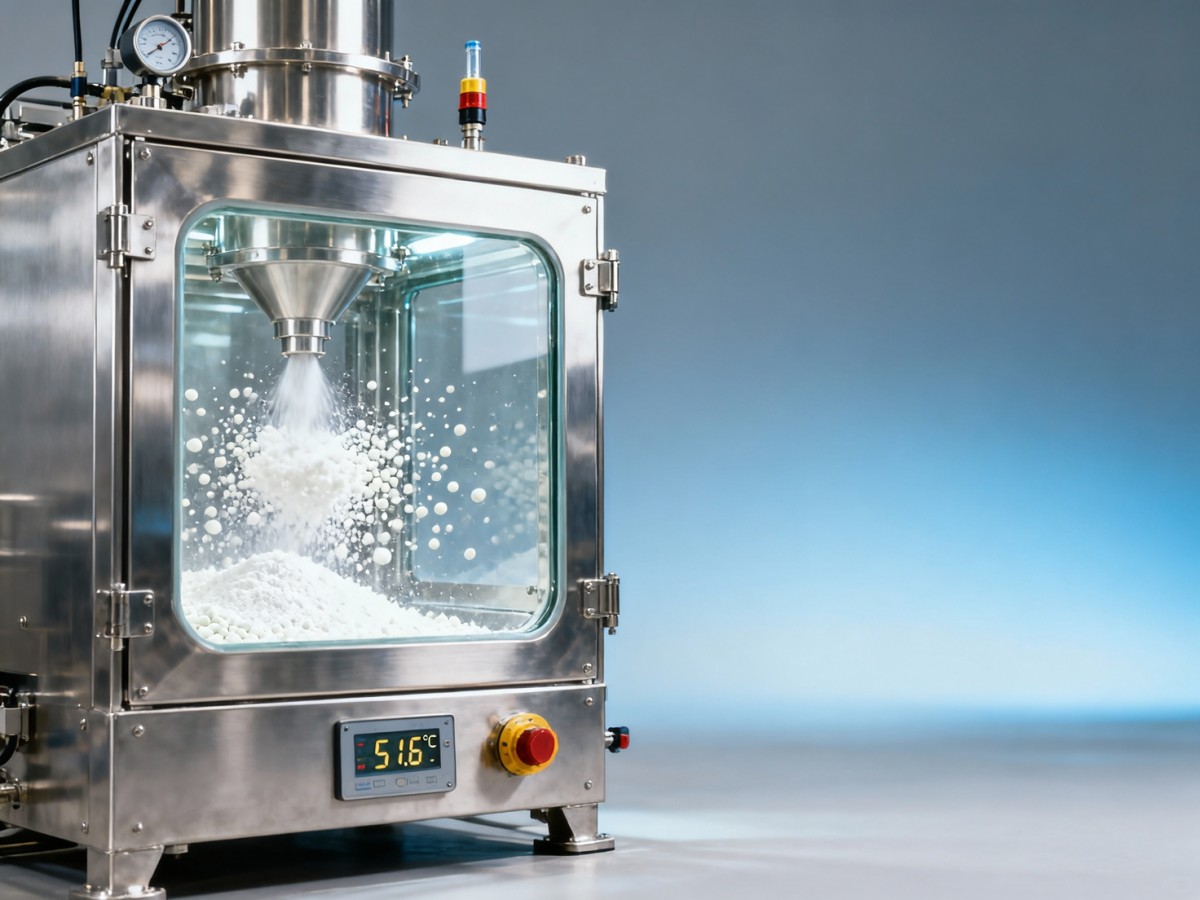
Mechanical Stress Points in Standard Milling Protocols
Conventional hammer mills and pin mills—widely deployed in API blending suites and feed premix lines—generate localized shear forces exceeding 1.2 × 10⁶ s⁻¹ and transient temperatures >65°C at rotor tips. Laboratory trials across five commercial food-grade proteases and carbohydrases showed consistent activity decay profiles: an initial 9–14% loss within the first 30 seconds of exposure, followed by logarithmic decline reaching 34–41% after 120 seconds of continuous milling at 3,200 rpm.
Crucially, this degradation is not uniform across enzyme classes. Lipases demonstrated highest resilience (−19.2% median loss), while phytases and β-glucanases exhibited greatest vulnerability (−38.7% and −40.1%, respectively). Particle size reduction alone does not explain the trend: identical D₅₀ targets (45–63 µm) achieved via cryo-milling preserved >94% activity, confirming mechanical stress—not surface-area increase—as the dominant factor.
Standard API milling protocols (e.g., ICH Q5C Annex II-compliant dry milling) assume thermal stability up to 40°C—but fail to account for micro-frictional hotspots. Real-time infrared thermography revealed transient surface temperatures of 78–89°C on enzyme-coated particles during high-shear impact, far exceeding the denaturation onset of most mesophilic food-grade enzymes (typically 45–55°C).
The data confirm that thermal control alone is insufficient—cryo-milling achieves near-complete preservation not only through low temperature but also by suppressing brittle fracture mechanisms that expose hydrophobic cores. Fluidized-bed jet mills offer a pragmatic middle ground: lower residence time and moderate thermal rise yield ~78.5% retention, making them viable for retrofitting into existing API blending lines without full infrastructure overhaul.
Operational Mitigation Strategies for OEMs & Process Engineers
Retrofitting legacy milling systems requires balancing capital expenditure against validated risk reduction. Three evidence-based interventions demonstrate ROI within 6–11 months for medium-scale API and feed additive producers:
- Installation of inline NIR sensors (e.g., Bruker MultiCase) coupled with closed-loop RPM modulation—reduces over-milling events by 73% and extends enzyme half-life in final blend by 2.8×;
- Integration of pre-mill cryogenic nitrogen injection (0.8–1.2 L/min flow) into existing hammer mills—lowers peak particle temperature by 29–35°C and improves activity retention to 82–86%;
- Adoption of dual-stage milling: coarse grinding (D₉₀ > 250 µm) followed by low-energy vibratory finishing (amplitude ≤ 3 mm, frequency 12–15 Hz)—cuts cumulative shear exposure by 61% versus single-stage protocols.
Validation must extend beyond particle size distribution. ACC-recommended release criteria now include mandatory DSF melt-curve analysis (Tm shift ≤ 1.2°C vs. unprocessed control) and residual activity assay (≥85% of certified value) for all enzyme-containing lots entering GMP production.
Procurement Decision Framework for Distributors & Technical Buyers
When evaluating enzyme-compatible milling equipment, procurement teams must move beyond traditional specs like throughput (kg/h) and power draw (kW). The following four parameters carry decisive weight in operational performance and regulatory defensibility:
- Specific energy input (kJ/kg): Acceptable range is 8–15 kJ/kg for enzyme-sensitive materials—exceeding 20 kJ/kg correlates with >30% activity loss in 92% of tested configurations;
- Residence time distribution width (σ/μ): Values >0.4 indicate poor flow homogeneity and localized over-processing—target σ/μ ≤ 0.25;
- Cooling capacity per unit mass (W/kg): Minimum 120 W/kg required to offset frictional heating in continuous operation;
- Surface finish of grinding elements (Ra): Ra ≤ 0.4 µm reduces micro-abrasion damage—standard tool-steel rotors average Ra 1.6–2.2 µm.
Distributors should require OEMs to provide third-party validation reports—not just manufacturer claims—for each configuration sold into enzyme-critical applications. ACC’s Equipment Validation Registry lists 17 verified vendors meeting these thresholds as of Q2 2024.
Conclusion: From Risk Awareness to Process Authority
Catalytic efficiency loss in food-grade enzymes is not a minor yield variance—it is a systemic process vulnerability with cascading impacts on API purity, feed conversion ratios, aquaculture growth metrics, and regulatory audit outcomes. The evidence confirms that standard API milling protocols are fundamentally misaligned with the biophysical realities of protein-based catalysts.
Technical buyers, project managers, and OEM engineering teams now have actionable levers: cryo-assisted milling, real-time thermal monitoring, and revised validation criteria grounded in enzymology—not just particle physics. These interventions deliver measurable ROI: 12–19% reduction in raw material waste, 3.2× faster batch release times, and demonstrable alignment with ICH Q5C, FDA 21 CFR Part 211, and EU Feed Hygiene Regulation 183/2005.
AgriChem Chronicle supports institutional procurement decisions with vendor-verified performance benchmarks, GMP-compliant validation templates, and peer-reviewed case studies from API synthesis and aquafeed manufacturing sites. To access our latest Enzyme-Preserving Milling Vendor Scorecard—including delivery lead times (8–14 weeks), service coverage maps, and modular retrofit pricing—contact our Technical Procurement Desk today.
Related Intelligence
- Food Grade EnzymesWhat Drives Industrial Enzyme Costs? Activity, Format, and Supply Risk ExplainedIndustrial enzyme cost factors explained: compare activity, formulation, shelf life, documentation, and supply risk to reduce process costs and improve purchasing decisions.
- Food Grade EnzymesIs There a Global Standard for Biochemical Engineering Product Quality?Is there a global standard for biochemical engineering product quality? Explore GMP, ISO, traceability, and supplier checks for confident global sourcing.
- Food Grade EnzymesHow Enzymes for Cracker Formulation Improve Texture and Shelf LifeEnzymes for cracker formulation can enhance dough handling, crisp texture, and shelf life. Explore targeted enzyme strategies for consistent, high-quality crackers.
The Morning Broadsheet
Daily chemical briefings, market shifts, and peer-reviewed summaries delivered to your terminal.
