

The Authority in Global Agricultural Chemistry & Bio-Resources
How to compare commercial fishing hooks bulk offers

When evaluating commercial fishing hooks bulk offers, the cheapest carton rarely delivers the lowest operating cost.
A useful comparison must connect hook design, corrosion behavior, packaging logic, and supplier reliability to the intended fishing scenario.
For industrial buyers, better decisions come from technical matching, not price-only screening.
This article explains how to compare commercial fishing hooks bulk offers across real use cases and avoid expensive selection errors.
Why scenario-based evaluation matters for commercial fishing hooks bulk purchasing
Different fisheries create different stress profiles.
A hook used in offshore saltwater longline systems faces very different demands than one used in freshwater harvest operations.
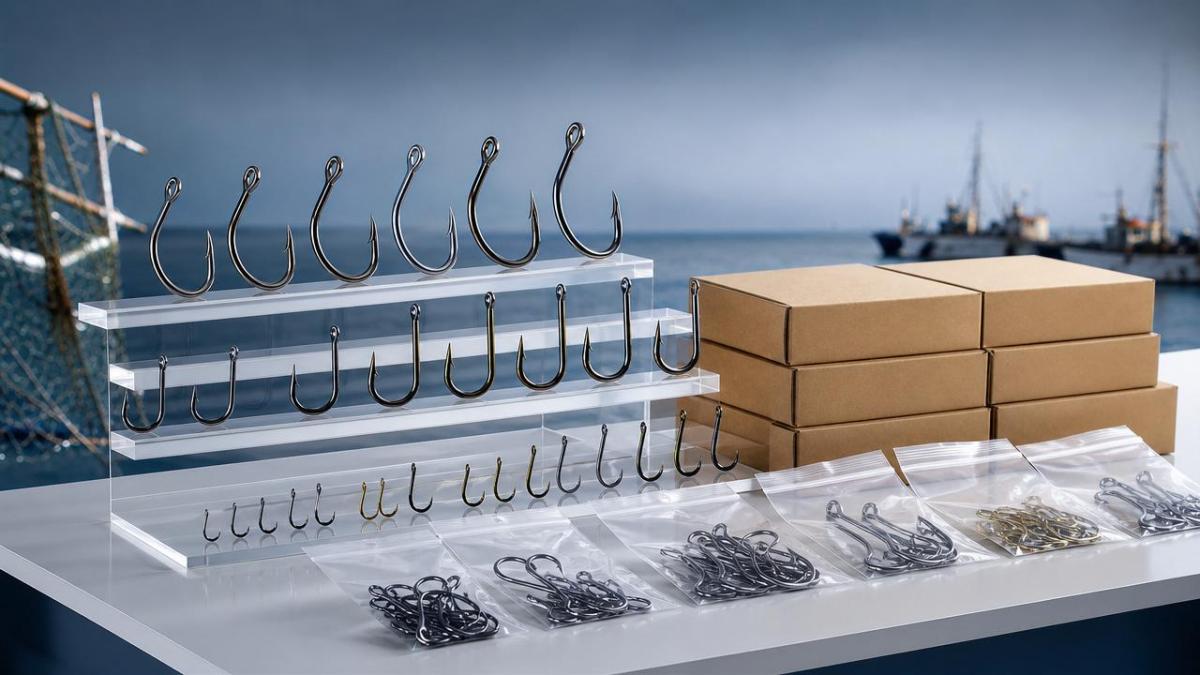
That is why commercial fishing hooks bulk comparisons should begin with application conditions, not catalog claims.
Material grade, barb geometry, wire diameter, tempering consistency, and anti-rust coating all influence catch rate and replacement frequency.
In regulated supply chains, documentation matters as much as performance.
Traceable production records, metal composition statements, and packaging controls reduce commercial risk during cross-border procurement.
Scenario 1: Comparing commercial fishing hooks bulk offers for offshore saltwater operations
Saltwater exposure is the fastest way to expose low-quality hooks.
Corrosion resistance should be treated as a primary filter, especially for high-humidity storage and extended deck handling.
Stainless steel, high-carbon steel with marine coating, and tin-finished options each carry different trade-offs.
A lower-cost finish may fail early if coating thickness is inconsistent or if the point receives poor protection.
In this scenario, commercial fishing hooks bulk offers should be checked for:
- salt spray resistance data
- point retention after repeated baiting
- bend strength under heavy line tension
- uniform coating coverage at eye and barb areas
Packaging also matters offshore.
Moisture-resistant inner bags and corrosion-inhibiting carton liners can reduce spoilage before deployment.
Scenario 2: Comparing commercial fishing hooks bulk offers for freshwater and inland fishery programs
Freshwater applications usually place less pressure on corrosion resistance.
That shifts attention toward hook penetration, shape consistency, and bulk handling efficiency.
For inland fisheries, a commercial fishing hooks bulk order often succeeds when point sharpness is stable across the full lot.
Variation between cartons can create uneven performance and complicate crew training.
Useful questions include whether hooks are machine-sorted by size tolerance and whether point grinding is visually inspected.
If hooks are tied or rigged before use, eye closure consistency becomes another critical checkpoint.
In many inland programs, packaging density has real cost impact.
Compact, clearly labeled packs simplify storage and lower sorting time during seasonal peaks.
Scenario 3: Comparing commercial fishing hooks bulk offers for aquaculture harvest and controlled systems
Aquaculture settings often need more predictable performance than open-water capture environments.
Hook selection may be influenced by fish welfare rules, harvest speed, and compatibility with existing handling systems.
Here, commercial fishing hooks bulk evaluation should include shape repeatability and reduced injury design.
Circle hooks or barbless options may fit some controlled harvest protocols better than aggressive J-hook profiles.
Material cleanliness matters too.
Buyers may request declarations for restricted substances, coating composition, or food-contact adjacent handling practices.
This is especially relevant when harvest systems intersect with audited feed, processing, or export chains.
How demand differences change what to compare in commercial fishing hooks bulk offers
The same hook is rarely optimal across all operating environments.
A structured comparison table helps isolate the right buying criteria.
What technical checkpoints improve bulk offer comparison accuracy
The most reliable commercial fishing hooks bulk review process uses measurable checkpoints.
Catalog descriptions alone are not enough.
Material and finish
Request substrate details such as carbon steel grade, stainless type, and heat-treatment approach.
Then verify finish consistency through samples or inspection photos.
Point geometry and penetration
Chemically sharpened and mechanically ground points may behave differently under repetitive use.
The right option depends on species, bait method, and expected handling volume.
Wire diameter and bend performance
Thin wire may improve penetration but increase deformation risk.
Heavy wire may resist bending but reduce hook-up efficiency in some species.
Packaging and lot control
Commercial fishing hooks bulk offers should specify units per inner pack, carton weight, lot number format, and moisture protection.
These details influence warehousing, traceability, and cycle counting.
Scenario-fit recommendations before selecting a commercial fishing hooks bulk supplier
A practical shortlist process can reduce mismatch risk quickly.
- Define the fishing environment, target species, and deployment cycle.
- Rank performance factors such as corrosion, sharpness, bend strength, or welfare compatibility.
- Request sample lots from at least two commercial fishing hooks bulk sources.
- Compare measured dimensions, point condition, and packaging durability.
- Review compliance documents, origin data, and lead-time stability.
- Estimate total cost using replacement rate, spoilage risk, and labor handling time.
This approach turns a basic price inquiry into a more durable procurement decision.
Common mistakes when reviewing commercial fishing hooks bulk deals
One common error is comparing only unit price per hook.
Lower quotes can hide weaker finish quality, mixed sizing, or inefficient packaging.
Another mistake is approving samples that do not represent full production lots.
Bulk consistency matters more than one polished sample bag.
Documentation is also frequently underestimated.
If the supplier cannot provide stable lot traceability, later quality claims become difficult to resolve.
Finally, some buyers overlook storage conditions after delivery.
Even strong commercial fishing hooks bulk inventory can degrade if warehouse humidity and carton rotation are poorly managed.
Next steps for evaluating commercial fishing hooks bulk offers with confidence
The best commercial fishing hooks bulk decision comes from matching hooks to use conditions, compliance needs, and handling workflows.
Price remains important, but total performance value matters more.
Use a comparison sheet covering material, finish, sharpness, tolerances, packaging, and supplier records.
Then test short-listed offers in the exact operating scenario they are meant to serve.
For industries tracked by AgriChem Chronicle, this disciplined method supports stronger sourcing transparency and more reliable field performance.
If a current sourcing plan depends on commercial fishing hooks bulk purchasing, start with sample validation and documented specification review before expanding order volume.
Related Intelligence
- Commercial FishingU.S. Advances America First Seafood Strategy With Focus on Fishermen’s InterestsExplore NOAA’s America First Seafood Strategy and proposed U.S.-Caught Seafood label, highlighting fishermen’s interests and what seafood buyers and suppliers should watch next.
- Commercial FishingAustralis Secures Vietnam Leases for 30,000-Tonne Barramundi Hub, Opens Processing PlantAustralis secures 16 Vietnam marine leases for a 30,000-tonne barramundi hub and opens its Blue Loop processing plant. Explore the potential impact on seafood sourcing.
- Commercial FishingWhat Certifications Do Fishery Supplies Need for Export?What certifications should fishery supplies carry for export? Explore requirements for equipment, feed, and chemicals to avoid costly delays and ship with confidence.
The Morning Broadsheet
Daily chemical briefings, market shifts, and peer-reviewed summaries delivered to your terminal.
