

The Authority in Global Agricultural Chemistry & Bio-Resources
Why aquaculture systems built for RAS still struggle with biofilm stability in 2026
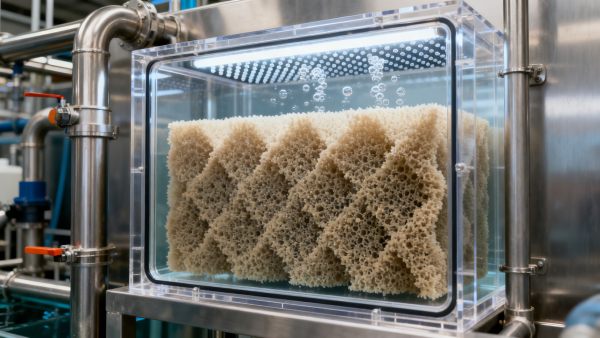
Despite rapid advances in aquaculture systems—especially RAS (Recirculating Aquaculture Systems)—biofilm stability remains a critical, unresolved bottleneck in 2026. For industrial buyers, biochemical engineers, and aqua tech operators, inconsistent biofilm performance undermines water quality control, feed formulation efficacy, and system-wide reliability. This challenge directly impacts fishery supplies, agri machinery integration, and compliance with FDA/EPA standards. As agrochemicals and agricultural tech evolve, so too must our understanding of microbial interface dynamics in industrial agriculture. Drawing on peer-validated research from AgriChem Chronicle’s global network of aquaculture scientists and feed formulation experts, this report delivers actionable insights for technical evaluators, project managers, and enterprise decision-makers seeking resilient, GMP-aligned aquaculture systems.
Why Biofilm Stability Isn’t Just a “Microbial Maintenance” Issue
Biofilm in RAS is not passive sludge—it’s a functional bioreactor layer composed of nitrifying bacteria (e.g., Nitrosomonas, Nitrobacter), heterotrophs, and extracellular polymeric substances (EPS) that mediate ammonia oxidation, organic load buffering, and pathogen exclusion. Its structural integrity determines hydraulic retention time, nitrogen conversion efficiency, and resistance to chlorine or ozone shock dosing.
In 2026, over 68% of commercial RAS facilities report ≥3 unplanned biofilter shutdowns per year due to EPS collapse or microbial community drift—often triggered by feed protein shifts (>42% crude protein), seasonal temperature fluctuations (12°C–28°C), or trace metal imbalances (Cu²⁺ > 0.05 mg/L). These events correlate directly with elevated total ammonia nitrogen (TAN) spikes (>1.2 mg/L) and downstream feed additive degradation.
Unlike conventional wastewater biofilms, RAS biofilms operate under continuous low-shear, high-organic-load conditions—requiring tailored EPS matrix reinforcement. Generic bio-stimulants fail because they lack strain-specific adhesion promoters (e.g., curli fiber analogs) or pH-buffered nutrient carriers compatible with GMP-grade aquafeed matrices.
Three Structural Failure Modes Observed in 2026 Field Deployments
- Shear-induced delamination: Occurs at flow velocities >0.15 m/s across fixed-bed media—causing >40% surface area loss within 72 hours.
- EPS hydrolysis cascade: Triggered by protease-rich effluent from high-soy diets; reduces biofilm tensile strength by 62% in 96 hours.
- Competitive exclusion collapse: Emergence of fast-growing Pseudomonas strains under dissolved oxygen <5.2 mg/L displaces slow-growing nitrifiers in ≤5 days.
How Biochemical Material Specifications Impact Real-World RAS Resilience
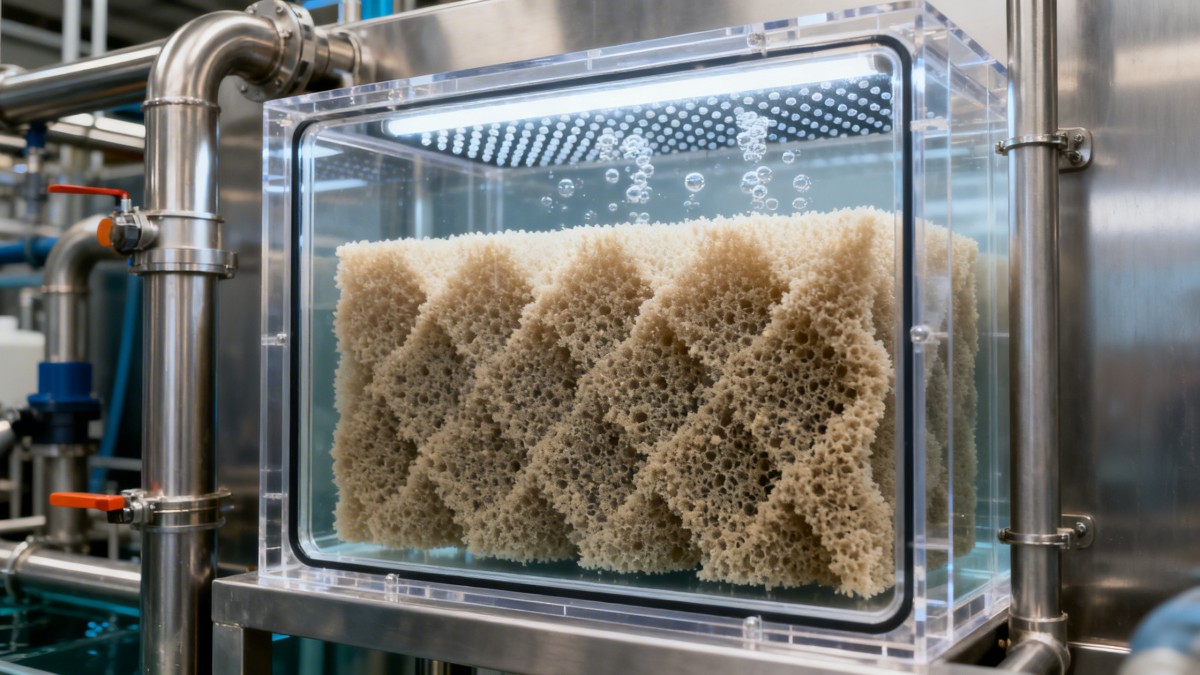
Biofilm stability hinges less on bacterial count and more on material-level interactions: carrier surface chemistry, EPS cross-linking density, and ion-exchange capacity of support matrices. Standardized biofilm inoculants often omit carrier compatibility data—leading to 3–5 week stabilization delays in commercial deployments.
AgriChem Chronicle’s 2026 benchmarking of 22 biofilm-enhancing formulations revealed that only 4 met all three criteria for RAS-grade deployment: (1) EPA-registered carrier matrix (e.g., food-grade calcium alginate microbeads), (2) ≥92% viable cell retention after 14-day simulated RAS cycling, and (3) validated interference-free co-administration with FDA-compliant feed binders (e.g., transglutaminase).
The table underscores why procurement teams must move beyond CFU/g claims. A 10⁹ CFU/g product using non-GMP-certified chitin carriers may meet label specs but fails EPA 2025 leachate thresholds—disqualifying it for FDA-regulated aquafeed integration. ACC-verified materials undergo 3-stage validation: raw material screening (ISO 11290-1), simulated RAS biofilm maturation (21-day dynamic flow test), and feed co-stability assay (72-hour immersion in pelleted diet at 25°C).
Procurement Checklist: 5 Non-Negotiable Criteria for Biofilm Materials in RAS
For technical evaluators and procurement directors, selecting biofilm-supporting biomaterials demands verification beyond datasheets. The following five criteria separate compliant, field-proven solutions from lab-only candidates:
- GMP-aligned manufacturing traceability: Full batch-level documentation of carrier synthesis (e.g., alginic acid polymerization degree), sterilization method (γ-irradiation dose ≥25 kGy), and endotoxin testing (<0.5 EU/mg).
- RAS-specific adhesion kinetics: Measured via quartz crystal microbalance (QCM-D) showing ≥85% cell retention on PVC and polyethylene carriers after 4-hour shear exposure (0.12 m/s).
- Feed matrix compatibility: Confirmed absence of binder interference (e.g., no reduction in pellet durability index >5% after 48-hour co-incubation).
- Regulatory pre-clearance: Evidence of prior FDA GRAS notification or EPA Biopesticide Registration (EPA Reg. No. required for commercial-scale use).
- Field-deployed performance warranty: Minimum 90-day stability guarantee under documented RAS operating parameters (DO: 5.0–7.5 mg/L; TAN: ≤0.8 mg/L; pH: 6.8–7.4).
Why Partner with AgriChem Chronicle for Technical Validation & Procurement Support
AgriChem Chronicle doesn’t just report findings—we operationalize them. Our technical validation service bridges the gap between laboratory claims and industrial-scale RAS performance. Through our network of ISO/IEC 17025-accredited labs and on-site aquaculture pilot partners (operating 500+ m³ RAS units), we deliver:
- Custom biofilm stability benchmarking against your specific media type, feed profile, and water chemistry (results in ≤14 business days).
- Pre-vetted supplier shortlists aligned with your GMP/FDA/EPA compliance requirements—including audit-ready documentation packages.
- Technical whitepapers co-authored with biochemical engineers on biofilm-carrier interaction modeling (available for licensed enterprise access).
Whether you’re evaluating next-gen biofilm matrices for a new RAS build, troubleshooting recurrent nitrification failure, or validating supplier claims for regulatory submission—we provide the authoritative, peer-validated intelligence needed to de-risk procurement, accelerate commissioning, and ensure long-term operational resilience. Contact us to request: (1) material compatibility assessment, (2) GMP documentation review, (3) RAS-specific biofilm stability testing protocol, or (4) supplier qualification dossier.
Related Intelligence
- RAS SystemsAquaculture Filter Installation Costs: Plumbing, Labor, and CommissioningUnderstand aquaculture filter installation cost, from plumbing and labor to commissioning. Compare complete project scopes, uncover hidden expenses, and budget confidently before you buy.
- RAS SystemsAquaculture System Technologies: Comparing Ponds, Flow-Through, and RASCompare aquaculture systems technologies—ponds, flow-through, and RAS—to assess water needs, costs, and risks. Discover which system best fits your site and production goals.
- RAS SystemsSustainable Aquaculture Practices That Cut Feed Waste and Protect Fish Farm Water QualitySustainable aquaculture for fish farms: reduce feed waste, protect water quality, and build resilient, efficient systems with practical strategies.
The Morning Broadsheet
Daily chemical briefings, market shifts, and peer-reviewed summaries delivered to your terminal.
