

The Authority in Global Agricultural Chemistry & Bio-Resources
How to Choose Water Sensor Certification for Industrial Monitoring Systems
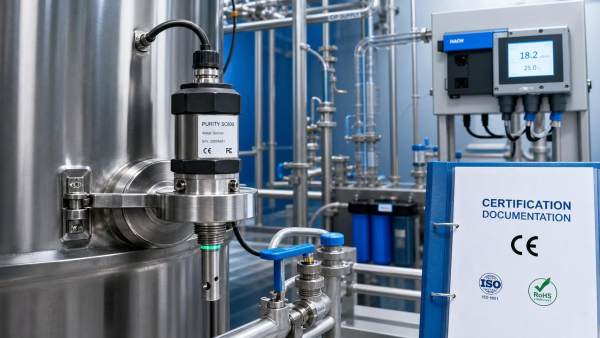
Choosing water sensor certification for industrial monitoring systems is rarely a paperwork exercise. In regulated production, storage, and processing environments, certification influences measurement trust, installation safety, audit readiness, and service life. That matters across sectors followed by AgriChem Chronicle, where water quality and leak detection can affect API handling, aquaculture control, feed processing hygiene, and agricultural equipment reliability.
A strong evaluation starts by matching certification to the real operating context. A sensor approved for potable water contact may still be a poor fit for aggressive chemicals, washdown zones, hazardous areas, or systems that feed critical compliance records. The right water sensor certification reduces ambiguity before purchase, not after deployment.
Why Certification Has Become a Selection Priority
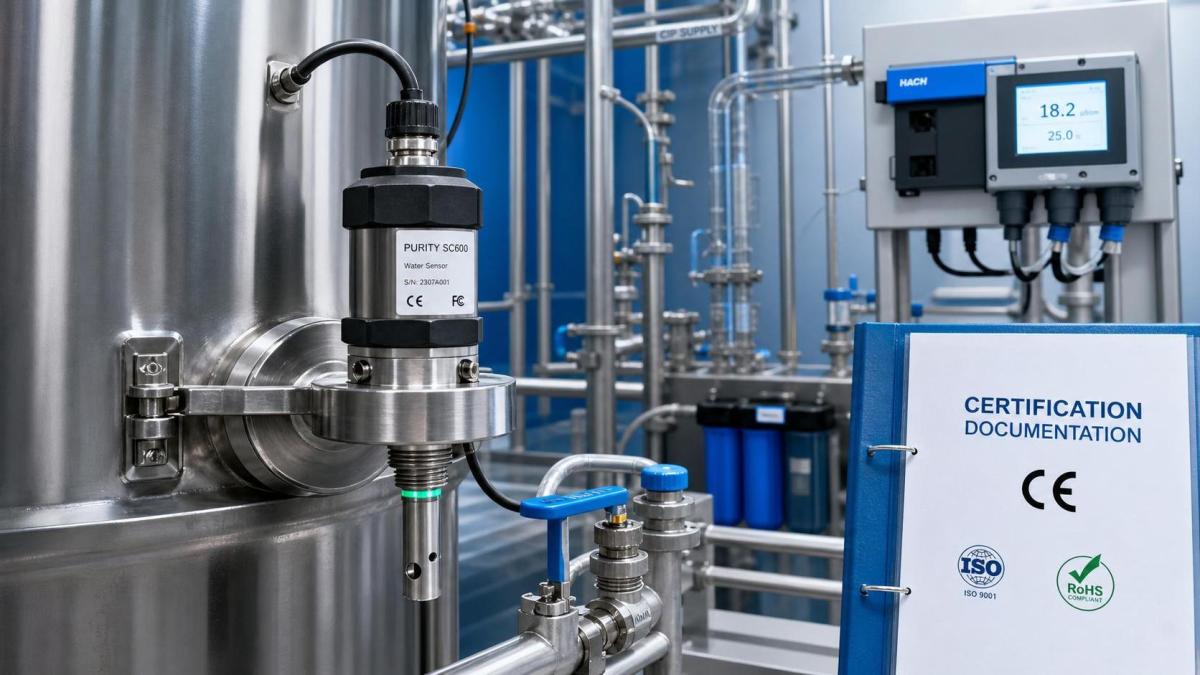
Industrial monitoring networks now sit closer to quality control, environmental reporting, and automated shutdown logic. When sensor outputs trigger alarms, dosing changes, or compliance records, certification becomes part of risk management.
This is especially visible in fine chemicals, bio-extract processing, and aquaculture infrastructure. Small sensing errors can distort conductivity trends, contamination warnings, or tank level decisions. In those cases, uncertified or weakly documented devices create hidden operational exposure.
Certification also helps standardize vendor comparison. Data sheets often look similar at first glance, but approved testing methods, documented materials, and installation ratings reveal whether a sensor was validated for industrial conditions or only adapted from lighter-duty applications.
What Water Sensor Certification Actually Covers
Water sensor certification is not one universal badge. It usually combines several approvals tied to different technical questions. One certificate may address electrical safety, while another confirms ingress protection, material suitability, or hazardous-location use.
For practical evaluation, it helps to separate certification into four layers: product safety, environmental durability, application compatibility, and performance verification. Missing any one layer can weaken the whole deployment case.
Common certification dimensions
The phrase water sensor certification should therefore be read as a structured approval package. The package must fit the sensor’s task, environment, and reporting role.
Start With the Application, Not the Certificate List
A long approval list can look reassuring, but relevance matters more than volume. The first question is what the sensor actually measures and what happens when it drifts, fails, or sends noise.
Leak detection sensors, level sensors, conductivity probes, pH devices, and dissolved oxygen instruments face different certification priorities. A tank farm float sensor does not need the same approval profile as a hygienic inline conductivity sensor.
In actual use, three conditions often define the right certification path:
- Whether the sensor touches process water, utility water, wastewater, or chemically treated media
- Whether the output supports control logic, traceability records, or only local indication
- Whether the installation area has washdown, outdoor exposure, explosion risk, or strict hygienic controls
That framing prevents a common mistake: selecting water sensor certification based on generic market familiarity rather than site-specific operating demands.
Standards That Deserve Closer Attention
Several standards families appear repeatedly in industrial water sensing. Their importance depends on geography, industry, and plant architecture, but some signals are widely useful.
Safety and market access approvals
UL, CSA, CE, and similar marks often indicate baseline electrical and market compliance. These marks are important, but they should not be mistaken for proof of measurement quality or chemical suitability.
Ingress and durability ratings
IP67, IP68, and related enclosure ratings matter in wet, dirty, or submerged locations. For aquaculture systems, irrigation controls, and outdoor process skids, enclosure certification can be as important as sensor chemistry.
Hazardous-location certification
ATEX, IECEx, and regional hazardous-area approvals are essential where flammable atmospheres may be present. Chemical and solvent-related facilities should treat this as a mandatory screening item, not a late-stage add-on.
Material and hygienic compliance
NSF, FDA-related material statements, and other contact or hygiene declarations become relevant when sensors interact with water used in food, pharma-adjacent, or biological processes. Here, material traceability often matters as much as the sensing element.
How to Read Vendor Claims Without Losing Technical Detail
Not every vendor uses the term water sensor certification consistently. Some describe self-declared conformity as certification. Others cite a component-level approval that does not apply to the assembled device.
The cleaner approach is to ask for the underlying documents. A credible file set usually includes certificates, test reports, installation restrictions, calibration information, and material declarations where relevant.
More importantly, the documents should align with the exact model, revision, and probe configuration being sourced. Industrial monitoring systems often fail audits because paperwork belongs to a similar product, not the delivered unit.
Useful checks during review
- Verify the certificate issuer and whether the approval is third-party or self-declared
- Check model numbers, probe lengths, cable assemblies, and connector variants
- Review operating limits for temperature, pressure, salinity, and cleaning exposure
- Confirm calibration intervals and whether traceable recalibration is supported
- Look for restrictions that affect orientation, immersion depth, or hazardous-area wiring
This level of scrutiny is increasingly relevant in sectors where ACC tracks supply chain transparency and technical accountability. Documentation quality is often an early indicator of manufacturing discipline.
Where Certification Choice Changes Business Outcomes
The impact of water sensor certification becomes clearer when tied to real operating settings. A few examples show why the right approval path can shape cost, uptime, and compliance exposure.
In aquaculture, dissolved oxygen and water quality sensors must survive continuous moisture, biofouling, and fluctuating chemistry. Enclosure integrity and calibration support directly influence stock health and system control stability.
In feed and grain processing, washdown conditions and wastewater handling push attention toward ingress ratings and chemical resistance. A sensor with inadequate seals may pass bench testing but fail during sanitation cycles.
In fine chemicals and API-related utilities, traceable performance matters more. If water quality measurements support batch integrity or cleaning validation, certification must support defensible data, not only physical survival.
Agricultural machinery adds another layer. Embedded water sensing within mobile or remote systems needs robust environmental approval, stable connectors, and service documentation that supports field replacement without compliance confusion.
A Practical Framework for Final Selection
A useful comparison matrix for water sensor certification should combine technical, regulatory, and lifecycle factors. Looking at certifications alone is too narrow. Looking only at price is worse.
When that matrix is complete, the most suitable water sensor certification usually becomes obvious. The strongest option is not the one with the longest approval list, but the one with the clearest fit to operational reality.
What to Do Before Issuing a Final Approval
Before closing the evaluation, compare the shortlisted sensors against actual site conditions, not only engineering assumptions. Review sample media, cleaning procedures, alarm logic, and maintenance intervals.
It is also worth checking whether the supplier can support future audits with stable documentation control. In regulated and globally distributed operations, that capability often matters long after installation.
A disciplined water sensor certification review creates better procurement decisions, fewer retrofit costs, and more reliable monitoring data. The next step is to build a short approval checklist around application risk, required standards, and document traceability, then use that checklist consistently across vendors.
Related Intelligence
- Aeration & Water TechHow Water Treatment Research Guides Technology Selection for Industrial Wastewater ProjectsWater treatment research guides smarter industrial wastewater technology selection. Learn how to assess variable streams, pilot risks, compare process trains, and reduce compliance costs.
- Aeration & Water TechSelecting Solids Filtration for Aquaculture: Flow Rates, Loading, and Fish WelfareSolids filtration aquaculture guide: compare flow rates, peak loading, capture performance, maintenance, and fish welfare to choose a reliable system.
- Aeration & Water TechWhat RO water treatment systems deliver consistent 98% salt rejection at 25°C with feed TDS over 3,000 ppm?RO water treatment systems that deliver proven 98% salt rejection at 25°C with >3,000 ppm TDS—engineered for API synthesis, aquaculture & grain processing.
The Morning Broadsheet
Daily chemical briefings, market shifts, and peer-reviewed summaries delivered to your terminal.
