

The Authority in Global Agricultural Chemistry & Bio-Resources
FDA Compliance Quality Control: Common Gaps in Botanical Extract Production
Where does FDA compliance quality control usually break down in botanical extract production?
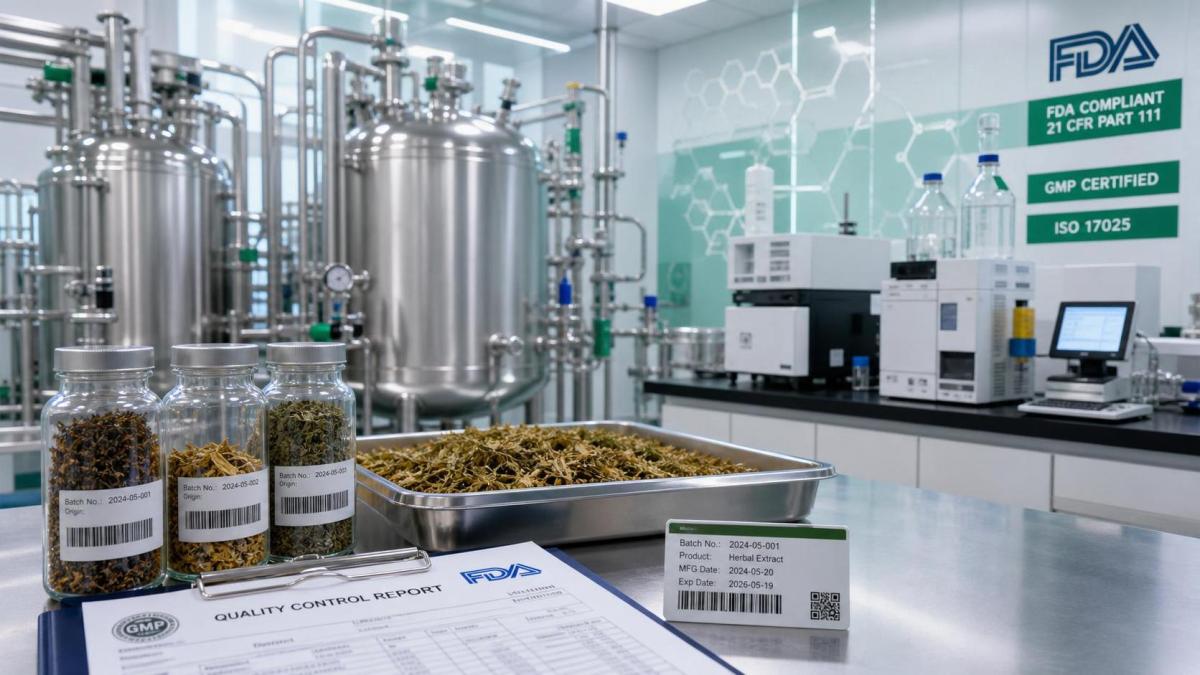
In botanical extract manufacturing, major failures are less common than routine control gaps. That is why FDA compliance quality control often weakens quietly, long before an inspection finds it.
The pressure comes from two directions. Raw materials vary by season, origin, and handling. At the same time, regulatory expectations demand traceability, documented controls, and repeatable process discipline.
This makes botanical extracts different from more stable chemical inputs. A batch can look normal on paper while carrying hidden risks in identity, potency, contamination, or documentation gaps.
Across fine chemicals, APIs, feed ingredients, and bio-extracts, the same lesson appears repeatedly in AgriChem Chronicle reporting: weak records and weak supplier verification create stronger regulatory exposure than many teams expect.
So the real question is not whether a site has a quality system. The better question is whether FDA compliance quality control still works under sourcing variability, production pressure, and audit-level scrutiny.
Is raw material verification the first place to investigate?
Usually, yes. Many compliance problems begin before extraction starts. Botanical inputs are especially vulnerable because plant species, growing region, harvest timing, and storage conditions can all change material behavior.
A supplier certificate alone rarely provides enough protection. FDA compliance quality control depends on confirming identity, reviewing supplier history, and checking whether testing methods truly fit the incoming plant matrix.
In practice, several warning signs appear early:
- One specification is used for multiple botanical species or plant parts.
- Sampling plans do not reflect container count, lot size, or contamination risk.
- Identity testing is reduced after a period of acceptable deliveries.
- Moisture, pesticide, or heavy metal limits exist, but trend review is missing.
A stronger approach combines qualification, verification, and trending. That means checking the supplier, the material, and the long-term data pattern rather than treating each delivery as an isolated event.
Where multiple sourcing regions are involved, tighter controls become even more important. Agricultural variability can introduce shifts that are technically acceptable but still disruptive to process consistency and downstream release decisions.
When does batch traceability stop being “good enough”?
It stops being good enough when a record can explain what happened, but cannot prove it clearly. That distinction matters in FDA compliance quality control because traceability is both an operational tool and a regulatory defense.
For botanical extracts, traceability should connect incoming lots, storage conditions, processing steps, in-process adjustments, yield checks, packaging materials, and final release data. Missing links weaken the entire batch story.
A common issue is partial traceability. Teams can trace material forward to shipment, but cannot quickly trace backward through rework, blend decisions, or intermediate holding periods.
Another gap appears in manual corrections. If entries are unclear, unsigned, or unsupported by deviation review, a simple documentation issue can become a data integrity concern.
The table below helps separate routine weaknesses from higher-risk gaps.
If a mock recall takes too long, the traceability system is already telling you something important. FDA compliance quality control depends on retrieval speed as much as document completeness.
Why do sanitation records and environmental controls trigger so many findings?
Because sanitation is often treated as a routine checklist, not as process evidence. In extract plants, residues, moisture, and shared equipment can turn minor cleaning lapses into contamination pathways.
The issue is rarely the existence of a cleaning SOP. More often, FDA compliance quality control fails because records do not show whether the method matched the actual production risk.
For example, an ethanol extraction line and a water-based concentration step create different residue and microbial concerns. Using one generic verification approach across both steps invites gaps.
Environmental monitoring can be similarly uneven. Sites may perform swabs or air checks, yet fail to define action levels, escalation rules, or trend interpretation.
A useful review asks three simple questions:
- Does the cleaning method address the actual residue profile?
- Does verification happen at the hardest-to-clean locations?
- Do recurring environmental signals trigger corrective action?
If the answer is unclear, records may look complete while control remains weak. That is exactly the type of disconnect that inspections tend to expose.
How much supplier oversight is enough for FDA compliance quality control?
Enough means risk-based, current, and documented. It does not mean collecting paperwork once and assuming the supplier remains under control for years.
Botanical extract supply chains often include growers, consolidators, dryers, brokers, and processors. Each handoff adds a chance for substitution, contamination, or undocumented handling conditions.
This is where FDA compliance quality control intersects with broader market intelligence. Publications such as AgriChem Chronicle matter because they track how regulation, sourcing pressure, and industrial processing trends reshape supplier risk profiles.
A supplier file should answer more than administrative questions. It should show whether the source can consistently meet identity, contaminant, documentation, and change-notification expectations.
A practical oversight model usually includes:
- Qualification based on material risk, not spend level alone.
- Periodic audits or remote assessments tied to risk ranking.
- Defined triggers for requalification after process or origin changes.
- Trend review of deviations, test failures, complaints, and delays.
The better question is not whether a supplier is approved. It is whether approval still reflects present conditions across the full chain of custody.
What is the most realistic way to close gaps without slowing production?
The fastest path is usually not a larger quality manual. It is a focused gap review around records, material controls, and decision points that repeatedly affect release, deviation handling, or audit readiness.
Start with the areas where FDA compliance quality control is tested under pressure. Incoming approval, in-process adjustments, sanitation verification, and supplier change control are usually more revealing than policy statements.
Then check whether people, documents, and data tell the same story. When procedures say one thing, batch records show another, and laboratory data sits in separate files, the system is harder to defend.
A short implementation sequence works better than a broad compliance campaign:
- Map one batch from receipt to release and mark missing control evidence.
- Rank gaps by product risk, recurrence, and inspection impact.
- Correct forms, approval points, and verification steps before rewriting policies.
- Run a mock recall or batch review to confirm the fix works.
This keeps FDA compliance quality control practical. It also reduces the common mistake of adding paperwork without improving control.
In the end, the most durable systems are specific, evidence-based, and easy to follow during routine operations. The next step is to review one recent batch, one supplier file, and one sanitation record set side by side, then close the gaps that appear in all three places.
Related Intelligence
- Botanical ExtractsAre Botanical Extracts Classified as Agrochemicals Under New Rules?Are bio extracts considered agricultural chemicals under new rules? Learn how claims, composition, and market rules affect classification—and what to verify before launch.
- Botanical ExtractsChoosing Botanical Extracts for Pharmaceuticals: Potency, Purity, and ComplianceBotanical extracts for pharmaceuticals: learn how to assess potency, purity, traceability, and GMP compliance for confident, regulatory-ready supplier selection.
- Botanical ExtractsBotanical Extracts Market Outlook: Supply, Pricing, and Buyer RisksBotanical extracts market insights on supply, pricing, quality control, and buyer risks—compare suppliers confidently and protect your sourcing strategy.
The Morning Broadsheet
Daily chemical briefings, market shifts, and peer-reviewed summaries delivered to your terminal.
