

The Authority in Global Agricultural Chemistry & Bio-Resources
Muyuan’s saline-alkali farming loop draws industry attention
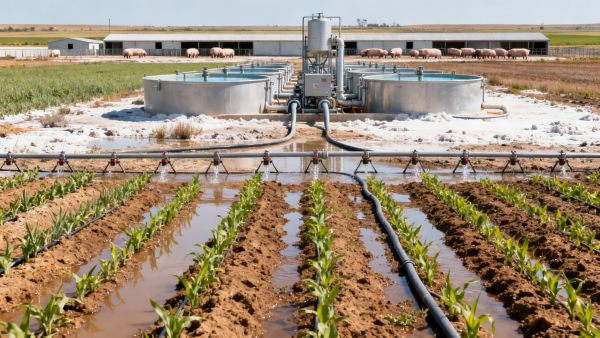
During World Environment Day activities on June 5, 2026, farmers in Chaganzhen, Da’an, Jilin, presented a ceremonial banner to Muyuan Group in recognition of its integrated "raise pigs to feed fields, use fields to support pigs" model. The development is worth watching not only for livestock and crop producers, but also for fertilizer-related trade, agricultural service providers, and cross-border agribusiness participants, because it links verified land improvement and input-cost reduction with a standardized liquid nutrient system that is now being discussed for overseas technical output.
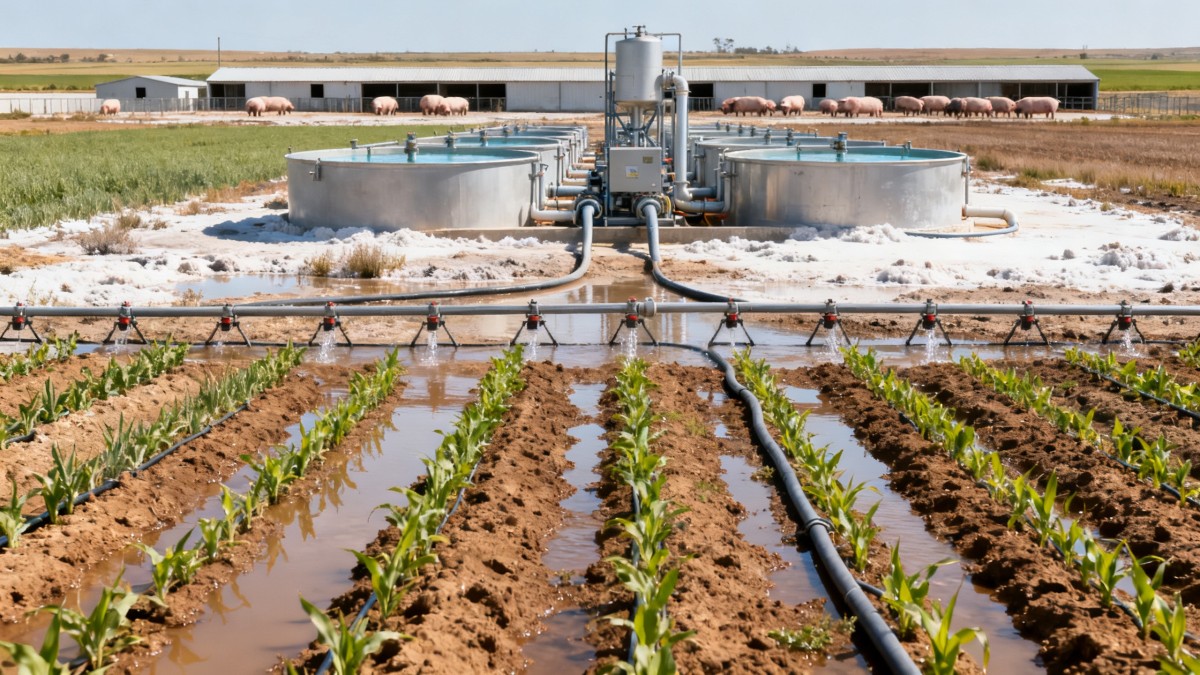
What was confirmed in Da’an
According to the provided event information, the local recognition centered on the use of manure-derived water fertilizer in saline-alkali land improvement. Under the model applied in Da’an, soil pH was reported to decline from 10.6 to 8.5, while input costs were reduced by RMB 1,600 per hectare.
The same information states that the model has already formed a standardized quality control system for water fertilizer, including limit values for COD and NH₃-N and a maturity requirement of at least 90%.
It was also stated that the model is in discussions with the Ministry of Agriculture of Kazakhstan for technology export and has been included in the priority promotion list under a China-Central Asia memorandum on green agricultural cooperation.
Why this matters across the value chain
For livestock-farming operators, waste treatment is moving closer to product logic
From an industry perspective, this development may affect hog producers and integrated farms because manure handling is being framed not only as a compliance issue, but also as a standardized agricultural input. The business impact is most visible in treatment processes, quality control, and the ability to demonstrate stable field-use results.
What deserves closer attention is whether similar operators can match the documented control indicators and maintain consistent output quality if they want to position manure-derived liquids beyond internal farm use.
For crop growers and land-improvement service providers, field performance becomes the key reference
Growers working on saline-alkali land and service providers engaged in soil improvement may be affected because the event ties a specific input format to both agronomic and cost outcomes. The practical impact lies in crop-side adoption decisions, field demonstration standards, and the need to compare performance against conventional input spending.
Observably, the most relevant change to watch is whether end users increasingly ask for measurable indicators such as pH improvement and per-hectare cost savings rather than broad sustainability claims.
For traders and cross-border supply-chain participants, standardization matters more than concept value
Companies involved in fertilizer trade, agricultural inputs distribution, and international agribusiness services may be affected because the information points to possible technology export and inclusion in a cross-regional promotion list. In business terms, the focus shifts to whether a manure-derived liquid input can be documented, categorized, and delivered in a form that overseas counterparts can evaluate.
Analysis shows that cross-border interest alone is not the same as market conversion. The more immediate relevance is in documentation readiness, technical communication, and alignment between quality specifications and buyer expectations.
What companies should watch now
Track how official wording evolves
Businesses should closely watch subsequent official statements related to the Kazakhstan discussions and the China-Central Asia green agriculture memorandum. Inclusion in a promotion list signals policy-level visibility, but it does not by itself confirm transaction volume, project rollout, or recurring orders.
Focus on controllable quality indicators
For suppliers and service firms, the clearest operational takeaway is the emphasis on standardized quality control, especially COD, NH₃-N, and maturity of at least 90%. These indicators are likely to shape procurement reviews, partner selection, and technical acceptance discussions more directly than broad circular-agriculture positioning.
Separate demonstration value from commercial delivery
Analysis shows that the Da’an case demonstrates recognized on-the-ground results, but companies should distinguish between local field validation and scalable commercial delivery. Procurement, packaging of technical materials, fulfillment planning, and customer communication may all require additional preparation if similar products move toward external markets.
Prepare for evidence-based customer communication
Market participants should be ready to communicate with customers using verifiable field and process indicators rather than abstract environmental narratives. In the current stage, the most practical preparation lies in product documentation, quality records, and explanation of how agronomic outcomes are linked to process control.
How this signal should be read
Observably, this development is more appropriate to understand as a meaningful industry signal rather than a fully formed export outcome. The confirmed facts point to three linked elements: local farmer recognition, measurable saline-alkali land improvement, and a standardized quality system that is already being connected to overseas discussions.
At the same time, analysis shows that the export angle remains at the stage of negotiation and policy-supported promotion, not a confirmed large-scale market result. That is why the event matters: it suggests that circular livestock-crop systems may increasingly be evaluated not only for environmental management, but also for their ability to become tradable green inputs.
A short-term case with longer-term implications
In summary, the June 5 development is not just a local recognition story. It also indicates that standardized manure-derived water fertilizer may be gaining a clearer place in discussions around saline-alkali land improvement, farm cost control, and cross-border green agriculture cooperation.
From a neutral industry reading, the news is best understood as an early but concrete signal. It shows documented local application results and emerging external interest, while the scale, pace, and commercial form of any broader rollout still require continued observation.
Basis of this article
This article is based on the user-provided news title, event date, and event summary. The information provided confirms the recognition event in Da’an, the reported pH and cost outcomes, the stated quality-control indicators, the discussion with the Ministry of Agriculture of Kazakhstan, and inclusion in a priority promotion list under a China-Central Asia green agriculture cooperation memorandum.
For this type of industry update, commonly relevant source categories may include official announcements, company disclosures, industry association information, authoritative media reports, and standard-related documents. A specific official source link was not provided in the input, so further verification remains necessary. Continued attention should focus on any later official wording, technical export progress, and whether the standardized input system moves from demonstration recognition into confirmed business implementation.
Related Intelligence
- Aeration & Water TechHow Water Treatment Research Guides Technology Selection for Industrial Wastewater ProjectsWater treatment research guides smarter industrial wastewater technology selection. Learn how to assess variable streams, pilot risks, compare process trains, and reduce compliance costs.
- Aeration & Water TechSelecting Solids Filtration for Aquaculture: Flow Rates, Loading, and Fish WelfareSolids filtration aquaculture guide: compare flow rates, peak loading, capture performance, maintenance, and fish welfare to choose a reliable system.
- Aeration & Water TechWhat RO water treatment systems deliver consistent 98% salt rejection at 25°C with feed TDS over 3,000 ppm?RO water treatment systems that deliver proven 98% salt rejection at 25°C with >3,000 ppm TDS—engineered for API synthesis, aquaculture & grain processing.
The Morning Broadsheet
Daily chemical briefings, market shifts, and peer-reviewed summaries delivered to your terminal.
