

The Authority in Global Agricultural Chemistry & Bio-Resources
China-Australia Agri-Tech Links Advance in Shanghai

On June 5, 2026, a new China-Australia collaboration signal emerged in Shanghai as the 2026 Global Industrial Technology Innovation Cooperation Conference and China-Australia Innovation Week highlighted cleaner energy technologies and opened initial cross-border conversion channels for six agricultural technologies. For OEM manufacturers, agricultural equipment suppliers, and businesses targeting Australia and New Zealand, the development deserves attention because it connects technology access, localization work, and export pathways more directly than a general conference announcement would suggest.
What Was Confirmed at the Shanghai Conference
The event took place in Shanghai on June 5, 2026. At the conference, Australian Academy of Science Fellow Martin Green presented several clean energy technologies intended for collaborative implementation with China. The meeting also announced that the Yangtze River Delta National Innovation Center had formally joined the China-Australia Joint Innovation Platform.
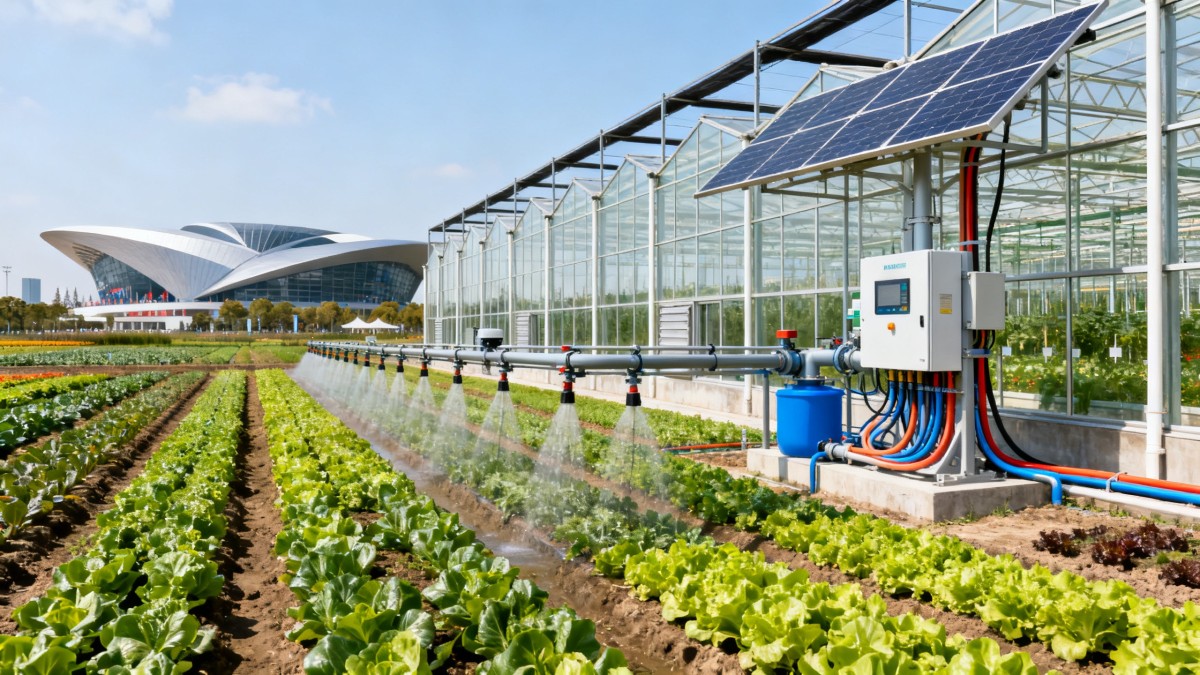
According to the event summary, the first batch of cross-border conversion channels was opened for six agricultural technologies, including smart greenhouse environmental control algorithms and photovoltaic-driven integrated water and fertilizer systems. The announcement also stated that Chinese OEM manufacturers would be supported in completing localized adaptation in line with the AS/NZS 4755 standard, creating a new export path for low-carbon agricultural equipment into the Australia-New Zealand market.
Where the Immediate Business Relevance Sits
OEM adaptation moves closer to market entry work
From an industry perspective, Chinese OEM manufacturers may be the most directly affected group because the announcement links technology conversion with localization against AS/NZS 4755. The impact is likely to appear in product adaptation, technical documentation, and market-specific configuration work rather than in conference visibility alone. What deserves closer attention is whether companies already serving agricultural equipment customers can align product design and compliance preparation with this pathway.
Agri-equipment supply chains may need earlier coordination
Suppliers involved in greenhouse control, irrigation, fertigation, power management, and related components may also be affected because cross-border conversion channels usually shift attention from concept-stage cooperation to delivery-stage readiness. Analysis shows that the key pressure point is not broad market sentiment, but whether supporting parts, system interfaces, and service arrangements can match localized technical requirements for Australia and New Zealand.
Export-oriented distributors and service providers gain a new reference point
For channel partners, export service providers, and companies supporting cross-border delivery, the practical significance is that low-carbon agricultural equipment is now being framed through a clearer cooperation mechanism. Observably, this does not yet confirm shipment volumes or commercial results, but it does give market participants a more concrete basis for evaluating product categories, customer communication, and market-entry timing.
What Companies Should Track Next
Watch the next official wording around the six technologies
Companies should closely follow how the first six technologies are described in later official communications, especially where the boundary lies between technology opening, conversion support, and actual commercialization. The distinction matters because a cooperation channel does not automatically mean immediate procurement or scaled deployment.
Focus on localization tasks tied to AS/NZS 4755
For OEMs and technical teams, the more actionable issue is how localization against AS/NZS 4755 will be interpreted in product adaptation work. Businesses targeting Australia and New Zealand should pay attention to whether internal engineering, testing preparation, and customer-facing specifications are ready to support that process.
Review product and project fit for low-carbon agri-equipment exports
Manufacturers and exporters should identify whether their current offerings connect to the technology areas named in the event summary, particularly smart greenhouse control and photovoltaic-driven integrated water and fertilizer systems. Analysis shows that the most relevant question is not whether the whole product portfolio benefits, but which specific lines may fit an emerging export route.
Prepare documentation and delivery communication early
Supply chain teams, project managers, and sales staff should prepare for stricter discussions around technical materials, localization scope, delivery expectations, and customer communication. If companies plan to explore this route, early alignment between engineering, compliance, and commercial teams will likely matter more than broad promotional activity.
Why This Looks More Like a Directional Signal Than a Finished Outcome
Analysis shows that this development is best read as a concrete cooperation signal with operational implications, rather than as proof that large-scale trade results have already been achieved. The confirmed facts point to platform access, technology opening, and localization support, which are meaningful steps, but they are still upstream of fully verified market outcomes.
Observably, the industry should keep watching because the announcement combines three elements that do not always appear together: clean energy technology collaboration, agricultural application scenarios, and a standards-linked export path for OEM adaptation. That combination may influence how companies prioritize cross-border technical partnerships, but the pace of real business conversion still requires further verification.
How to Read This Update for Now
At this stage, it is more appropriate to understand the Shanghai announcement as an actionable early-stage industry signal. It indicates that China-Australia cooperation in clean energy and smart agriculture is being connected to specific conversion channels and localization work, especially for equipment aimed at Australia and New Zealand.
That matters for manufacturers and service providers because it narrows the gap between technology cooperation language and export-oriented implementation. Even so, the current information does not establish commercial scale, rollout speed, or final market uptake, so a measured reading remains necessary.
Basis of This Article and What Still Needs Verification
This article is based on the user-provided news title, event date, and event summary. The confirmed information available here is limited to the Shanghai conference on June 5, 2026, Martin Green's presentation of clean energy technologies for collaborative implementation with China, the Yangtze River Delta National Innovation Center joining the China-Australia Joint Innovation Platform, the opening of cross-border conversion channels for six agricultural technologies, and support for Chinese OEM localization under AS/NZS 4755 for the Australia-New Zealand market.
For this type of industry update, relevant source categories would usually include official event announcements, institutional notices, company statements, industry association information, authoritative media coverage, and standards-related documents. A specific official source link was not provided in the input, so subsequent verification is still needed. The main follow-up focus should remain on later official disclosures concerning the six technologies, the scope of localization support, and any clearer business implementation details tied to the Australia-New Zealand market.
Related Intelligence
- Climate Control & VentilationPoultry Ventilation for Broilers: How to Balance Airflow, Temperature, and Litter QualityPoultry ventilation for broilers made practical: learn how to balance airflow, temperature, humidity, and litter quality to improve flock health, growth, and house performance.
- Climate Control & VentilationLivestock and Poultry Climate Control: Key Parameters for Stable House TemperatureLivestock and poultry climate control starts with the right parameters. Learn how temperature, humidity, airflow, and ventilation work together to keep house conditions stable and improve daily performance.
- Climate Control & VentilationGermany Enforces IoT Carbon Monitoring Rule for Ventilation ImportsGermany Enforces IoT Carbon Monitoring Rule for Ventilation Imports: learn how BGD-2026 impacts market access, UBA reporting, and compliance planning for Germany and Austria.
The Morning Broadsheet
Daily chemical briefings, market shifts, and peer-reviewed summaries delivered to your terminal.
