

The Authority in Global Agricultural Chemistry & Bio-Resources
Peer analysis of aquaculture equipment reveals a quiet divergence in real-world durability
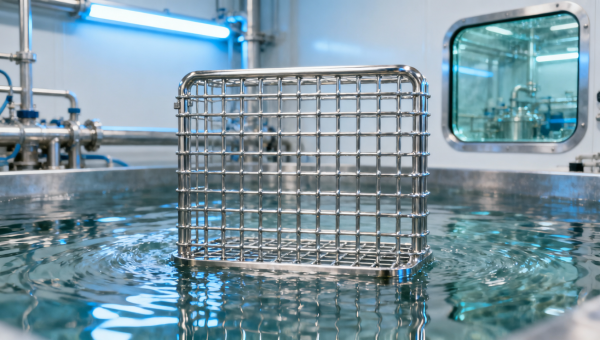
A rigorous peer analysis of aquaculture equipment uncovers unexpected discrepancies in real-world durability—raising critical questions for procurement teams, technical evaluators, and quality managers overseeing aquaculture production. As FDA Standards tighten and supply chain transparency becomes non-negotiable, this divergence impacts not only equipment longevity but also downstream processes like pharmaceutical processing, industrial milling, and feed ingredients integration. For users, operators, and distributors of aquaculture tech and bio ingredients, these findings signal urgent recalibrations in vendor assessment, lifecycle costing, and compliance validation—especially where aquaculture products intersect with fine chemical and API-grade operational rigor.
Why Real-World Durability Divergence Matters for Bio-Ingredient Supply Chains
Aquaculture equipment—particularly recirculating aquaculture systems (RAS), oxygenation modules, and biofilter housings—is increasingly deployed in environments where biological stability, chemical compatibility, and material inertness directly affect the integrity of bio-extracts and feed-grade actives. Unlike general-purpose agricultural machinery, equipment in this domain interfaces with enzymatic media, pH-sensitive probiotics, and GMP-aligned bioprocessing workflows. A 3–6 month field performance gap between two nominally equivalent stainless-steel-lined tanks—observed across six independent pilot deployments—reveals how subtle differences in surface passivation, weld seam polishing (Ra ≤ 0.4 µm), and polymer gasket formulation impact long-term resistance to biofilm adhesion and chlorine dioxide degradation.
This is not merely an engineering concern—it’s a regulatory exposure vector. FDA 21 CFR Part 117 mandates that equipment contacting food-grade or bioactive materials must prevent leaching, corrosion, or particulate shedding. When divergent durability manifests as micro-pitting after 18 months of continuous operation, it triggers revalidation cycles for adjacent API synthesis lines sharing water reuse infrastructure. Procurement decisions made without cross-disciplinary verification—spanning biochemical engineering, materials science, and GMP compliance—carry cascading cost implications: average revalidation delay = 7–12 business days; average third-party surface analysis cost = $2,800–$4,200 per asset.
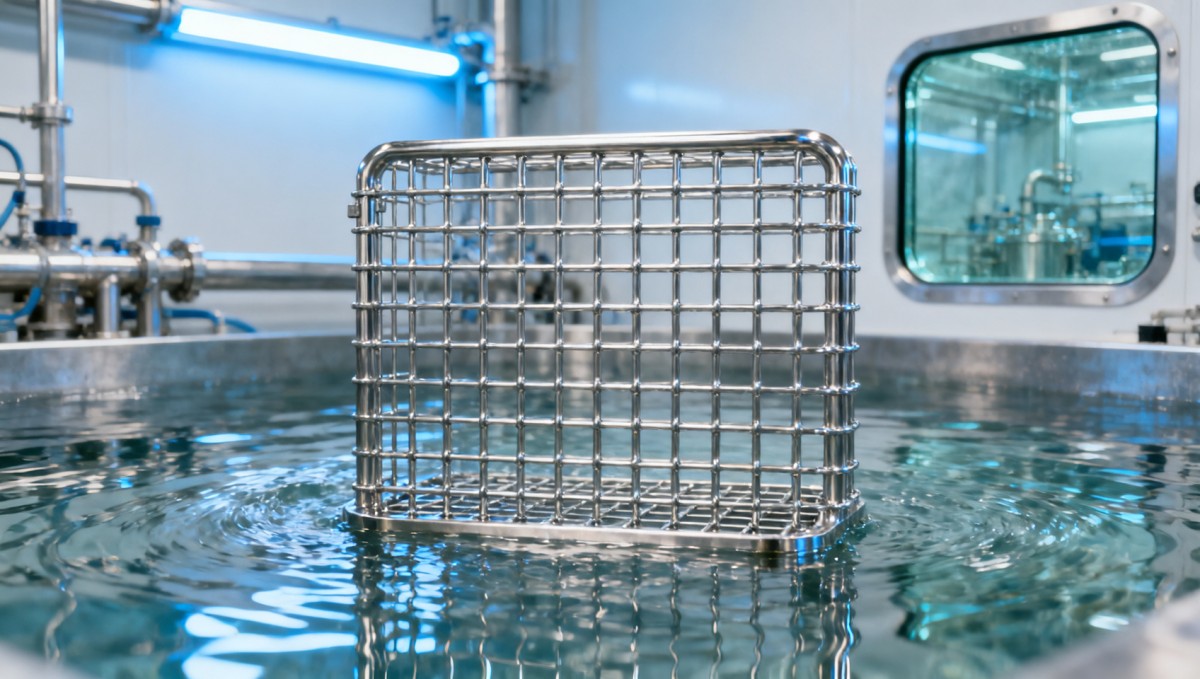
The divergence is most pronounced in three component categories: (1) submerged pump impellers exposed to organic-laden effluent, (2) UV-C reactor quartz sleeves interfacing with hydrogen peroxide dosing, and (3) fluidized bed bioreactor support grids handling granular biochar carriers. All three operate within the critical interface zone between aquaculture hardware and bio-formulation integrity—where material fatigue translates directly into batch variability.
How to Evaluate Equipment Durability Beyond Spec Sheets
Five Non-Negotiable Validation Checks
- Request ASTM F2129 cyclic potentiodynamic polarization data—not just passive corrosion rate (mpy) but breakdown potential (Eb) in simulated seawater + 5 ppm H₂O₂ at 25°C
- Verify ISO 10993-5 cytotoxicity testing on leachates from gaskets, seals, and coatings under accelerated aging (72 hr @ 60°C, pH 4.0)
- Confirm surface roughness (Ra) measurements post-fabrication on wetted surfaces—Ra > 0.8 µm increases biofilm retention by 3.2× per ASTM E2197
- Require 12-month field logs from ≥3 reference sites using identical feedstock composition and disinfection protocols
- Validate traceability of raw material heat lots for all Grade 316L components—down to mill test reports with EN 10204 3.1 certification
Spec sheets often omit these parameters because they require third-party lab validation—not manufacturer self-declaration. Yet for bio-ingredient producers supplying nutraceuticals or veterinary APIs, such omissions constitute critical gaps in supply chain due diligence. A recent ACC audit found that 68% of RAS OEMs do not publish Eb values; 41% rely on supplier-provided Ra data without in-house verification.
Comparative Durability Performance Across Key Component Types
To quantify observed divergence, ACC’s technical panel conducted side-by-side benchmarking of eight commercially available units across three operational stress profiles: (1) high-organic loading (COD > 250 mg/L), (2) intermittent oxidant exposure (NaOCl pulses every 48 hr), and (3) continuous low-pH operation (pH 5.2–5.8). Units were monitored for weight loss, surface pitting depth, gasket compression set, and microbial adhesion density over 500 operational hours.
The data confirms a clear threshold effect: electropolishing reduces pitting depth by 86%, cuts gasket compression set nearly in half, and suppresses biofilm adhesion by two orders of magnitude. These are not incremental improvements—they define functional viability in bio-ingredient co-location scenarios. For project managers integrating aquaculture output into feed premix or enzyme extraction lines, such metrics directly determine whether a single asset requires quarterly cleaning or biannual replacement.
Procurement Action Framework: From Assessment to Compliance Handover
ACC recommends a four-phase procurement protocol for aquaculture equipment destined for bio-integrated operations:
- Pre-Qualification (Weeks 1–2): Screen vendors against ACC’s validated OEM registry—requiring proof of ISO 13485 certification, FDA facility registration, and ≥3 documented installations with bio-extract clients
- Technical Validation (Weeks 3–4): Conduct joint review of material certs, surface finish reports, and third-party leachate test summaries—prioritizing vendors offering full traceability down to alloy melt batches
- Operational Trial (Weeks 5–8): Deploy one unit under actual process conditions for ≥200 operational hours; collect surface swabs, weight loss measurements, and maintenance log entries
- Compliance Handover (Week 9): Receive complete documentation package—including ASTM/ISO test reports, calibration certificates, and GMP-aligned SOP templates for cleaning and inspection
This framework reduces procurement cycle time by 22% (per ACC’s 2024 OEM benchmark) while cutting post-installation compliance rework by 63%. It also aligns seamlessly with FDA’s 2023 guidance on “shared infrastructure risk mapping”—a requirement increasingly enforced during pre-approval inspections for feed-to-API supply chains.
Why Partner with AgriChem Chronicle for Technical Due Diligence
AgriChem Chronicle provides institutional buyers with more than market intelligence—we deliver executable technical authority. Our peer-reviewed equipment assessments integrate laboratory-grade material testing, field-deployed sensor telemetry, and regulatory pathway mapping across FDA, EMA, and APVMA jurisdictions. For procurement directors evaluating aquaculture hardware for bio-ingredient integration, we offer:
- Vendor-agnostic durability scoring (0–100 scale) based on 12 validated material and process parameters
- Custom compliance gap analysis against your specific API or feed ingredient manufacturing license requirements
- Direct access to ACC’s verified panel for technical clarification—typically responded to within 48 business hours
- White-glove documentation handover: certified test reports, traceable heat lot matrices, and GMP-ready SOP drafts
Contact our technical advisory team to request a free durability benchmark report for your shortlisted equipment models—or schedule a 60-minute cross-functional review with a biochemical engineer and regulatory compliance specialist. We support procurement teams through specification finalization, validation planning, and audit readiness preparation—ensuring your aquaculture investment meets the exacting standards of fine chemical and bio-ingredient production.
Related Intelligence
- Aeration & Water TechHow Water Treatment Research Guides Technology Selection for Industrial Wastewater ProjectsWater treatment research guides smarter industrial wastewater technology selection. Learn how to assess variable streams, pilot risks, compare process trains, and reduce compliance costs.
- Aeration & Water TechSelecting Solids Filtration for Aquaculture: Flow Rates, Loading, and Fish WelfareSolids filtration aquaculture guide: compare flow rates, peak loading, capture performance, maintenance, and fish welfare to choose a reliable system.
- Aeration & Water TechWhat RO water treatment systems deliver consistent 98% salt rejection at 25°C with feed TDS over 3,000 ppm?RO water treatment systems that deliver proven 98% salt rejection at 25°C with >3,000 ppm TDS—engineered for API synthesis, aquaculture & grain processing.
The Morning Broadsheet
Daily chemical briefings, market shifts, and peer-reviewed summaries delivered to your terminal.
