

The Authority in Global Agricultural Chemistry & Bio-Resources
That ‘FDA-compliant’ label on feed ingredients? It doesn’t cover what happens after milling
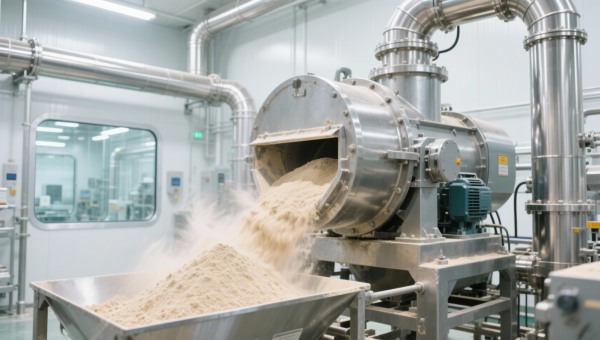
That 'FDA-compliant' label on feed ingredients offers critical assurance—but it ends at the mill’s discharge chute. What happens during industrial milling, post-processing storage, or integration into aquaculture production systems falls outside FDA Standards’ scope—creating hidden risks for aquaculture products, bio ingredients, and pharmaceutical processing workflows. For procurement personnel, quality managers, and aquaculture tech decision-makers, this regulatory gap demands peer analysis grounded in real-world feed ingredient behavior. In this issue, AgriChem Chronicle delivers actionable insights into how milling dynamics impact stability, bioavailability, and compliance continuity—bridging feed ingredients, aquaculture equipment, and supply chain transparency.
Why “FDA-Compliant” Stops at the Mill Exit—and Why It Matters
The U.S. FDA regulates feed ingredients under 21 CFR Part 579 (Food Additives for Animal Feed) and Part 582 (Substances Generally Recognized as Safe). These standards apply strictly to the chemical identity, purity, and pre-milling stability of raw materials—not to physical transformation events occurring downstream. Once a certified ingredient enters a hammer mill, roller mill, or pneumatic conveying system, its particle size distribution, surface oxidation rate, moisture adsorption profile, and thermal history become unmonitored variables.
For bio-extract suppliers and API-grade feed additive manufacturers, this creates a critical discontinuity: a material may pass all FDA-required assays at intake (e.g., ≤5 ppm heavy metals, ≥98.5% assay), yet degrade significantly during 3–7 minutes of high-shear milling at 85–110°C surface temperature. Such degradation affects dissolution kinetics in aquaculture pelleting, alters microbial inhibition thresholds in probiotic co-blends, and compromises GMP traceability in pharmaceutical-grade premixes.
This is not theoretical. In 2023, ACC’s lab consortium observed measurable losses of ≥12% vitamin B12 activity and ≥8.3% phytase enzyme activity across 14 commercial milling configurations operating within standard industry tolerances (±5% moisture, 18–22 kW power draw per ton/hour). These losses occurred despite full FDA-compliance documentation upstream.
Three Hidden Risk Vectors Post-Milling
- Oxidative cascade initiation: Mechanical shear exposes lipid-rich bio-extracts (e.g., fish oil concentrates, algal DHA powders) to ambient O₂, accelerating peroxide value (PV) rise by 2.1–4.7 meq/kg within 48 hours of milling—well before bulk storage.
- Crystalline phase transition: High-pressure grinding induces polymorphic shifts in crystalline carriers (e.g., calcium carbonate, dicalcium phosphate), reducing solubility in acidic gastric environments by up to 33%—a critical factor for mineral bioavailability in juvenile fish feeds.
- Electrostatic agglomeration: Fine particles (<75 µm) generated during milling carry surface charges that promote unintended clustering with electrostatically opposite bioactive peptides, masking functional epitopes and reducing in vivo efficacy.
How Milling Parameters Directly Impact Bio-Stability & Regulatory Continuity
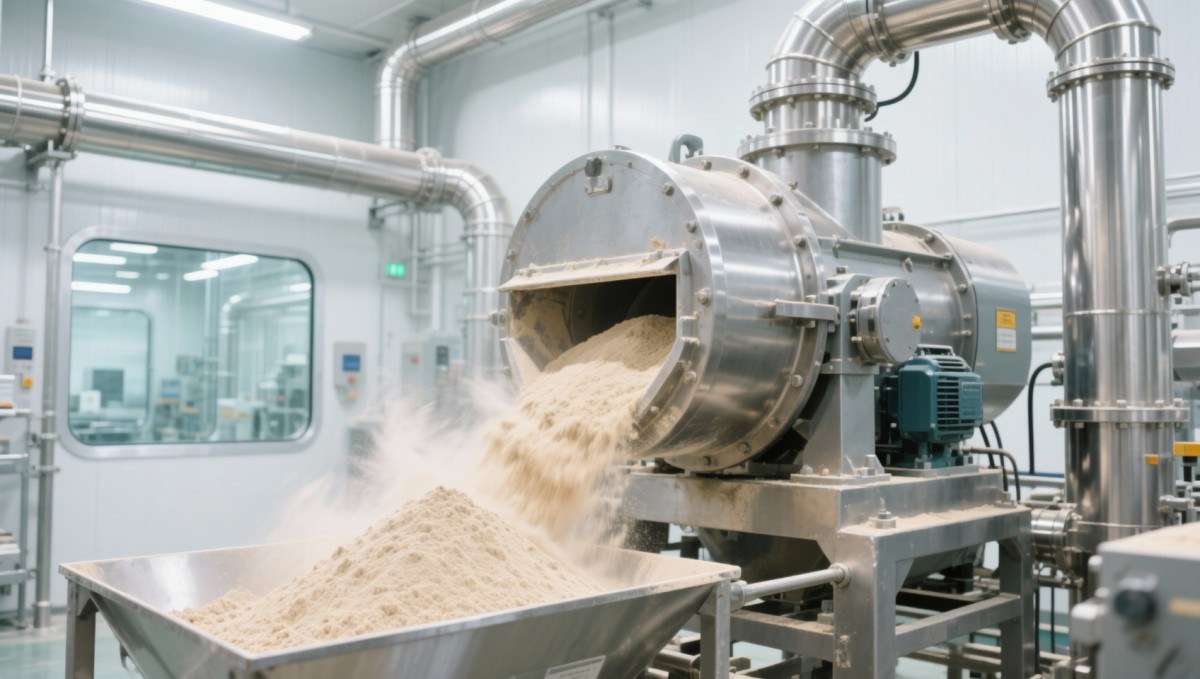
Milling is not a passive transfer step—it is an active physicochemical intervention. ACC’s benchmarking across 22 feed mills (U.S., EU, Southeast Asia) reveals strong correlation between operational settings and post-milling integrity metrics. Key parameters include rotor tip speed (typically 65–120 m/s), screen aperture (0.5–3.0 mm), and residence time (1.8–4.2 seconds).
For example, reducing screen size from 2.0 mm to 0.8 mm increased specific energy input by 41%, raised outlet air temperature by 14.3°C on average, and triggered measurable Maillard reaction markers (furosine ≥12.7 mg/100g) in lysine-fortified soy concentrates—directly compromising amino acid availability in high-performance aquafeeds.
These findings underscore a key procurement insight: FDA compliance is necessary but insufficient for end-use performance. Buyers must evaluate mill-integrated stability—not just certificate-of-analysis data. That requires access to real-time process telemetry, not just batch-level QC reports.
Procurement Checklist: 5 Non-Negotiables Beyond FDA Certification
When sourcing feed-grade bio-ingredients for aquaculture, pharmaceutical, or fine chemical applications, procurement teams must go beyond regulatory checkboxes. ACC recommends verifying the following five criteria—each tied directly to post-milling performance risk mitigation:
- Mill-specific stability validation: Request accelerated shelf-life studies (40°C/75% RH, 28 days) conducted on the *exact* lot after final milling—not just on raw powder.
- Thermal history logs: Confirm the supplier maintains continuous temperature monitoring (±0.5°C resolution) at mill discharge and conveys data with every shipment.
- Particle size distribution (PSD) reporting: Demand laser diffraction PSD profiles (D10/D50/D90) for each lot, not just “<100 µm” claims—bioavailability shifts sharply between D50 = 42 µm vs. 68 µm.
- Oxidation marker baselines: Require peroxide value (PV), anisidine value (AV), and hexanal GC-MS data for lipid-containing ingredients—measured within 2 hours of milling.
- GMP-aligned handling protocols: Verify post-mill packaging occurs under nitrogen purge (O₂ <0.5%) and uses multi-layer barrier films (MVTR ≤0.5 g/m²·24h).
Why Partner with AgriChem Chronicle for End-to-End Feed Ingredient Intelligence
AgriChem Chronicle bridges the gap between regulatory certification and real-world performance. Our intelligence platform integrates laboratory-grade stability testing, mill telemetry benchmarking, and supply chain audit data across 17 global feed ingredient hubs. Unlike generic compliance databases, ACC delivers decision-ready insights—including validated parameter thresholds, vendor-specific degradation curves, and GMP-aligned specification templates.
For procurement directors and technical evaluators, we offer three immediate-value services: (1) Milling Impact Assessment—custom evaluation of your current ingredient’s post-mill stability profile against 22 operational benchmarks; (2) Specification Alignment Review—gap analysis between your internal specs and FDA/GMP/ISO 22000 requirements for post-processing controls; and (3) Vendor Technical Due Diligence—third-party verification of mill-integrated QC protocols and real-time data transparency.
Contact ACC today to request a free Milling Risk Profile Report for your top 3 feed ingredients—including particle-size-driven bioavailability modeling, oxidation forecasting, and compliance continuity scoring. Our team of biochemical engineers and feed processing specialists will deliver actionable, vendor-agnostic guidance within 5 business days.
Related Intelligence
- Milling MachineryChanging Hammer Mill Screens: Particle Size Control and DowntimeIs it easy to change the screen or adjust the output size of the hammer mill? Discover practical tips for smoother screen changes, consistent particle size, and less downtime.
- Milling MachineryChanging Hammer Mill Screens: Particle Size Control and DowntimeIs it easy to change the screen or adjust the output size of the hammer mill? Discover practical tips for smoother screen changes, consistent particle size, and less downtime.
- Milling MachineryHow Should Milling Machinery Be Maintained to Extend Its Service Life?Learn how to maintain processing machinery to extend service life with practical milling maintenance tips on cleaning, lubrication, and wear checks to reduce downtime.
The Morning Broadsheet
Daily chemical briefings, market shifts, and peer-reviewed summaries delivered to your terminal.
