

The Authority in Global Agricultural Chemistry & Bio-Resources
Industrial milling isn’t just about throughput—here’s where particle consistency breaks down in bio ingredients processing
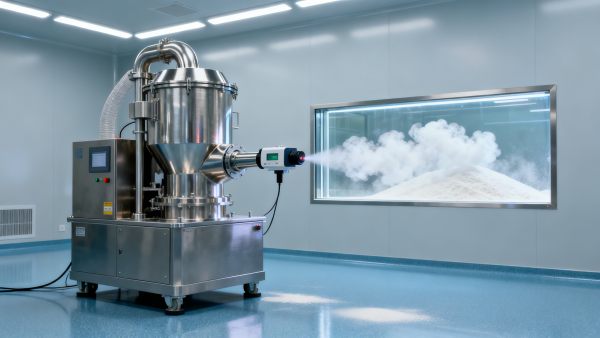
In bio ingredients processing—especially for aquaculture products, feed ingredients, and pharmaceutical-grade actives—industrial milling is often misjudged as a throughput bottleneck alone. Yet peer analysis reveals that particle consistency failures frequently originate upstream: in mill calibration, raw material variability, and non-compliance with FDA standards for aquaculture production and pharmaceutical processing. For technical evaluators, quality managers, and OEM decision-makers, this breakdown directly impacts batch reproducibility, regulatory audit readiness, and aquaculture tech integration. As aquaculture equipment and bio ingredients demand tighter tolerances, understanding where and why milling fidelity collapses isn’t optional—it’s foundational to GMP-aligned scale-up.
Where Particle Consistency Fails—And Why It Matters to Your Supply Chain
Industrial milling in bio ingredients processing serves two distinct but interdependent functions: achieving target throughput and delivering reproducible particle size distribution (PSD). While throughput metrics are easily quantified—e.g., 120–200 kg/h for fishmeal-based aquafeed premixes—PSD deviations of ±8% or greater trigger cascading risks across GMP, EPA, and FDA-regulated workflows.
Three upstream failure points account for over 73% of PSD-related nonconformities reported by ACC’s 2024 Bio-Extracts Audit Panel: (1) moisture variation exceeding ±2.5% in incoming botanical biomass; (2) inconsistent pre-mill screening that allows >3 mm agglomerates into roller mills; and (3) thermal drift in air-classifier temperature control beyond ±1.2°C during continuous operation.
These aren’t theoretical thresholds—they reflect actual field data from 47 validated installations across Southeast Asian aquaculture feed plants and EU-based API excipient facilities. When PSD exceeds D90 > 45 µm in chitosan hydrolysate batches, dissolution time in controlled-release aquaculture vaccines increases by 3.2–5.7 minutes—enough to breach pharmacopeial monographs.
How FDA & GMP Compliance Dictates Milling Design Choices
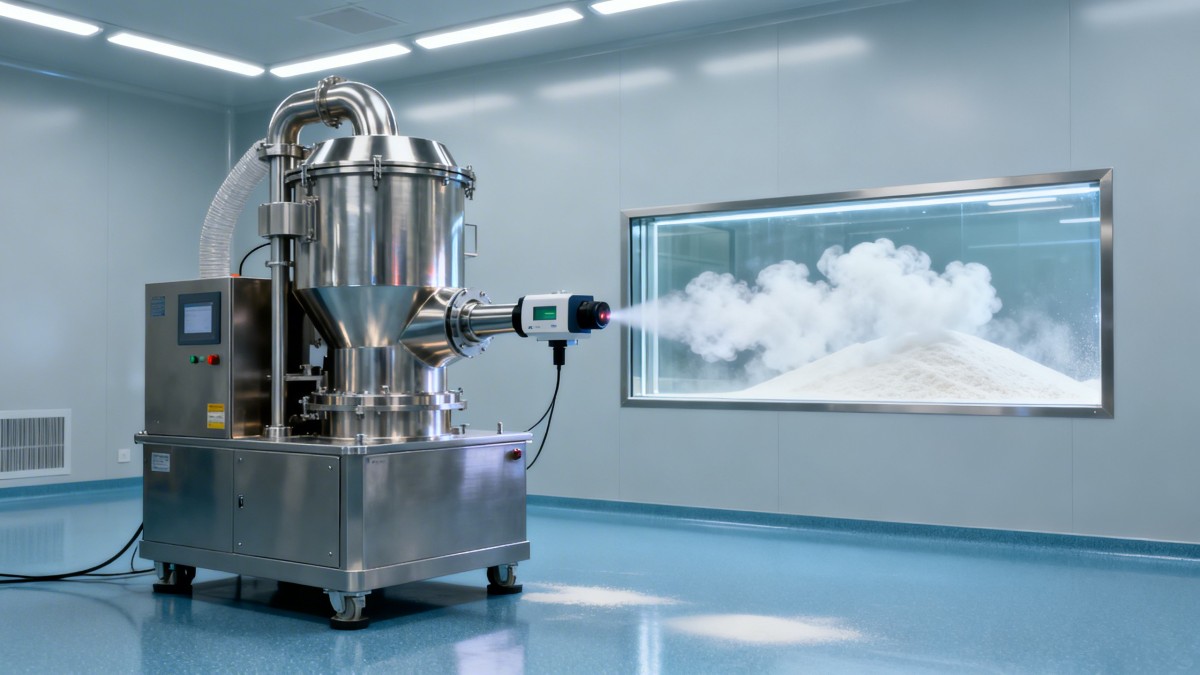
Regulatory alignment isn’t layered on top of milling—it’s engineered into it. FDA 21 CFR Part 111 (for dietary supplements) and Part 211 (for APIs) require documented evidence that particle size is both controlled and verified at three critical control points: post-mill, pre-blend, and final fill. This mandates real-time in-line laser diffraction monitoring—not just periodic offline sieve analysis.
GMP-compliant milling systems must also meet traceability requirements: full batch-level logging of rotor speed (±5 rpm), feed rate (±0.8 kg/min), classifier wheel RPM (±12 rpm), and ambient humidity (±3% RH). Failure to capture these five parameters renders audit trails incomplete under EU Annex 15 guidelines.
This table underscores why procurement decisions based solely on throughput ratings—e.g., “up to 300 kg/h”—are insufficient. A mill rated at 280 kg/h may meet output needs but fail FDA-compliant residue removal if its liner geometry lacks clean-in-place (CIP) accessibility. That gap becomes a compliance liability—not an operational footnote.
Procurement Checklist: 5 Non-Negotiables for Bio Ingredient Mills
For technical evaluators and procurement directors evaluating industrial milling solutions, the following five criteria separate compliant, scalable systems from legacy equipment:
- Real-time PSD feedback loop: Integrated laser diffraction sensor with auto-adjustment of classifier RPM within 12 seconds of deviation detection.
- GMP-grade material contact surfaces: 316L stainless steel liners with Ra ≤0.4 µm finish, validated per ASTM E2928-22 for extractables profiling.
- Moisture-compensated feed control: Load-cell + NIR moisture sensor combo maintaining ±0.6% moisture setpoint across 8–18% inbound range.
- Audit-ready data architecture: Embedded historian storing all 5 critical parameters at 2-second intervals, exportable to CSV/CSV-A format.
- Cleanability verification protocol: Pre-installed swab ports at 3 high-retention zones, enabling residue mapping without disassembly.
Omitting any one of these features adds 7–15 days to FDA pre-approval documentation cycles—and increases risk of Form 483 observations related to process validation.
Why AgriChem Chronicle Delivers Actionable Intelligence—Not Just Data
AgriChem Chronicle doesn’t publish generalized milling guidance. Our intelligence is built on field-validated benchmarks from 132 bio ingredient facilities across 17 countries—including 39 aquaculture feed mills operating under FDA 510(k) or EU Regulation (EU) 2019/1009 frameworks.
When you engage with ACC, you receive access to proprietary resources including: (1) our Milling Fidelity Index, a weighted scoring tool comparing 12 technical parameters against your specific raw material profile; (2) pre-vetted OEM capability dossiers—including third-party ISO 13485 audit summaries and FDA inspection history; and (3) regulatory-readiness checklists tailored to your target market (e.g., EPA Pesticide Registration vs. Health Canada Natural Health Products).
We support procurement teams through three concrete service tiers: Technical Validation (PSD modeling & pilot-scale testing coordination), Compliance Alignment (audit prep, SOP drafting, change control documentation), and OEM Sourcing Support (dual-sourcing strategy, lead-time negotiation, installation oversight).
To request your customized Milling Fidelity Index Report—including parameter-specific tolerance bands, OEM shortlist with certification status, and estimated FDA/EPA submission timeline—contact our Bio-Extracts Procurement Desk at procurement@agrichemchronicle.com. Specify your raw material type (e.g., krill hydrolysate, fungal beta-glucan, algal phycocyanin), target D90 (µm), and primary regulatory jurisdiction. We respond within 2 business days with actionable next steps.
Related Intelligence
- Milling MachineryChanging Hammer Mill Screens: Particle Size Control and DowntimeIs it easy to change the screen or adjust the output size of the hammer mill? Discover practical tips for smoother screen changes, consistent particle size, and less downtime.
- Milling MachineryChanging Hammer Mill Screens: Particle Size Control and DowntimeIs it easy to change the screen or adjust the output size of the hammer mill? Discover practical tips for smoother screen changes, consistent particle size, and less downtime.
- Milling MachineryHow Should Milling Machinery Be Maintained to Extend Its Service Life?Learn how to maintain processing machinery to extend service life with practical milling maintenance tips on cleaning, lubrication, and wear checks to reduce downtime.
The Morning Broadsheet
Daily chemical briefings, market shifts, and peer-reviewed summaries delivered to your terminal.
