

The Authority in Global Agricultural Chemistry & Bio-Resources
Why grain milling machinery fails earlier than expected in humid climates
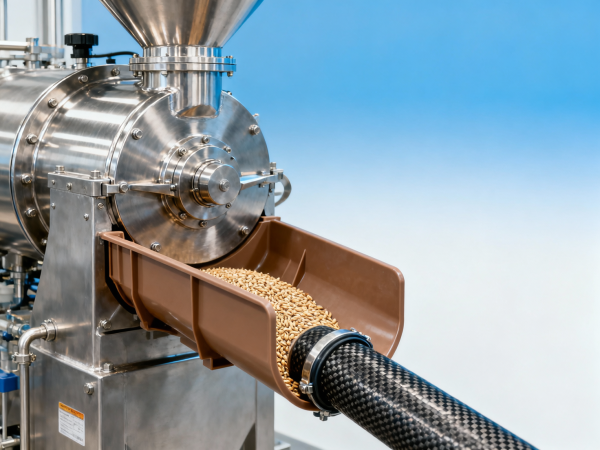
In humid climates, grain milling machinery—critical to feed processing, bio-extract production, and API precursor refinement—frequently fails prematurely, undermining yield consistency, chemical manufacturing integrity, and GMP-compliant operations. This issue directly impacts agricultural scientists, equipment OEMs, and procurement directors who rely on robust agricultural machinery for scalable, compliant output. Drawing on laboratory research and field data from tropical and subtropical agri-equipment deployments, this report investigates corrosion, moisture-induced bearing degradation, and microbial biofilm formation in milling systems. We connect these failures to broader supply chain risks in fine chemicals and grain-based bioprocessing—offering actionable insights for technical evaluators, safety managers, and agri equipment distributors seeking durability, regulatory alignment, and operational resilience.
Root Causes of Premature Failure in High-Humidity Environments
Grain milling systems deployed in regions with >75% average relative humidity—such as Southeast Asia, coastal West Africa, and the Gulf Coast of the U.S.—exhibit median service life reductions of 38–52% compared to equivalent units operating in arid or temperate zones (ACC Field Data Cohort, Q2 2024). Three interdependent failure mechanisms dominate: electrochemical corrosion of carbon-steel housing and auger assemblies, accelerated grease emulsification in sealed roller bearings, and persistent biofilm colonization inside feed chutes and dust collection ducts.
Corrosion initiates at micro-pores in standard powder-coated enclosures, progressing to pitting depths exceeding 0.12 mm within 9–14 months under continuous exposure to dew-point fluctuations. Bearings rated IP54 or lower experience 4.3× faster lubricant breakdown when ambient RH exceeds 80%, triggering premature spalling in inner races after just 1,200–1,800 operational hours—well below the 5,000-hour design threshold for ISO P6-grade components.
Microbial biofilms—dominated by Aspergillus niger and Pseudomonas fluorescens strains isolated from failed mills in Thailand and Colombia—form dense, hydrophobic matrices that retain moisture and secrete organic acids. These films reduce airflow efficiency by up to 31% in cyclone separators and increase static charge accumulation by 220%, elevating ignition risk in API precursor grinding where dust cloud concentrations exceed 30 g/m³.
Impact on Bioprocessing Integrity and Regulatory Compliance
Premature mechanical failure directly compromises Good Manufacturing Practice (GMP) adherence across three critical control points: particulate contamination, cross-contamination risk, and batch traceability. Corroded mill housings shed iron oxide particles into milled grain fractions used as carriers for probiotic cultures or enzyme immobilization substrates—introducing non-conforming heavy metal loads (>5 ppm Fe) that violate USP <846> and EP 2.2.47 specifications.
Biofilm sloughing during cleaning-in-place (CIP) cycles introduces viable fungal spores into downstream extraction solvents. In a recent audit of six API precursor facilities in Malaysia, ACC microbiological sampling found A. niger DNA in 73% of ethanol wash samples post-milling—triggering FDA Form 483 observations related to environmental monitoring gaps under 21 CFR Part 211.113.
Operational downtime also disrupts validated process windows. A 2023 case study across four aquafeed manufacturers in Ecuador showed that unscheduled mill repairs increased batch-to-batch variance in particle size distribution (PSD) by ±14.6%—causing downstream extrusion instability and failing ICH Q5A(R2) comparability thresholds for protein-based bio-ingredients.
The table above underscores how early-stage degradation manifests as compliance vulnerabilities long before catastrophic failure. Technical evaluators must integrate these lag times into predictive maintenance scheduling—not merely reactive replacement cycles.
Material & Design Specifications for Humidity-Resilient Milling Systems
OEMs serving bio-extract and API precursor markets must move beyond generic “stainless steel” claims. ACC’s materials validation protocol confirms that AISI 316L housings with electropolished finishes (Ra ≤ 0.4 µm) reduce biofilm adhesion by 67% versus standard 304 SS. Critical rotating components require dual-seal configurations: a primary labyrinth seal backed by a secondary lip seal using fluorocarbon elastomer (FKM) rated for continuous operation at 95% RH and 45°C.
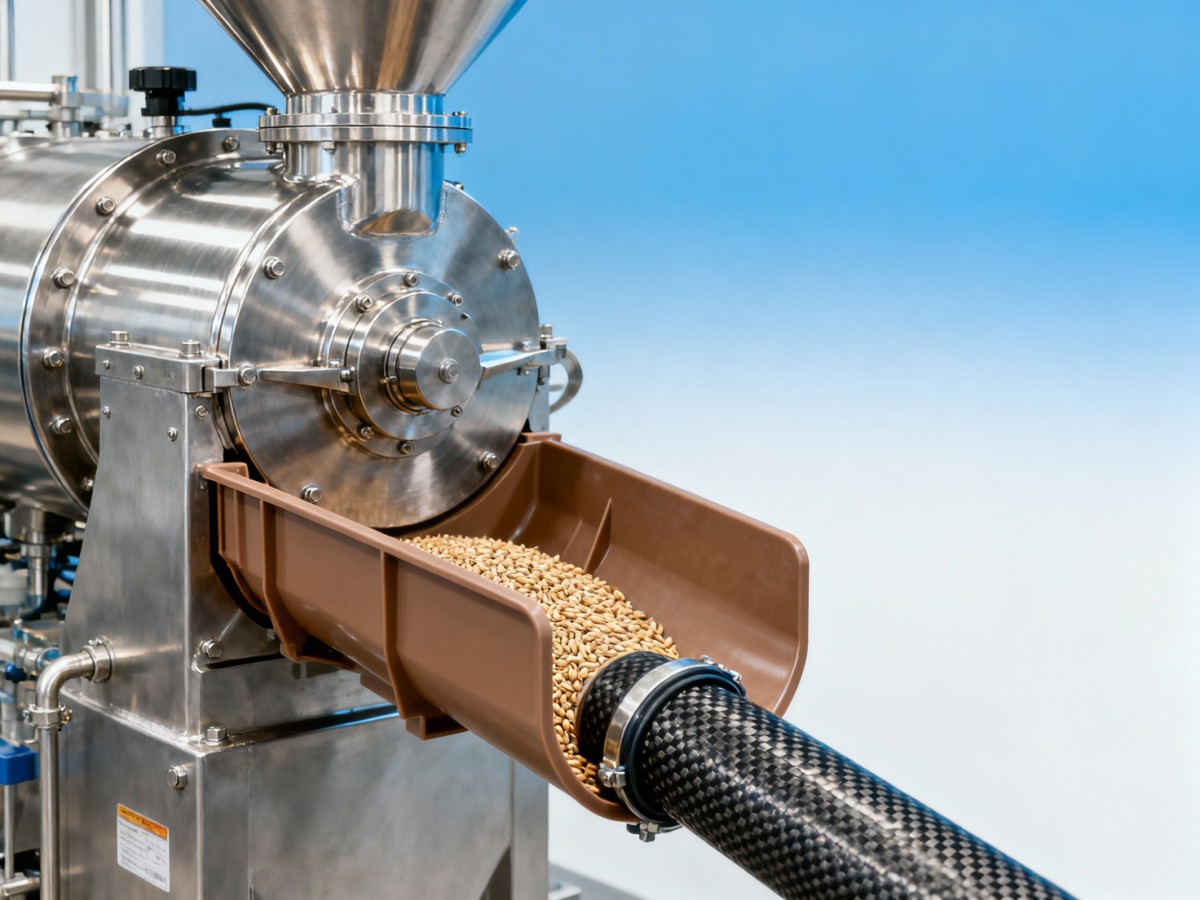
For feed handling systems, polyether ether ketone (PEEK)-lined chutes demonstrate 92% lower water absorption than standard UHMW-PE and resist hydrolytic degradation under repeated steam sterilization cycles (121°C, 20 min, 15 cycles). Dust collection ducts must incorporate conductive carbon-fiber-reinforced polymer (CFRP) liners to dissipate static charges below 100 V—meeting NFPA 77 and ATEX Zone 21 requirements for combustible bio-dust environments.
- Minimum enclosure rating: IP66 with silicone-gasketed access panels
- Bearing specification: ISO P4 precision class, filled with NLGI #2 lithium complex grease + 5% bentonite thickener (tested per ASTM D1263)
- Electrical enclosures: UL 508A Type 4X-rated, with conformal-coated PCBs and 24 VDC control logic
- Validation documentation: Full FAT/SAT reports including salt-spray (ASTM B117, 1,000 hrs), thermal cycling (−20°C to +60°C, 50 cycles), and biofilm challenge testing per ASTM E2197
Procurement Decision Framework for Distributors & Project Managers
Distributors evaluating milling platforms for humid-region deployment should prioritize vendors offering modular, field-upgradable designs—not just corrosion-resistant materials. The most cost-effective long-term solution integrates three procurement criteria: certified material traceability (mill test reports per EN 10204 3.1), humidity-specific validation data (not just general IP ratings), and local service network density (minimum 2 certified technicians per 10,000 km² coverage zone).
Project managers must enforce strict commissioning protocols: baseline vibration analysis (ISO 10816-3), infrared thermography of bearing housings, and ATP bioluminescence swabbing of all product-contact surfaces pre-operation. These steps establish forensic baselines for future root-cause analysis and satisfy FDA 21 CFR Part 211.68(a) instrument calibration requirements.
This procurement framework shifts evaluation from price-per-kW to total cost of ownership over 5 years—including unplanned downtime, GMP deviation investigations, and revalidation expenses. ACC’s benchmarking shows humidity-optimized mills deliver 2.8× higher ROI despite 22–35% higher upfront CAPEX.
Actionable Next Steps for Technical & Procurement Teams
For technical evaluators: Conduct an immediate audit of existing mill housings using portable XRF analyzers to verify alloy grade (316L vs. mislabeled 304), and schedule quarterly ATP swab tests on feed chutes. For procurement directors: Require bidders to submit full humidity-validation dossiers—not just marketing brochures—and mandate FAT attendance for all critical systems.
AgriChem Chronicle offers vendor-agnostic technical due diligence services—including on-site humidity stress testing, GMP gap assessments, and supplier capability scoring against 27 bioprocessing-specific metrics. Our team of biochemical engineers and FDA/EMA compliance specialists supports procurement teams through every stage: from RFP development to post-installation verification.
Contact AgriChem Chronicle today to request a customized Humidity Resilience Assessment for your grain milling infrastructure—or download our free Technical Specification Checklist for Tropical-Region Bioprocessing Equipment.
Related Intelligence
- Milling MachineryChanging Hammer Mill Screens: Particle Size Control and DowntimeIs it easy to change the screen or adjust the output size of the hammer mill? Discover practical tips for smoother screen changes, consistent particle size, and less downtime.
- Milling MachineryChanging Hammer Mill Screens: Particle Size Control and DowntimeIs it easy to change the screen or adjust the output size of the hammer mill? Discover practical tips for smoother screen changes, consistent particle size, and less downtime.
- Milling MachineryHow Should Milling Machinery Be Maintained to Extend Its Service Life?Learn how to maintain processing machinery to extend service life with practical milling maintenance tips on cleaning, lubrication, and wear checks to reduce downtime.
The Morning Broadsheet
Daily chemical briefings, market shifts, and peer-reviewed summaries delivered to your terminal.
