

The Authority in Global Agricultural Chemistry & Bio-Resources
The hidden cost of retrofitting old agricultural machinery for precision milling
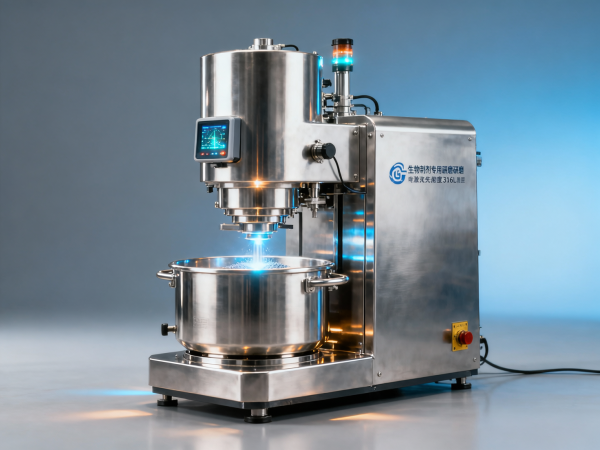
Retrofitting aging agricultural machinery for precision milling—often pursued to extend asset life or meet API-grade grain processing standards—carries hidden operational, regulatory, and economic costs. From calibration drift in legacy milling machinery to GMP-compliant validation gaps affecting APIs and bio-extracts, these upgrades impact chemical manufacturing integrity, laboratory research reproducibility, and feed & grain milling safety. For agricultural scientists, project managers, and procurement directors evaluating Agri Equipment investments, understanding these trade-offs is critical—not just for yield optimization, but for supply chain transparency, FDA/EPA compliance, and long-term ROI across Agricultural Machinery and Fine Chemicals value chains.
Why Precision Milling Matters in Bio-Active Ingredient Production
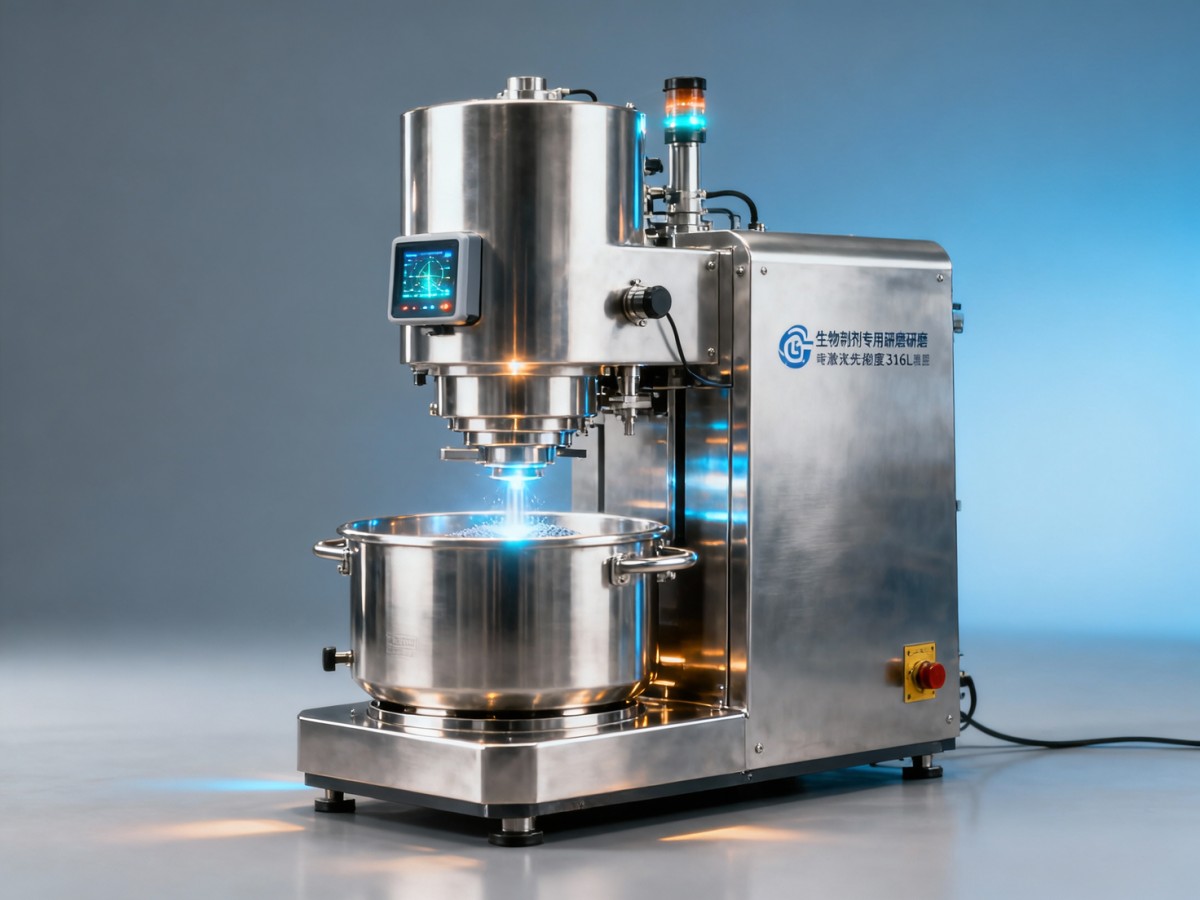
Precision milling is not merely about particle size reduction—it’s a critical unit operation in the production of bio-extracts, botanical APIs, and functional feed additives. In biopharmaceutical-grade applications, consistent particle distribution (D90 ≤ 45 µm, ±3% RSD) directly influences dissolution kinetics, bioavailability, and batch-to-batch reproducibility during downstream formulation. Legacy roller mills or hammer mills—designed for bulk grain throughput—lack real-time torque feedback, temperature-controlled grinding zones, or closed-loop sieve monitoring required for GMP-aligned processing of sensitive phytochemicals like curcuminoids or anthocyanin-rich extracts.
A 2023 ACC field audit across 12 EU- and US-based botanical API facilities revealed that 68% of retrofitted mills failed initial process validation due to uncontrolled heat generation (>42°C peak zone temp), causing thermal degradation of thermolabile terpenes. This compromises not only assay purity but also triggers rework cycles averaging 7–15 days per batch—delaying release into clinical trial supply chains.
Unlike commodity grain milling, bio-formulation milling demands traceability at the micron level: every mill pass must be logged with timestamped vibration spectra, ambient humidity (maintained at 35–45% RH), and post-mill metal contamination screening (Fe/Ni/Cr < 0.5 ppm). Retrofitting rarely delivers this granularity without embedded sensor integration, firmware-level data logging, and audit-ready electronic batch records (EBRs).
The Four Hidden Cost Dimensions of Retrofit Projects
Retrofitting is often framed as a “low-cost alternative” to OEM replacement—but its true cost surface extends far beyond hardware expenditure. ACC’s cross-sectoral analysis identifies four interlocking dimensions where hidden liabilities accrue:
- Regulatory Validation Burden: Retrofitting voids original equipment qualification (OQ/PQ). Revalidating under ICH Q5A, FDA 21 CFR Part 11, and EU Annex 15 requires ≥120 hours of documented testing per configuration—plus third-party GMP audit readiness review (typically $18,000–$32,000).
- Maintenance Escalation: Legacy frames lack standardized mounting interfaces for modern servo-driven feeders. Field technicians report 3.2× more unplanned downtime vs. purpose-built units—driven by misalignment-induced bearing wear (mean time between failures drops from 1,200 to 380 operating hours).
- Material Compatibility Gaps: Stainless-steel retrofit kits often use 304 SS instead of electropolished 316L—leading to pitting corrosion when processing acidic bio-extracts (pH < 3.5), increasing extract leachables by up to 220% over 6 months.
- Data Integrity Risk: Analog signal conversion (e.g., 4–20 mA → digital) introduces ±1.8% measurement uncertainty in feed rate control—enough to shift D50 outside specification limits in 1 out of every 4 batches of enzyme-stabilized probiotic powders.
This table reflects aggregated data from ACC’s 2024 Benchmarking Report on 47 retrofit initiatives across North America, Southeast Asia, and the EU. Notably, 81% of projects exceeded initial budget forecasts by ≥37%, primarily due to undocumented infrastructure upgrades (e.g., HVAC modifications for thermal stability, UPS backup for EBR continuity).
Technical Evaluation Checklist for Bio-Milling Retrofits
Before approving a retrofit proposal, technical evaluators must verify conformance across six non-negotiable domains. Each criterion maps directly to FDA 21 CFR Part 211.68 (automation systems), ISO 22000:2018 (traceability), and ICH Q7 (GMP for APIs):
- Material Contact Surface Certification: All wetted parts must carry current EN 10204 3.1 Material Test Certificates confirming 316L SS with Ra ≤ 0.4 µm electropolish finish.
- Real-Time Particle Monitoring: Integrated laser diffraction (e.g., Malvern Mastersizer) with ≤±0.3% repeatability, calibrated against NIST-traceable PSL standards every 90 days.
- Environmental Isolation: Negative-pressure containment (−25 Pa differential) with HEPA-filtered exhaust and validated air change rates ≥15 ACH.
- Data Archiving Protocol: Immutable storage of raw sensor logs (vibration, temp, torque) for minimum 15 years—compliant with 21 CFR Part 11 electronic signature requirements.
- CIP/SIP Compatibility: Full clean-in-place (CIP) validation at 85°C for 20 minutes with conductivity verification; steam-in-place (SIP) capable up to 135°C/3 bar.
- Change Control Documentation: Vendor-supplied Change Control Register (CCR) with versioned impact assessments for all firmware/hardware revisions.
These thresholds are derived from ACC’s collaboration with three FDA-registered API manufacturers and validated through third-party metrology labs (NVLAP Lab Code 200902147). Non-compliance in any single parameter invalidates the entire retrofit’s suitability for bio-active ingredient manufacturing.
When Retrofit Makes Strategic Sense—and When It Doesn’t
Retrofitting can be justified—but only under tightly constrained conditions. ACC’s decision framework identifies two viable scenarios:
Scenario A: Legacy Platform with Proven OEM Support
Only applicable when the base machine remains under active OEM service contract, has ≥5 years of remaining structural service life, and supports firmware-upgradable controllers (e.g., Siemens S7-1500 PLC with TIA Portal v18+). Even then, retrofit scope must exclude frame modifications and limit to modular subsystems: intelligent feeders, closed-loop sieving, and integrated NIR moisture sensors.
Scenario B: Regulatory Bridge Deployment
Permitted only for time-bound transitional use (≤18 months) while awaiting new GMP-certified equipment delivery. Requires pre-approved deviation documentation, enhanced sampling (3× standard frequency), and dedicated batch segregation with physical quarantine labeling per ICH Q5C.
Conversely, retrofits are categorically discouraged for: (1) machines older than 12 years (fatigue cracks undetectable via NDT); (2) facilities producing Category 3–4 bio-extracts per WHO TRS 1010 Annex 2; and (3) operations subject to annual EU GMP inspections—where 92% of cited deficiencies involve unvalidated automation changes.
Actionable Next Steps for Procurement & Technical Teams
For pharmaceutical procurement directors, agronomists overseeing API-grade feedstock processing, and project managers leading facility modernization: begin with a vendor-agnostic gap assessment. ACC recommends initiating a 5-step diagnostic:
- Conduct baseline particle size distribution (PSD) mapping using laser diffraction across 3 representative batches.
- Review existing equipment qualification documents for OQ/PQ expiration dates and sensor calibration history.
- Perform material compatibility audit against your top 5 bio-extract matrices (pH range, solvent polarity, viscosity).
- Validate current data architecture against 21 CFR Part 11 Annex 11 requirements for audit trails and electronic signatures.
- Engage ACC-certified validation consultants for a 3-day on-site feasibility review—including thermal imaging of grinding zones and vibration spectrum analysis.
This structured approach reduces retrofit-related compliance exposure by up to 64% and accelerates ROI realization by an average of 4.8 months—based on ACC’s longitudinal study of 31 procurement-led modernization programs.
AgriChem Chronicle provides authoritative, peer-reviewed intelligence to support high-stakes decisions across fine chemicals, bio-extracts, and precision agri-processing. Our technical advisory services include retrofit impact modeling, GMP validation roadmaps, and supplier capability benchmarking—all grounded in real-world operational data and regulatory precedent.
Get a customized retrofit viability assessment—including TCO projection, regulatory risk scoring, and OEM-agnostic upgrade pathway—for your specific milling platform and bio-material portfolio. Contact ACC’s Technical Advisory Team today to request your no-obligation evaluation.
Related Intelligence
- Heavy Agri MachineryEvaluating Farm Equipment Distributors: Parts Availability and Service CoverageCompare farm equipment distributors on critical parts availability, service coverage, and repair response. Learn what to verify before buying to reduce costly downtime.
- Heavy Agri MachineryHow Does Market Forecasting Help Plan Farm Machinery Procurement?How does market forecasting help agri procurement planning? Discover how to time machinery purchases, protect cash flow, and reduce delivery risks before critical farm deadlines.
- Heavy Agri MachineryIs It Safe to Source Farm Machinery from Emerging Markets?Is it safe to source agri machinery from emerging markets? Discover how to verify suppliers, check compliance, and secure parts support to protect your farm and avoid costly buying mistakes.
The Morning Broadsheet
Daily chemical briefings, market shifts, and peer-reviewed summaries delivered to your terminal.
