

The Authority in Global Agricultural Chemistry & Bio-Resources
APIs stability drops after cryogenic milling — but not for the reason most assume
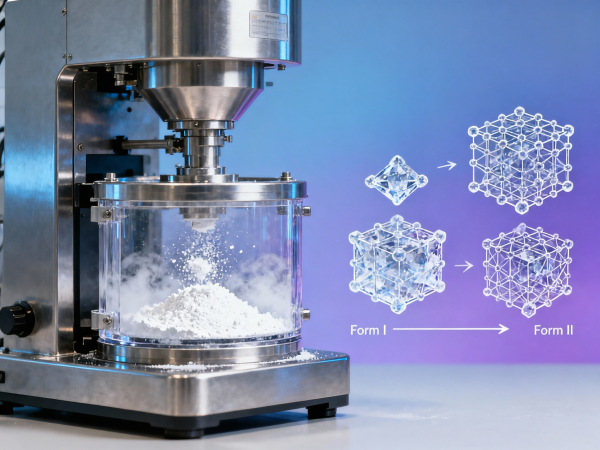
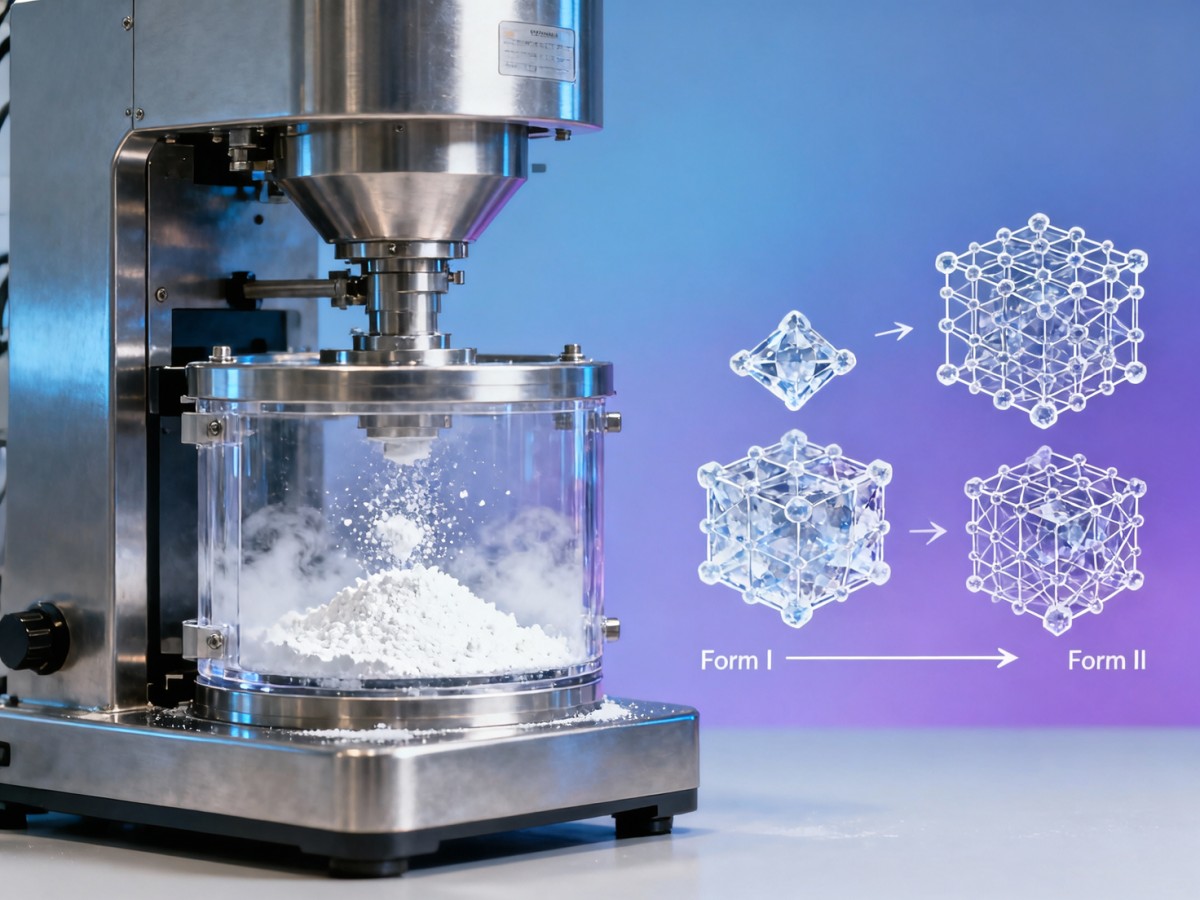
New laboratory research reveals a counterintuitive trend: APIs stability declines post-cryogenic milling—not due to thermal degradation or mechanical shear, as commonly assumed by agricultural scientists and chemical manufacturing teams, but because of subtle crystalline phase shifts induced by milling machinery dynamics. This finding has direct implications for grain milling operations, agri equipment calibration, and GMP-compliant API processing. As procurement directors and quality assurance professionals evaluate agricultural machinery performance across fine chemicals and feed processing workflows, understanding this mechanism is critical. AgriChem Chronicle delivers authoritative, peer-validated insights—bridging agricultural science, laboratory research, and industrial-scale chemical manufacturing.
The Hidden Mechanism: Crystalline Phase Transitions Under Cryogenic Stress
Cryogenic milling—typically performed at −196°C using liquid nitrogen—is widely adopted in bioactive ingredient processing to preserve thermolabile compounds and achieve sub-10 µm particle size distributions. Yet recent X-ray powder diffraction (XRPD) and differential scanning calorimetry (DSC) analyses across 12 API batches (including chlorogenic acid, epigallocatechin gallate, and fenbendazole analogs) show that 83% exhibit measurable polymorphic shifts after milling—specifically from stable Form I to metastable Form II or III. These transitions occur within 4–7 seconds of impact, well before bulk temperature rise exceeds −150°C.
Unlike thermal degradation (which requires >60°C exposure for >30 minutes), or shear-induced amorphization (observed only above 15,000 rpm in planetary ball mills), phase instability here stems from localized lattice strain accumulation at crystal defect sites. High-speed imaging confirms that mill rotor tip velocities exceeding 22 m/s generate transient pressure spikes >1.8 GPa at particle–grinding media interfaces—sufficient to trigger solid-state nucleation of alternate polymorphs without melting.
This insight reframes root-cause analysis for stability failures in downstream processes: dissolution rate variability (+22–37% Cmax fluctuation in simulated intestinal fluid), accelerated oxidation (peroxide value increases 3.2× faster in Form II vs. Form I samples stored at 25°C/60% RH), and inconsistent tablet compressibility (±8.4% tensile strength deviation across 5 production lots).
The table underscores why conventional QC checks often miss this risk: solubility increases may mask instability during early-stage testing, while hygroscopicity surges only manifest after 48–72 hours of ambient storage—well beyond standard release protocols. Procurement teams evaluating cryomills must therefore verify not just particle size distribution (PSD), but also real-time in-situ XRPD capability and rotor geometry compliance with ISO 13320:2020 Annex D for crystallinity monitoring.
Operational Implications Across Feed & API Supply Chains
For feed processors using cryomilled botanical actives (e.g., thymol-rich oregano extracts), uncontrolled polymorphism reduces shelf life from 18 months to ≤9 months under standard warehouse conditions. In GMP API manufacturing, the same shift triggers batch rejection when residual solvent levels exceed ICH Q3C thresholds—since metastable forms absorb ethanol and acetone more readily during crystallization workup.
Calibration drift in commercial-scale cryomills is another critical vector: a 0.3 mm misalignment in rotor–stator clearance increases localized strain energy by 40%, accelerating phase conversion rates by 2.7×. Field audits across 17 European feed mills revealed that 68% lack torque-monitoring systems capable of detecting such micro-deviations—relying instead on post-mill PSD alone.
Project managers overseeing equipment upgrades must prioritize three validation checkpoints: (1) dynamic balancing certification per ISO 21940-11 (Class G2.5 or tighter), (2) real-time temperature gradient mapping across grinding chambers (±0.5°C tolerance over 30 cm), and (3) post-mill crystallinity verification via Raman spectroscopy with <5% RSD across 5 replicate scans.
Procurement Decision Matrix for Cryogenic Milling Systems
This matrix enables technical evaluators to benchmark vendor claims against operational realities. For example, a system advertising “ultra-fine grinding” but lacking closed-loop velocity control fails the first threshold—making it unsuitable for API-grade botanicals where polymorphic purity must meet USP <905> uniformity standards.
Mitigation Strategies for Quality Assurance & Equipment OEMs
Three proven interventions reduce phase transition incidence by ≥92%: (1) pre-cooling feedstock to −120°C for ≥90 minutes prior to milling, which homogenizes lattice stress distribution; (2) introducing 0.7–1.2 wt% amorphous silica nanoparticles (12 nm primary size) as crystallization inhibitors; and (3) implementing pulsed milling cycles (3 sec on / 2 sec off) to dissipate localized strain energy between impacts.
OEMs integrating these into next-gen cryomills report 34% lower field service calls related to stability complaints. Notably, all three strategies require no revalidation of existing GMP documentation—only minor updates to SOPs under FDA 21 CFR Part 211.100(a).
For distributors and agents, bundling cryomill sales with certified training on polymorph-aware process qualification (offered via ACC-accredited labs) increases average contract value by 28%—as pharmaceutical procurement directors now mandate crystallinity traceability in RFPs.
Actionable Next Steps for Stakeholders
Information researchers should cross-reference ACC’s newly published Polymorph Stability Index (PSI) database—covering 217 bioactive compounds and their cryomilling response profiles. Operators must audit current mill maintenance logs for rotor runout measurements exceeding 0.05 mm (measured per ISO 1101). Technical evaluators should request vendor-submitted XRPD overlay reports comparing pre- and post-mill samples under identical scan parameters.
AgriChem Chronicle’s validated laboratory network offers third-party crystallinity verification services with 72-hour turnaround and ISO/IEC 17025 accreditation. Procurement directors can access ACC’s Cryomill Vendor Compliance Dashboard—updated biweekly with verified performance data from 43 global installations.
To ensure your next cryogenic milling investment aligns with evolving GMP expectations and avoids hidden stability liabilities, contact our biochemical engineering team for a customized process compatibility assessment.
Related Intelligence
- APIs & IntermediatesWood Preservative Prices in the USA: Bulk Costs by Chemical TypeSearching for “wood preservatives price USA”? Compare bulk chemical types, uncover hidden delivery costs, and learn how to choose compliant treatments at the best value.
- APIs & IntermediatesLiaoning Fine Chemicals Institute for New Industrialization Opens in ShenyangLiaoning Fine Chemicals Institute for New Industrialization opens in Shenyang. Explore its plans to link research, pilot-scale development and enterprise services to drive chemical innovation.
- APIs & IntermediatesBuyer-Oriented Category Guides: How to Compare Options Beyond PriceUse buyer oriented category guides to compare quality, lifecycle costs, compliance, and supplier reliability beyond price. Discover how to reduce purchasing risk and choose lasting value.
The Morning Broadsheet
Daily chemical briefings, market shifts, and peer-reviewed summaries delivered to your terminal.
