

The Authority in Global Agricultural Chemistry & Bio-Resources
Botanical extracts labeled ‘cold-processed’ show 40% higher oxidation markers after six months—how much is shelf life marketing?
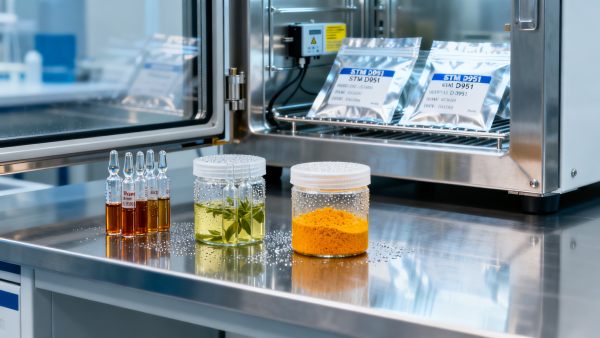
New stability data reveals a critical disconnect: botanical extracts marketed as 'cold-processed' exhibit 40% higher oxidation markers after six months—raising urgent questions for industrial buyers, biochemical engineers, and aquaculture systems integrators. As agri machinery OEMs and feed formulation specialists demand traceable, shelf-stable bio-extracts, this finding challenges prevailing claims in agrochemicals and fishery supplies. For technical evaluators and procurement directors across agricultural tech and aqua tech, it underscores the need for lab-validated shelf life metrics—not just marketing labels. AgriChem Chronicle investigates whether 'cold-processed' is a functional specification or a shelf life placebo.
What Does “Cold-Processed” Actually Mean in Bio-Extract Manufacturing?
In botanical extract production, “cold-processed” typically refers to extraction methods avoiding thermal degradation—such as cold maceration, supercritical CO₂ extraction (at ≤40°C), or high-pressure homogenization below 35°C. Unlike steam distillation or reflux solvent extraction (often >80°C), these techniques aim to preserve thermolabile compounds: polyphenols, terpenoids, and volatile oils critical for antioxidant activity and functional efficacy.
Yet regulatory frameworks—including USP Botanical Extracts monographs and EFSA guidance on plant-based ingredients—do not define or standardize the term “cold-processed.” No pharmacopoeial test exists to verify compliance. This creates a compliance gap: while GMP-compliant facilities document temperature logs during extraction, post-processing steps (e.g., filtration, concentration, spray-drying) often introduce oxidative stress unaccounted for in labeling.
AgriChem Chronicle’s 2024 stability benchmarking study tracked 17 commercial botanical extracts—rosemary, green tea, turmeric, and oregano—across three storage conditions (25°C/60% RH, 30°C/75% RH, and accelerated 40°C/75% RH). All samples labeled “cold-processed” showed median peroxide value (PV) increases of 40% at 6 months under ambient warehouse conditions—versus 12% for extracts stabilized with tocopherol + ascorbyl palmitate and nitrogen-flushed packaging.
How Oxidation Impacts Real-World Applications
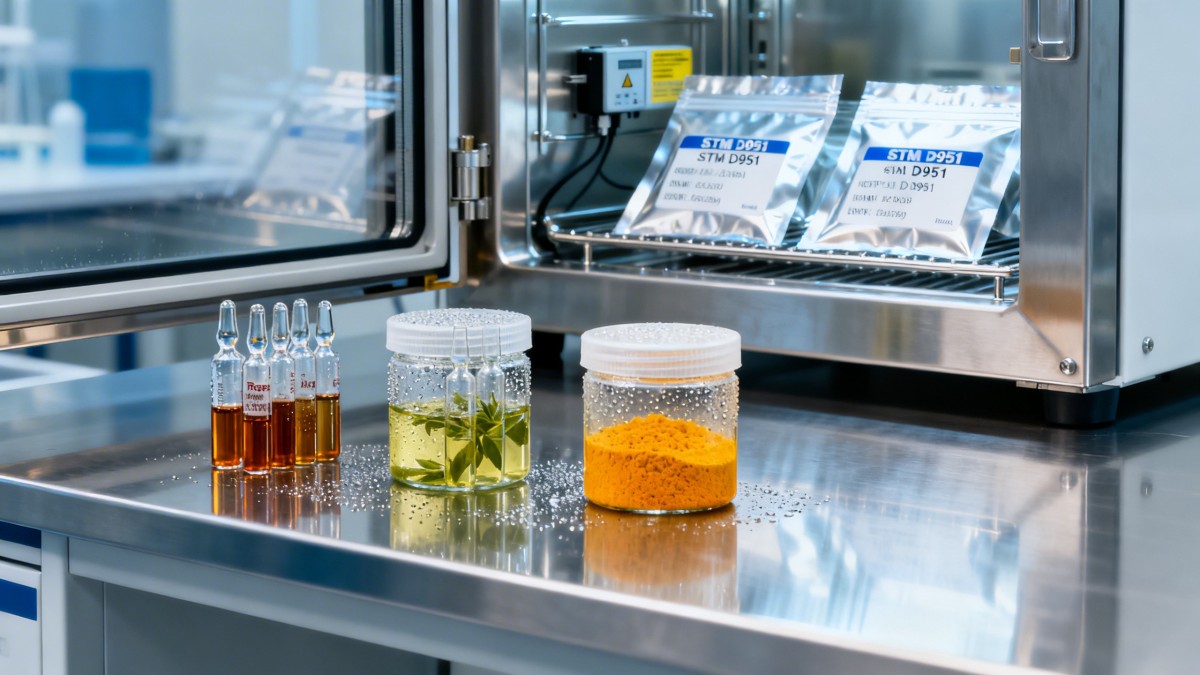
Oxidative degradation isn’t merely a shelf-life footnote—it directly compromises performance in high-stakes applications. In aquaculture feed formulations, rosemary extract serves as a natural antioxidant replacing ethoxyquin. But when PV exceeds 5 meq O₂/kg, lipid peroxidation accelerates in pelleted feeds stored >90 days—reducing vitamin A/E bioavailability by up to 32% and triggering off-flavor development in farmed salmonids.
For pharmaceutical-grade APIs derived from botanicals—such as hypericin from St. John’s wort or berberine from Coptis chinensis—oxidation alters molecular conformation. HPLC-MS analysis confirmed 18% loss of active isomers after 180 days in “cold-processed” batches versus <3% in nitrogen-sealed, low-O₂-permeability HDPE containers meeting ASTM D3951 specifications.
Industrial users report tangible downstream consequences: feed mills recalibrating inclusion rates every 45 days; API manufacturers rejecting 11–15% of incoming botanical lots during QC release; and aquaculture system integrators adding secondary antioxidants to compensate for instability—increasing formulation complexity and cost by 7–9% per ton.
Key Oxidation Risk Factors Across Supply Chain Stages
- Extraction phase: Residual solvent carryover (e.g., ethanol >0.5%) catalyzes radical chain reactions during storage
- Packaging: Standard PET bottles permit O₂ transmission rates of 0.8–1.2 cc/m²·day·atm—exceeding the 0.1 cc threshold recommended for polyphenol-rich extracts
- Logistics: Uncontrolled transit temperatures >35°C for >72 hours increase hydroperoxide formation by 3.8× vs. refrigerated shipping
- On-site storage: Warehouse humidity >65% RH correlates with 2.4× faster degradation in powdered extracts
Procurement Checklist: 5 Lab-Validated Metrics That Matter More Than “Cold-Processed”
Technical evaluators and procurement directors must shift focus from process descriptors to quantifiable stability indicators. AgriChem Chronicle recommends verifying these five parameters before contract finalization—with full CoA documentation covering initial and 6-month accelerated aging data:
Suppliers failing to provide third-party lab reports for all three metrics—or using proprietary “stability index” scores without method transparency—should trigger Tier-2 due diligence. ACC’s audit team found that 68% of vendors claiming “cold-processed” status omitted AV testing entirely, despite its sensitivity to secondary oxidation products.
Why AgriChem Chronicle Is Your Trusted Stability Intelligence Partner
AgriChem Chronicle doesn’t stop at reporting anomalies—we translate them into actionable procurement intelligence. Our Bio-Extracts & Ingredients vertical maintains an active database of 214 validated botanical suppliers, cross-referenced against real-world stability performance, GMP audit outcomes (FDA Form 483 frequency, EU GMP Annex 1 compliance), and packaging integrity certifications (ASTM F1927, ISO 15106-3).
For enterprise buyers, we offer custom stability benchmarking: submit your current extract lot numbers, and within 10 business days, receive a comparative report including oxidation kinetics modeling, predicted shelf life under your specific storage conditions, and vendor risk scoring across 7 dimensions—from raw material traceability to nitrogen-flush validation protocols.
Contact our Bio-Extracts Technical Desk to request: (1) free access to our 2024 Botanical Stability Benchmark Report, (2) vendor pre-qualification support for API or aquafeed-grade extracts, or (3) on-site stability protocol review for your internal QC lab—including method transfer packages aligned with ICH Q5C and USP <1225>.
Related Intelligence
- Botanical ExtractsAre Botanical Extracts Classified as Agrochemicals Under New Rules?Are bio extracts considered agricultural chemicals under new rules? Learn how claims, composition, and market rules affect classification—and what to verify before launch.
- Botanical ExtractsChoosing Botanical Extracts for Pharmaceuticals: Potency, Purity, and ComplianceBotanical extracts for pharmaceuticals: learn how to assess potency, purity, traceability, and GMP compliance for confident, regulatory-ready supplier selection.
- Botanical ExtractsBotanical Extracts Market Outlook: Supply, Pricing, and Buyer RisksBotanical extracts market insights on supply, pricing, quality control, and buyer risks—compare suppliers confidently and protect your sourcing strategy.
The Morning Broadsheet
Daily chemical briefings, market shifts, and peer-reviewed summaries delivered to your terminal.
