

The Authority in Global Agricultural Chemistry & Bio-Resources
EU Traceability Rule Reshapes Botanical Extract Entry
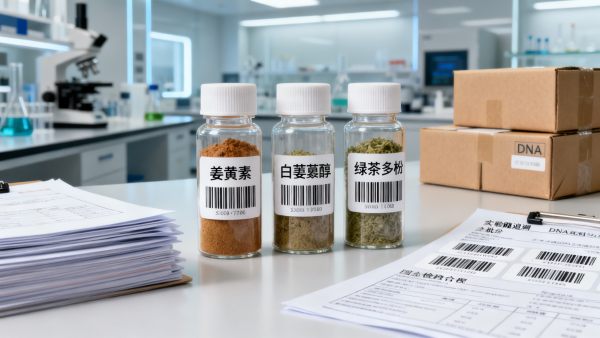
From June 15, 2026, the EU will apply a new compliance requirement to botanical extracts entering its market under Regulation (EU) 2026/928 on Botanical Traceability. For products such as curcumin, resveratrol, and green tea polyphenols, the key change is that market access now depends on a full DNA barcode traceability report covering the chain from cultivation and harvest through drying, extraction, and finished goods, with the report issued by an EU-recognized lab. This matters not only to exporters, but also to procurement teams, processors, distributors, and compliance functions because the rule connects documentation readiness directly with customs clearance and shelf access.
What the rule now requires at market entry
According to the information provided, Regulation (EU) 2026/928 on Botanical Traceability took effect on June 15, 2026. The rule applies to Botanical Extracts entering the EU market, including examples such as curcumin, resveratrol, and green tea polyphenols.
The confirmed requirement is that affected products must be accompanied by a full-chain DNA barcode traceability report. The report must cover the route from planting base, harvesting, drying, and extraction to the finished product.
The report must be issued by an EU-recognized lab. Products without such a report may be refused customs clearance or removed from sale.
Where the operational pressure is likely to appear first
Export transactions face a stricter documentation threshold
From an industry perspective, exporters and direct trading companies are likely to feel the change first because the new rule links product entry to a specific traceability document rather than general product description alone. The main impact is likely to fall on shipment preparation, customs document readiness, and the ability to demonstrate that each batch can be traced across the full production path.
What deserves closer attention is whether internal export files, batch records, and supporting compliance documents are aligned with the DNA traceability report before shipment is arranged. Where that alignment is weak, delivery timing and trade execution may become more difficult.
Procurement and raw material control move closer to compliance work
For procurement teams and companies buying botanical raw materials for further processing, the rule suggests that supplier selection can no longer be treated only as a cost or quality issue. Analysis shows that upstream visibility into cultivation, harvest, drying, and extraction records may become more relevant because the final report must cover the full chain.
This means purchasing functions may need to pay closer attention to whether suppliers can support traceability evidence that is consistent with the required report, especially for extracts intended for EU-bound business.
Processors and manufacturers may need tighter batch linkage
Manufacturing and processing companies may be affected where product transformation, blending, or finished-goods preparation depends on inputs that must remain traceable back through earlier stages. Observably, the pressure point is not only technical production, but also the connection between production records and the report issued by an EU-recognized lab.
For these operators, the practical issue is whether product files, batch identification, and release documentation can support the required chain of evidence without creating uncertainty at the point of delivery or market placement.
Distributors and channel operators face downstream exposure
Distributors and channel businesses may also be affected because the stated consequence for missing reports includes removal from sale. From an industry perspective, this shifts part of the risk downstream: channel participants may need to review whether the products they place or keep on the market are supported by the required traceability documentation.
In practice, closer checks on supplier files, product dossiers, and document completeness may become more important for inventory decisions and listing continuity.
What companies should review now
Check whether current files can support full-chain traceability
Analysis shows that the first practical question is whether existing records can connect cultivation, harvest, drying, extraction, and finished goods at batch level in a way that can support the required report. If not, compliance gaps may appear before shipment or market placement rather than after commercial agreements are signed.
Review the role of lab-issued documentation in delivery planning
Because the required report must be issued by an EU-recognized lab, companies should pay close attention to how that document fits into their release, shipping, and customer documentation workflows. The input does not provide detailed execution timing or procedural rules, so it is more appropriate to treat this as an area requiring continued monitoring rather than as a fully mapped process.
Reassess supplier qualification for EU-bound extract business
For businesses sourcing or processing botanical extracts, supplier qualification may need to be reviewed through a traceability lens. What deserves closer attention is whether suppliers can provide consistent upstream records that support the eventual DNA barcode report, especially where products are destined for the EU market.
Watch for changes in compliance language used by customers and channels
Observably, commercial documents may begin to reflect the new requirement more directly. Companies should therefore monitor how customers, distributors, or channel partners describe report expectations, document conditions, and delivery acceptance criteria in routine business exchanges, while recognizing that the input does not provide confirmed wording or implementation templates.
Why this looks like an execution signal, not just a policy headline
Analysis shows that this development is better understood as an already effective market-entry condition rather than a distant policy discussion, because the provided information states both an effective date and a clear consequence for missing documentation: refusal of customs clearance or removal from sale. At the same time, the available input does not include detailed enforcement guidance, documentary format rules, or case-based implementation outcomes.
For that reason, it is more appropriate to read the event as a firm execution signal with open questions still remaining around operational interpretation. Continued attention will likely be needed on how compliance expectations are expressed in documentation review, trade handling, and downstream market controls.
How the market is likely to read this change
At this stage, the clearest significance of the event is that botanical extract access to the EU market is being tied more directly to traceability evidence that runs through the full supply chain and is validated through a specified lab channel. From an industry perspective, the most relevant takeaway is not broad market prediction, but the immediate need to examine document readiness, supplier traceability support, and delivery risk for EU-facing business.
It is more appropriate to understand this development as a rule that has already taken effect, while still recognizing that day-to-day execution details and market feedback remain worth watching.
Basis of this article and what still needs verification
This article is generated from the user-provided news title, event date, and event summary. For this type of development, commonly relevant source categories may include official regulatory notices, releases from supervisory authorities, customs or trade administration information, industry association updates, standard-setting documents, and reporting from authoritative media.
No specific official source link was provided in the input, so the exact official publication path still requires ongoing verification. Observably, the areas that remain worth monitoring include detailed enforcement language, certification and documentation practice, changes in tender or procurement wording, industry feedback, and how companies implement the requirement in actual export and distribution workflows.
Related Intelligence
- Botanical ExtractsChoosing Botanical Extracts for Pharmaceuticals: Potency, Purity, and ComplianceBotanical extracts for pharmaceuticals: learn how to assess potency, purity, traceability, and GMP compliance for confident, regulatory-ready supplier selection.
- Botanical ExtractsBotanical Extracts Market Outlook: Supply, Pricing, and Buyer RisksBotanical extracts market insights on supply, pricing, quality control, and buyer risks—compare suppliers confidently and protect your sourcing strategy.
- Botanical ExtractsEurope Botanical Extracts Market: Key Growth Drivers, Risks, and OpportunitiesEurope botanical extracts market insights: explore growth drivers, regulatory risks, supply-chain challenges, and scalable opportunities for compliant, high-value ingredients.
The Morning Broadsheet
Daily chemical briefings, market shifts, and peer-reviewed summaries delivered to your terminal.
