

The Authority in Global Agricultural Chemistry & Bio-Resources
EU Updates Food Contact Materials Rules for Botanical Extracts
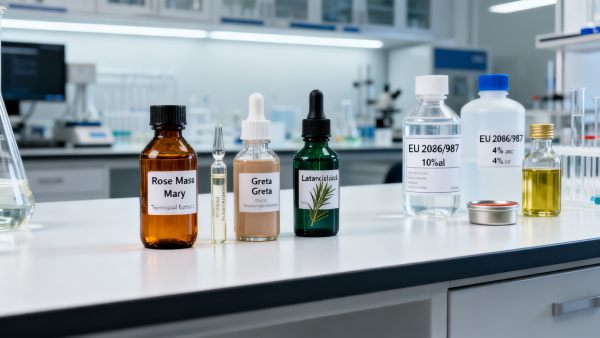
On May 13, 2026, the European Commission adopted Regulation (EU) 2026/987, amending Regulation (EC) No 1935/2004 to introduce new migration testing requirements for botanical extracts used in food contact materials. The change directly impacts exporters, suppliers, and downstream users in the natural ingredients and functional packaging sectors—particularly those engaged in EU trade—due to tightened compliance thresholds and newly mandated conformity declarations.
Event Overview
On May 13, 2026, the European Commission officially published Regulation (EU) 2026/987. It mandates total migration limit (OML) and specific migration limit (SML) testing under defined conditions for botanical extracts serving as food contact materials—including natural antioxidant carriers and plant-based packaging coatings. The regulation enters into force on November 1, 2026. Products lacking an EU 2026/987 conformity statement will be denied customs clearance into the EU market.
Industries Affected
Direct Trading Enterprises
Exporters of botanical extracts from China and other third countries face immediate operational impact: pre-shipment testing must now include OML/SML assessments aligned with EU-specified simulants and time–temperature conditions. This extends lead times, increases per-batch certification costs by an estimated 15–25%, and requires updated technical documentation for each export consignment—not just per product type.
Raw Material Procurement Enterprises
Buyers sourcing botanical extracts for formulation (e.g., nutraceutical manufacturers or clean-label food producers) must now verify supplier-level compliance—not only via test reports but also through formal EU 2026/987 declarations. Absence of such documentation risks supply chain interruption, especially where extracts are incorporated into multi-component food contact systems (e.g., active packaging films).
Processing & Manufacturing Enterprises
Firms converting botanical extracts into finished food contact articles (e.g., coated paperboard, biopolymer composites, or encapsulated delivery systems) must reassess their entire material safety dossier. Migration behavior may differ significantly when extracts are processed—heat-treated, blended, or immobilized—requiring retesting even if raw extract batches were previously cleared under older protocols.
Supply Chain Service Providers
Testing laboratories, regulatory consultants, and customs brokers handling EU-bound botanical extract shipments must update service offerings: accredited labs need ISO/IEC 17025 scope extensions for the new migration parameters; consultants must revise compliance roadmaps; and brokers now require digital submission of EU 2026/987 declarations alongside standard customs documents.
Key Focus Areas and Recommended Actions
Validate Testing Protocols Against Annex II Conditions
Regulation (EU) 2026/987 specifies exact food simulants (e.g., 10% ethanol for alcoholic beverages), exposure durations (e.g., 10 days at 40°C for long-term storage), and temperature profiles. Enterprises must confirm that their current lab partners replicate these precisely—not generic ‘food contact’ migration tests.
Secure Supplier-Level EU 2026/987 Declarations
Importers cannot rely solely on batch test reports. The regulation requires a signed, dated declaration confirming that the extract meets all applicable OML/SML limits *under the conditions specified in the regulation*. This document must accompany every shipment—digitally or physically—and be retained for 10 years.
Review Product Grouping Strategies
Enterprises using multiple botanical extracts across similar applications (e.g., rosemary, green tea, and sage extracts as antioxidants in packaging) should assess whether grouping under one validated test matrix is feasible—subject to similarity in composition, processing, and intended use. Such grouping can reduce redundant testing, but must be scientifically justified and accepted by notified bodies.
Editorial Perspective / Industry Observation
Observably, this amendment reflects a broader EU trend toward substance-specific risk assessment—not just material-category rules—for complex natural mixtures. Unlike synthetic additives with defined structures, botanical extracts contain variable phytochemical profiles; the new requirement signals regulators’ growing emphasis on empirical migration data over compositional assumptions. Analysis shows that while the rule increases short-term compliance burden, it may accelerate harmonization of global testing standards—especially if major third-country regulators (e.g., China’s SAMR or US FDA) begin referencing similar protocols. From an industry perspective, the shift is less about restricting trade and more about demanding traceable, condition-specific evidence of safety.
Conclusion
This regulatory update marks a consequential step in the maturation of food contact safety frameworks for natural ingredients. It does not prohibit botanical extracts—but redefines how their safety must be demonstrated in real-use contexts. For global suppliers, the takeaway is not increased restriction, but increased specificity: compliance is now anchored to performance under defined conditions, not general category approval. A rational interpretation is that the rule favors enterprises with robust technical documentation, adaptable testing infrastructure, and vertically integrated quality oversight.
Source Attribution
Official text: Regulation (EU) 2026/987, published in the Official Journal of the European Union on May 13, 2026.
Related framework: Regulation (EC) No 1935/2004 (as amended).
Note: Guidance documents from the European Food Safety Authority (EFSA) and EU Reference Laboratory for Food Contact Materials (EURL-FCM) are pending publication and remain under observation.
Related Intelligence
- Botanical ExtractsAre Botanical Extracts Classified as Agrochemicals Under New Rules?Are bio extracts considered agricultural chemicals under new rules? Learn how claims, composition, and market rules affect classification—and what to verify before launch.
- Botanical ExtractsChoosing Botanical Extracts for Pharmaceuticals: Potency, Purity, and ComplianceBotanical extracts for pharmaceuticals: learn how to assess potency, purity, traceability, and GMP compliance for confident, regulatory-ready supplier selection.
- Botanical ExtractsBotanical Extracts Market Outlook: Supply, Pricing, and Buyer RisksBotanical extracts market insights on supply, pricing, quality control, and buyer risks—compare suppliers confidently and protect your sourcing strategy.
The Morning Broadsheet
Daily chemical briefings, market shifts, and peer-reviewed summaries delivered to your terminal.
