

The Authority in Global Agricultural Chemistry & Bio-Resources
FDA Tightens Import Rules for Natural Flavors & Food-Grade Enzymes
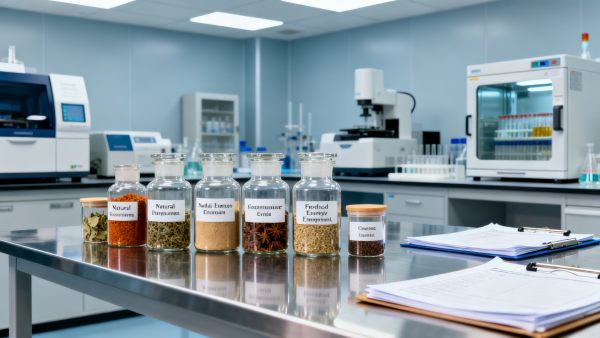
On May 12, 2026, the U.S. Food and Drug Administration (FDA) released the Import Pre-Review Guidance for Natural Flavors and Food-Grade Enzymes, marking a significant regulatory shift in the oversight of high-risk food ingredients. The update directly impacts U.S. importers, global suppliers, and downstream food manufacturers reliant on these functional ingredients — particularly those engaged in cross-border trade between China and the United States.
Event Overview
On May 12, 2026, the FDA updated Import Alert 100-25 Supplemental Guidance on its official website. For the first time, natural flavors and food-grade enzymes were explicitly designated as high-risk categories subject to mandatory pre-review. Effective June 1, 2026, all incoming shipments must submit, at least 14 calendar days prior to arrival, complete documentation including: (1) detailed process flow diagrams; (2) microbial strain safety declarations (GRAS or QPS status); and (3) full analytical reports covering heavy metals and microbiological contaminants. Average customs clearance time is projected to increase from five to twelve business days.
Industries Affected
Direct trading enterprises — Exporters and U.S.-based importers handling enzyme or natural flavor shipments face immediate operational pressure. Documentation preparation now requires deeper technical coordination with overseas manufacturers, and delayed submissions risk detention or refusal at port. Extended clearance timelines also compound inventory financing costs and contract penalty exposure.
Raw material procurement enterprises — Companies sourcing enzymes or natural flavors for formulation (e.g., flavor houses, nutraceutical ingredient buyers) must now reassess supplier qualification protocols. Pre-vetted vendors may no longer suffice if their documentation packages lack GRAS/QPS traceability or fail to meet the new analytical scope. Procurement lead times will likely widen, prompting earlier order placement and tighter batch-level traceability requirements.
Processing and manufacturing enterprises — Food, beverage, and dietary supplement producers using these ingredients face ripple effects in production planning. A 7-day extension in ingredient availability may disrupt just-in-time (JIT) manufacturing schedules, especially for seasonal or limited-run products. Some may explore domestic alternatives or dual-sourcing — though viable U.S.-based enzyme suppliers remain limited in specialty segments.
Supply chain service providers — Customs brokers, third-party labs, and regulatory consultants are seeing increased demand for pre-submission review, strain verification support, and accelerated testing turnaround. However, current lab capacity for full-spectrum heavy metal/microbiological analysis — especially under tight 14-day windows — is uneven across regions, creating bottlenecks in service delivery.
Key Focus Areas and Recommended Actions
Verify and upgrade documentation readiness
Confirm that all current and prospective suppliers can provide validated process flowcharts, strain-specific GRAS or QPS documentation (not generic statements), and test reports aligned with FDA’s specified analyte list — not just standard CoA templates.
Adjust logistics timelines and buffer stock strategy
Re-evaluate safety stock levels and reorder points based on the new 12-business-day clearance baseline — not historical averages. Consider staggered shipment scheduling to avoid congestion at key ports during peak seasons.
Engage qualified third-party labs early
Pre-qualify laboratories capable of delivering compliant heavy metal (e.g., As, Pb, Cd, Hg) and microbiological (total plate count, coliforms, Salmonella, E. coli) testing within ≤10 working days — allowing time for retesting or documentation correction before the 14-day deadline.
Editorial Perspective / Industry Observation
Observably, this guidance reflects FDA’s broader pivot toward upstream risk mitigation — shifting emphasis from post-entry inspection to pre-arrival evidence-based assurance. It does not introduce new safety standards per se, but significantly raises the evidentiary bar for compliance. Analysis shows the policy is less about restricting trade and more about enforcing accountability across fragmented global supply chains where strain origin, fermentation control, and purification history are often poorly documented. From an industry perspective, the 12-day timeline may become a de facto benchmark for other high-risk biotech-derived food ingredients — signaling potential future expansions beyond enzymes and natural flavors.
Conclusion
This regulatory development underscores a structural shift: food ingredient compliance is increasingly defined by data transparency and technical traceability — not just final product testing. While short-term friction is inevitable, the long-term implication is clearer accountability, stronger supplier due diligence frameworks, and potentially higher baseline quality across globally traded functional ingredients. Rational adaptation — not resistance — will define competitive advantage in the evolving U.S. import landscape.
Source Attribution
U.S. FDA Official Website: Import Alert 100-25 Supplemental Guidance (Updated May 12, 2026). Note: Implementation details, enforcement thresholds, and potential exemptions remain subject to FDA field office interpretation and may evolve through June 2026. Ongoing monitoring of FDA’s Import Alert dashboard and Center for Food Safety and Applied Nutrition (CFSAN) bulletins is advised.
Related Intelligence
- Food Grade EnzymesWhat Drives Industrial Enzyme Costs? Activity, Format, and Supply Risk ExplainedIndustrial enzyme cost factors explained: compare activity, formulation, shelf life, documentation, and supply risk to reduce process costs and improve purchasing decisions.
- Food Grade EnzymesIs There a Global Standard for Biochemical Engineering Product Quality?Is there a global standard for biochemical engineering product quality? Explore GMP, ISO, traceability, and supplier checks for confident global sourcing.
- Food Grade EnzymesHow Enzymes for Cracker Formulation Improve Texture and Shelf LifeEnzymes for cracker formulation can enhance dough handling, crisp texture, and shelf life. Explore targeted enzyme strategies for consistent, high-quality crackers.
The Morning Broadsheet
Daily chemical briefings, market shifts, and peer-reviewed summaries delivered to your terminal.
