

The Authority in Global Agricultural Chemistry & Bio-Resources
RCEP Launches Green Clearance for Agrochemicals to SEA
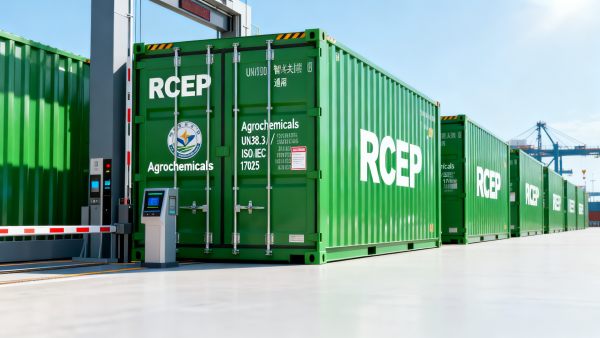
On May 13, 2026, RCEP member states jointly launched a green customs clearance channel for agrochemicals — marking the first region-wide facilitation measure targeting pesticide exports to Southeast Asia. The initiative directly impacts agrochemical exporters, formulation manufacturers, logistics providers, and regulatory compliance teams operating across China, Vietnam, Thailand, and Malaysia. It matters because it redefines time-to-market benchmarks for registered pesticide active ingredients and formulations in a high-compliance, high-velocity trade corridor.
Event Overview
On May 13, 2026, the RCEP Secretariat, together with customs authorities of China, Vietnam, Thailand, and Malaysia, issued the Memorandum of Understanding on Green Customs Clearance for Agrochemicals. Under the framework, agrochemical exports from enterprises holding ASEAN AEO Advanced Certification — and accompanied by ISO/IEC 17025-accredited GLP toxicological reports and UN38.3 transport classification certificates — are eligible for ‘immediate declaration and release + exemption from physical inspection’. The mechanism initially covers 12 categories of registered pesticide technical materials and formulated products. Implementation is scheduled to begin in Q3 2026, with average customs clearance time in Southeast Asia projected to decrease from 7.2 days to 4.3 days.
Industries Affected by This Measure
Direct Exporters (Registered Formulation & Technical Material Suppliers)
These companies face immediate operational implications: eligibility hinges on three concurrent certifications — ASEAN AEO Advanced status, ISO/IEC 17025-accredited GLP data, and UN38.3 classification proof. Without all three, the ‘instant release’ benefit does not apply. Impact manifests in reduced dwell time at ports, lower demurrage exposure, and tighter inventory planning cycles — but only for the 12 designated product categories.
Raw Material Sourcing & Active Ingredient Producers
Suppliers feeding into the 12 covered formulations may see upstream demand shifts. While the MOU does not extend green treatment to unregistered intermediates or non-listed actives, buyers may prioritize suppliers already aligned with ISO/IEC 17025 testing protocols or UN38.3 classification readiness — especially where downstream registrants seek to consolidate compliance documentation.
Contract Manufacturers & Formulators
Third-party formulators producing for export brands must verify whether their facility’s quality assurance system supports generation or validation of ISO/IEC 17025-compliant GLP studies. Since the MOU explicitly requires accredited toxicological reports tied to the exported batch or registration dossier, contract sites may need to adjust documentation handover procedures or engage certified labs earlier in the release workflow.
Distribution & Regulatory Affairs Service Providers
Agents handling ASEAN registrations and customs filings will need to validate AEO status eligibility per shipment, cross-check certificate validity windows (e.g., GLP report issue date vs. export date), and confirm alignment between UN38.3 classification codes and actual packaging configurations. Misalignment risks automatic exclusion from green lane treatment — even if all other criteria are met.
What Companies and Practitioners Should Focus On Now
Monitor official implementation guidelines and scope updates
The MOU is a framework document; detailed operational rules — including exact list of the 12 covered products, certificate validity periods, and dispute resolution for rejected green-lane applications — have not yet been published. Stakeholders should track announcements from national customs administrations and the RCEP Secretariat portal.
Verify and align three certification pillars before Q3 2026
Eligibility is conditional and cumulative: ASEAN AEO Advanced Certification, ISO/IEC 17025-accredited GLP toxicology reports, and valid UN38.3 classification documents must all be current and correctly referenced in the export declaration. Companies should audit existing certificates for expiry dates and accreditation scope — particularly whether GLP studies were conducted under labs recognized by ASEAN authorities.
Distinguish policy intent from immediate operational readiness
While the MOU signals strong regional commitment to agrochemical trade facilitation, rollout depends on national customs system integration. Not all participating countries may activate the ‘instant release’ function simultaneously in Q3. Early adopters should treat initial shipments as pilot cases — documenting processing times, rejection reasons, and inter-agency coordination points.
Update internal SOPs for documentation routing and version control
GLP reports and UN38.3 certificates are often managed across separate departments (regulatory, EHS, logistics). With green-lane eligibility requiring synchronized submission, companies should formalize handoff protocols — including version timestamps, authorized signatories, and digital verification methods acceptable to customs systems.
Editorial Perspective / Industry Observation
This initiative is best understood as a targeted procedural upgrade — not a broad regulatory harmonization. Analysis shows it does not alter maximum residue limits (MRLs), registration requirements, or labeling standards in ASEAN markets. Rather, it streamlines post-approval movement for a defined subset of compliant products. Observably, its significance lies less in immediate cost savings and more in signaling institutional prioritization: customs agencies are now treating agrochemical compliance documentation as interoperable infrastructure. From an industry perspective, this reflects growing recognition that regulatory predictability — especially around time-bound processes — is as critical as technical standards in shaping export competitiveness. Current relevance stems from its role as a test case: success here may inform future green lanes for other regulated chemical categories under RCEP.
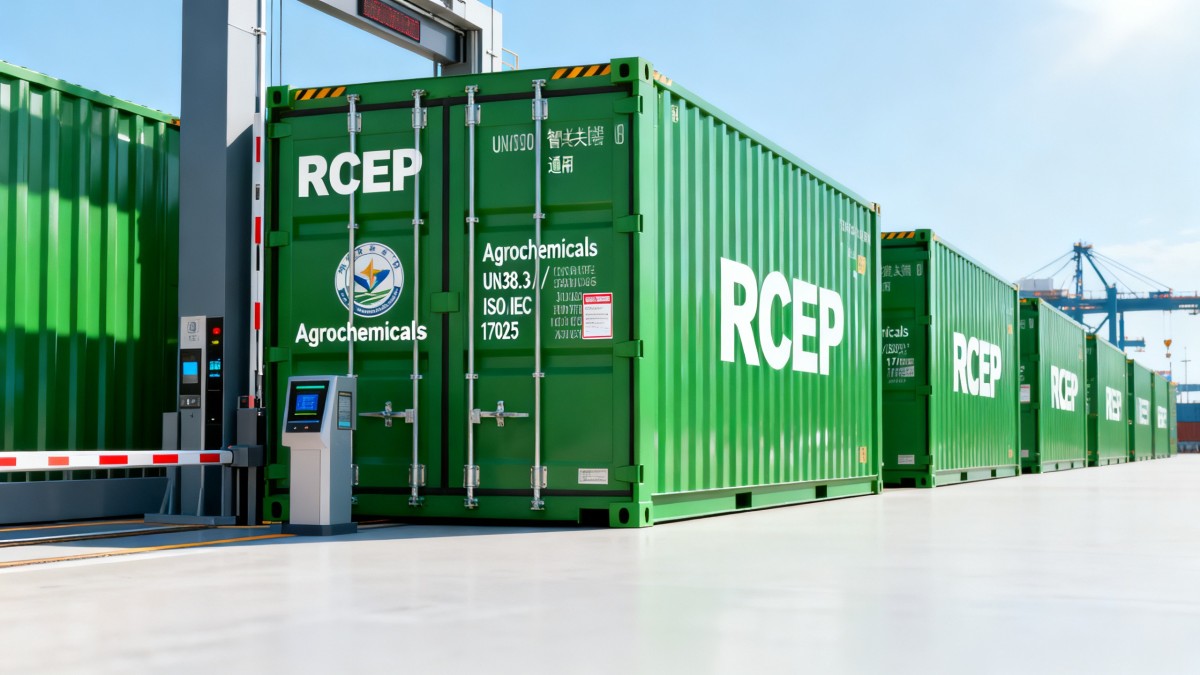
In summary, the RCEP green clearance channel introduces a time-bound, documentation-dependent efficiency gain — not a structural shift in market access conditions. Its value is real but bounded: it applies only to pre-qualified products and certified exporters, and its effectiveness depends on consistent cross-border system execution. For now, it is more accurately interpreted as an operational calibration than a strategic inflection point — one demanding precise compliance preparation, not wholesale business model revision.
Source: RCEP Secretariat official announcement (May 13, 2026); Joint customs notices issued by General Administration of Customs of China, Vietnam Customs Department, Thai Customs Department, and Royal Malaysian Customs Department. Note: Detailed product list, certificate validity rules, and national implementation timelines remain pending official publication and are subject to ongoing observation.
Related Intelligence
- AgrochemicalsUSDA Announces Over $500 Million for Eight Fertilizer Production ProjectsUSDA announces over $500 million for eight fertilizer production projects. Explore how expanded domestic supply could affect farm costs and agricultural supply chains.
- AgrochemicalsAgrochemicals Category Intelligence: Tracking Cost Drivers and Supply RiskExplore agrochemicals category intelligence to track cost drivers, uncover supply risks, and strengthen sourcing decisions. Learn how to negotiate smarter and secure reliable supply.
- AgrochemicalsChina’s Phosphate Fertilizer Exports Near Zero, Tightening Global SupplyChina’s phosphate fertilizer exports near zero in 2026 as sulfur shortages tighten global supply. Explore the risks for importers, prices and sourcing strategies.
The Morning Broadsheet
Daily chemical briefings, market shifts, and peer-reviewed summaries delivered to your terminal.
