

The Authority in Global Agricultural Chemistry & Bio-Resources
Global Feed Price Index Surges 8.3% Weekly
On May 12, 2026, the Food and Agriculture Organization (FAO)’s Feed Price Watch reported a sharp 8.3% weekly rise in the Global Feed Price Index (FFPI)—the largest single-week increase since early 2025—triggering cost pressures across commercial feed pellet export markets.
Event Overview
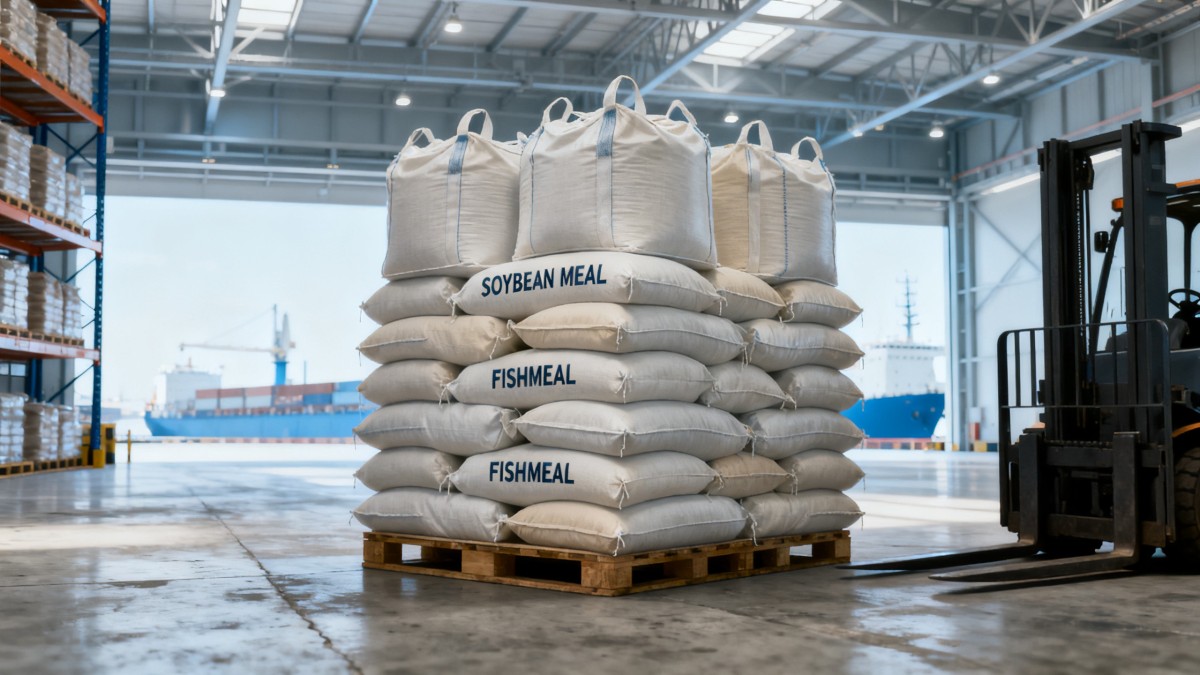
On May 12, 2026, FAO’s Feed Price Watch released updated data showing the Global Feed Price Index (FFPI) rose 8.3% week-on-week. The surge was attributed to delayed soybean harvest in Brazil and recurrent logistical disruptions at Black Sea ports. Concurrent price increases were observed for key feed ingredients—including soybean meal, fishmeal, and lysine—driving up unit manufacturing costs for Commercial Feed Pellets. Major Chinese export manufacturers have initiated repricing negotiations for June shipments; several clients in the Middle East and Africa have received formal adjustment notices citing 12–15% price increases.
Industries Affected
Direct Trading Enterprises
Export-oriented trading firms face compressed margins and heightened contract renegotiation risk. As quoted prices for Commercial Feed Pellets are revised mid-cycle, firms with fixed-price forward contracts may absorb short-term losses or trigger force majeure clauses—particularly where origin-sourcing terms lack indexation mechanisms.
Raw Material Procurement Entities
Procurement departments at integrated feed producers are confronting volatile input benchmarks. With soybean meal and fishmeal both rising sharply—and lysine pricing tightening due to production constraints—inventory planning and hedging strategies require urgent recalibration. Spot purchases now carry significantly higher basis risk versus forward commitments made just two weeks prior.
Feed Manufacturing Enterprises
Commercial Feed Pellet producers must reassess cost-plus pricing models and margin thresholds. The 8.3% FFPI jump directly translates into measurable per-tonne cost inflation, especially for formulations with high inclusion rates of soybean meal or specialty amino acids. Production scheduling may shift toward shorter batch runs to limit exposure to further ingredient volatility.
Supply Chain Service Providers
Freight forwarders, port agents, and trade finance providers report increased demand for documentary flexibility—such as letters of credit with adjustable pricing clauses or extended validity windows. Warehousing operators note rising requests for bonded storage solutions to defer customs valuation timing amid price uncertainty.
Key Considerations and Recommended Actions
Review Contract Indexation Clauses
Parties engaged in multi-month export agreements should audit existing price adjustment mechanisms—especially those referencing FFPI or regional soybean meal indices—to assess enforceability and timing triggers ahead of June shipment windows.
Stress-Test Ingredient Sourcing Mixes
Manufacturers should simulate formulation alternatives using lower-cost protein substitutes (e.g., sunflower meal, fermented rapeseed) and re-evaluate lysine inclusion levels against latest NRC/ARC nutrient requirement updates—without compromising feed conversion ratios.
Engage Early with Key Import Markets
Given confirmed 12–15% adjustment notices to Middle Eastern and African buyers, exporters should initiate transparent dialogue on phased implementation, volume incentives, or technical support packages—not solely price justification—to preserve long-term channel relationships.
Editorial Perspective / Industry Observation
Analysis shows this FFPI spike is not merely cyclical but structural: it reflects converging supply-side bottlenecks—Brazil’s harvest delay signals climate-related yield variability, while Black Sea port instability underscores persistent geopolitical risk in critical transit corridors. Observably, the magnitude of the week-on-week jump exceeds typical seasonal patterns, suggesting reduced buffer stocks and tighter global feed grain carryover. From an industry perspective, this episode highlights growing vulnerability in ‘just-in-time’ feed ingredient procurement—and may accelerate adoption of regionalized sourcing hubs and digital price benchmarking tools. Current more relevant interpretation is that cost pressure is acting as a catalyst for operational resilience planning, rather than a transient pricing event.
Conclusion
This FFPI surge serves as a timely stress test for global feed supply chain agility. While short-term impacts center on pricing and margin management, the broader significance lies in reinforcing the need for diversified sourcing, dynamic contracting, and real-time cost monitoring infrastructure—especially among exporters serving price-sensitive emerging markets.
Source Attribution
Data sourced from FAO Feed Price Watch (May 12, 2026 release). Additional context drawn from USDA Foreign Agricultural Service (FAS) Brazil Crop Reporting Program and Black Sea Grain Initiative logistics dashboards. Ongoing monitoring recommended for: (1) Brazilian CONAB harvest progress updates through end-June; (2) EU Commission’s proposed amendment to Regulation (EU) No 2023/1745 on feed additive import certification; (3) Red Sea shipping rerouting trends affecting East African pellet delivery lead times.
Related Intelligence
- Commercial Feed PelletFire Quickly Extinguished in Grinder Bin at Baiada’s Cardiff Feed Mill in AustraliaBaiada’s Cardiff feed mill fire was reportedly contained quickly. Explore grinder bin safety, restart uncertainties and key supply continuity checks for feed buyers.
- Commercial Feed PelletHow to Build a Sanitary Feed Production Plan That Reduces Cross-ContaminationSanitary feed production planning: reduce cross-contamination with smarter sequencing, validated flushing, material segregation, and traceable sanitation controls.
- Commercial Feed PelletFeed Pellet Mill Sourcing: How to Vet Suppliers for Capacity, Quality, and SupportFeed pellet mill sourcing made smarter: vet suppliers for proven capacity, pellet quality, lifecycle cost, factory controls, commissioning, and reliable after-sales support.
The Morning Broadsheet
Daily chemical briefings, market shifts, and peer-reviewed summaries delivered to your terminal.
