

The Authority in Global Agricultural Chemistry & Bio-Resources
China Opens Coffee Bean Access for African Partners
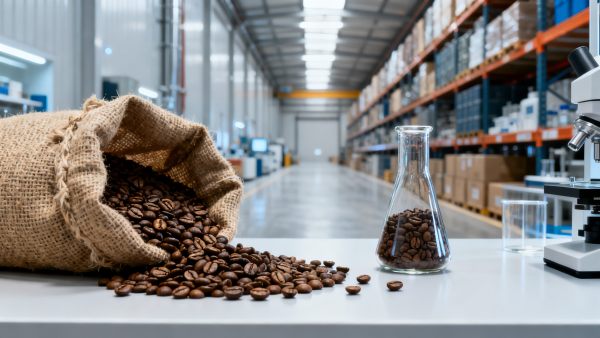
As of July 20, 2026, coffee beans from African countries that have diplomatic relations with China may enter the Chinese market if they meet inspection and quarantine requirements. For companies in botanical extracts and food grade enzymes, this is worth watching because it points to a broader raw material channel for products such as chlorogenic acid, caffeine, and enzyme solutions related to coffee polyphenol oxidation control, while also signaling new OEM and joint R&D possibilities for African botanical processing businesses.
A New Import Channel Is Now Confirmed
The confirmed development is limited but commercially relevant. Starting on July 20, 2026, eligible coffee beans from African countries with diplomatic ties to China are allowed to enter the Chinese market, provided they comply with applicable inspection and quarantine requirements. The information provided also indicates that this can expand the supply of quality raw materials for China-based botanical extracts companies and food grade enzyme businesses, while reducing reliance on South American producing regions. In addition, the opening is described as creating new opportunities for local African botanical extracts processors in OEM manufacturing and joint research and development linked to the China market.
Why Different Parts of the Value Chain Are Paying Attention
Raw material sourcing may become less concentrated
From an industry perspective, extract manufacturers that use coffee-derived inputs are likely to focus first on sourcing flexibility. The immediate business relevance is not only access to more coffee bean origins, but also the possibility of widening procurement options for ingredients tied to chlorogenic acid and caffeine extraction. What deserves closer attention is whether this access translates into stable, compliant, and commercially usable supply in practice.
Enzyme-related businesses may see new formulation and application options
For food grade enzyme companies, the development matters because coffee bean availability can affect upstream material planning for solutions associated with controlling coffee polyphenol oxidation. The likely impact is concentrated in procurement planning, raw material qualification, and discussions with downstream customers about consistency, specifications, and application scenarios rather than in any immediate market outcome.
African processors gain a clearer route to China-facing cooperation
Observably, the news also matters to African botanical extracts processors because market access on the coffee bean side can support broader commercial conversations around OEM processing and joint R&D. The practical effect, however, should be viewed as an opening for cooperation rather than a confirmed volume shift or finalized partnership wave.
What Companies Should Watch Next
Inspection and quarantine compliance remains the first checkpoint
Analysis shows that the headline change does not remove the need for strict compliance. Businesses involved in import trade, ingredient purchasing, and processing should watch how inspection and quarantine requirements are applied in actual transactions, because operational feasibility depends on compliant entry rather than on market access language alone.
Commercial readiness is different from policy access
It is more appropriate to understand this as a policy opening that may support business expansion, not as proof that every supply chain link is already ready. Companies should distinguish between permitted access and executable supply, especially when assessing supplier onboarding, documentation, delivery timing, and customer communication.
Priority categories should stay close to current product logic
For botanical extracts companies, the most relevant focus remains coffee-linked materials used for chlorogenic acid and caffeine. For food grade enzyme suppliers, attention is likely to stay on applications connected to coffee polyphenol oxidation control. Keeping the commercial review tied to these specific use cases can help avoid overextending early-stage expectations.
Partnership discussions may move before volumes do
Observably, African processors and China-facing buyers may begin with OEM and joint R&D conversations before any broader supply pattern is established. That means qualification standards, sample review, technical communication, and contract execution cycles may become more important near-term watchpoints than headline demand assumptions.
How This Signal May Be Best Understood
Analysis shows that this development carries both immediate and longer-range meaning, but it should not be overstated. In the short term, it is a concrete change in access conditions for compliant coffee bean imports from relevant African countries. In the longer term, it may be read as a supply diversification signal for botanical extracts and food grade enzymes businesses that currently watch origin concentration closely. Still, the market impact remains something to monitor rather than a completed outcome.
A Practical Reading of the News
At this stage, the industry significance lies in a newly opened raw material route and in the possibility of broader cooperation around processing and development. A neutral reading is that the policy direction is clearer than the commercial landing path. For companies across sourcing, processing, and ingredient development, this is better understood as a meaningful channel-opening with operational questions still requiring follow-up observation.
Basis of This Article and What Still Needs Verification
This article is based on the user-provided news title, event date, and event summary. For this type of development, commonly relevant source categories may include official notices, company announcements, industry association updates, authoritative media reporting, and standards-related documents. A specific official source link was not provided in the input, so the exact regulatory text and subsequent implementation details still require ongoing verification. Follow-up attention should remain on any further official wording, compliance requirements, and signs of actual business rollout across sourcing, OEM cooperation, and joint R&D activity.
Related Intelligence
- Food Grade EnzymesWhat Drives Industrial Enzyme Costs? Activity, Format, and Supply Risk ExplainedIndustrial enzyme cost factors explained: compare activity, formulation, shelf life, documentation, and supply risk to reduce process costs and improve purchasing decisions.
- Food Grade EnzymesIs There a Global Standard for Biochemical Engineering Product Quality?Is there a global standard for biochemical engineering product quality? Explore GMP, ISO, traceability, and supplier checks for confident global sourcing.
- Food Grade EnzymesHow Enzymes for Cracker Formulation Improve Texture and Shelf LifeEnzymes for cracker formulation can enhance dough handling, crisp texture, and shelf life. Explore targeted enzyme strategies for consistent, high-quality crackers.
The Morning Broadsheet
Daily chemical briefings, market shifts, and peer-reviewed summaries delivered to your terminal.
