

The Authority in Global Agricultural Chemistry & Bio-Resources
Low Fat Mayonnaise Purchasing Checks: Fat Content, Texture, and Label Claims
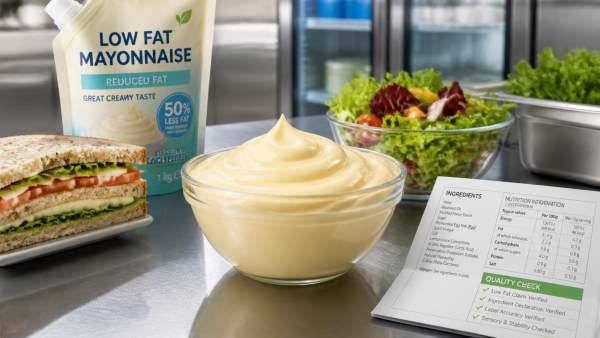
Low-fat buying decisions often fail on texture, not price
Low fat mayonnaise looks simple on a specification sheet: less oil, lower calories, same basic use. In purchasing practice, it is rarely that simple. Once fat is reduced, the product’s body, cling, mouthfeel, heat tolerance, and label positioning can change in ways that affect kitchen performance, shelf-life expectations, and customer acceptance. Buyers who compare suppliers on fat percentage alone can end up with a product that meets a nutrition target but fails in sandwiches, salads, dips, or prepared meals.
For procurement teams, the right check is not “Is this low fat?” but “Low fat for which application, under what storage and handling conditions, and with what claim limitations?” A mayonnaise used in a chilled deli salad faces a different set of requirements than one portioned into sachets, spread on buns in quick-service outlets, or pumped through filling equipment in a factory kitchen.
That is why three areas deserve close attention before a contract is signed: actual fat content and how it is defined, texture under real use conditions, and the wording of label claims. Each one affects cost, quality complaints, and the risk of supply mismatches.
Fat content is a functional variable, not just a nutritional number
Buyers usually begin with the fat declaration because it appears objective and easy to compare. Yet a low-fat specification only becomes useful when linked to functional performance. In mayonnaise-style emulsions, fat contributes body, opacity, richness, lubrication, and flavor release. Lowering it usually requires compensating with water-phase structure, starches, gums, proteins, or other texturizing systems. Two products with similar declared fat levels may behave very differently in production or foodservice.
When reviewing quotations or technical sheets, purchasers should clarify several points:
- Whether the stated fat value is a target, a guaranteed range, or a typical value.
- Whether the product is intended as a spread, dressing base, salad binder, dip, or general-purpose condiment.
- How the lower-fat system is stabilized and whether that affects flavor, allergen profile, or process tolerance.
- Whether viscosity remains stable across the expected storage temperature range.
A product with lower oil may reduce ingredient cost pressure in some formulas, but that does not automatically lower total cost. If the emulsion weeps in finished sandwiches, separates after mixing with acidic vegetables, or requires tighter cold-chain control, operational losses may offset any unit-price advantage. The true purchasing question is how the fat reduction changes the product’s working behavior.
Some buyers also need to distinguish between “low fat mayonnaise” in a commercial sense and products that are closer to salad dressing systems. The difference matters because formulation, sweetness, acidity, spoonability, and legal naming can shift together. For teams comparing category boundaries, Mayonnaise versus salad dressing is a useful reference point because the naming difference often signals changes in composition and end use rather than a minor marketing variation.
Texture checks should be tied to the final application
Texture failures usually show up after receiving, not during quotation review. A low-fat product may look acceptable in the container yet perform poorly once spread thin, mixed with proteins, dosed by machine, or held under refrigerated display conditions. Procurement should therefore ask suppliers for samples that match the intended use rather than relying on a generic tasting session.
Spreadability and cling
In sandwiches, burgers, and wraps, low-fat emulsions can show less lubricity and weaker cling than full-fat versions. That may lead to uneven coverage, visible tearing on soft bread, or migration into the crumb during holding. A buyer sourcing for assembled chilled products should test spreadability on the actual bread or carrier, then check appearance again after several hours under refrigeration.
Mixing stability in salads and fillings
In deli salads, cooked vegetable mixes, tuna fillings, or poultry preparations, the product has to bind ingredients without becoming watery. Low-fat formulas are sometimes more sensitive to moisture released from cut vegetables or proteins. Cucumbers, onions, and tomatoes are common stress points because they continue to release water after mixing. If the product is being used as a binder, ask how it performs after contact with high-moisture inclusions and whether the texture thins during overnight holding.
Pumpability and depositor performance
Industrial kitchens and prepared-food manufacturers should not assume that a low-fat mayonnaise will run through existing equipment the same way as the current product. Apparent viscosity, yield stress, and shear-thinning behavior affect filling accuracy, line speed, and cleanup frequency. A product that is too stiff may overload pumps or deposit unevenly. One that thins too quickly may drip, spread beyond target areas, or create weight variation in packed meals.
Heat and abuse tolerance
Many low-fat emulsions are sold for cold applications, but buyers still need to ask what happens during short periods of temperature abuse. Delivery delays, back-of-house handling, or line-side exposure can weaken emulsion structure. Even if the product is not meant for cooking, temporary warming may change viscosity enough to affect portioning or appearance. A supplier’s recommended storage condition should be checked against the buyer’s actual logistics rather than the ideal warehouse situation.
What to ask for during sample evaluation
Sample review works best when procurement, quality, and operations evaluate the same product against a common checklist. Otherwise, one team may approve flavor while another later rejects line performance. A structured review can prevent unnecessary resampling and speed up supplier comparison.
Label claims can create risk if they are treated as generic wording
Purchasing teams sometimes focus on composition while assuming claims are a regulatory issue for someone else. That separation can be costly. Label language shapes product acceptability in retail, foodservice tenders, and private-label programs. If a buyer selects a product that cannot support the required claim wording, reformulation or relabeling may become necessary late in the process.
Low-fat claims are not universal shorthand. Their acceptability depends on the market, applicable rules, product category, and comparison basis. A label statement that works in one destination may need different wording in another. Even where a “low fat” expression is commonly used, the product may still need supporting nutritional values, serving references, or category naming that aligns with local requirements.
There is also a commercial issue beyond compliance. End users often infer taste and texture from front-of-pack language. If the product is positioned as low fat but behaves more like a dressing, complaints may arise even when the specification is technically correct. Buyers sourcing for private label or contract manufacturing should make sure commercial naming, ingredient declaration, and sensory expectations are aligned before approval.
Questions buyers should raise with suppliers
- What exact claim wording is the supplier using in current markets, if any?
- Is the product sold under a mayonnaise name, a dressing name, or a broader condiment description?
- Are there formulation features that may affect claim strategy, such as sweeteners, starches, or egg substitutes?
- Does the supplier provide the documentation needed for nutrition panels and ingredient review?
- Will the same formula be supplied consistently across production lots and seasons?
Ingredient systems influence both performance and purchasing risk
Reducing fat usually shifts more responsibility to the non-oil portion of the formula. That matters in procurement because the stabilizing system can affect availability, shelf-life consistency, and customer acceptance. A low-fat emulsion may depend on starches, gums, proteins, or acidity management to create body. Each route has trade-offs.
Starch-supported systems may provide body at lower cost, but they can behave differently under freeze-thaw exposure or prolonged chilled holding. Gum-based systems may offer strong viscosity control, though some users notice a more elastic or less natural mouthfeel if the balance is not well tuned. Protein-supported systems can help structure, yet they may raise allergen or flavor questions depending on the source. None of these approaches is inherently wrong; the point is that buyers should understand which one they are paying for and how it matches the application.
Ingredient choices also affect supply continuity. If a product relies on a narrow set of specialty components, replacement lead times may be longer when disruptions occur. Procurement teams managing multiple sites may prefer a formula with slightly less sensory performance if it provides better supply resilience and easier substitution planning.
Pack format, shelf life, and logistics deserve equal attention
A technically suitable product can still create losses if the packaging does not fit the operation. Large pails may lower packaging cost per kilogram, but if the site uses only small daily volumes, open-container waste and hygiene exposure can rise. Sachets improve portion control in some channels but can add material cost and require closer seal integrity checks. Flexible pouches can improve handling efficiency yet may need compatible dispensing equipment.
Shelf life should be reviewed in its unopened and opened states. For foodservice and central kitchens, the “after opening” handling window matters as much as coded shelf life. Buyers should compare that practical working window with actual consumption patterns at site level. A low-fat product that must be used quickly after opening may be acceptable in high-throughput operations but inefficient in low-volume outlets.
Distribution conditions also matter. If the chain includes long transport routes, mixed loads, or variable ambient conditions during receiving, the product’s temperature sensitivity becomes a purchasing issue, not just a warehouse issue. Quality complaints tied to separation often start in logistics.
How procurement can write a better specification
Many sourcing problems begin with overly broad specifications such as “low-fat mayonnaise, standard quality.” That leaves too much room for interpretation. A more useful purchasing specification links composition, performance, and use case. It does not need to disclose a supplier’s proprietary formula, but it should define the acceptance range in terms the operation can verify.
Useful specification points may include:
- Intended application: sandwich spread, salad binder, dip base, or industrial depositor use.
- Target fat range rather than a vague low-fat description.
- Expected texture at the actual use temperature.
- Tolerance for water release, separation, or viscosity shift after mixing and holding.
- Packaging format and pack size matched to site consumption.
- Required labeling support and documentation for the destination market.
- Agreed sensory benchmark against the currently approved product, if one exists.
Where several departments are involved, procurement can reduce risk by making the sample protocol part of the sourcing file. If all suppliers are tested on the same bread, the same salad base, the same storage time, and the same filling equipment, comparison becomes more reliable.
The strongest low-fat option is the one that fits the operation
For buyers, low fat is only the starting point. The more important question is whether the product delivers the right texture, holds up in the intended application, and supports the required label position without creating downstream problems. A lower declared fat level may suit one menu line and fail in another. A smooth sample cup may still break down in actual use. A familiar product name may not match the regulatory or commercial claim strategy needed for the market.
Purchasing decisions are stronger when fat content, texture behavior, and label claims are reviewed together. That approach helps separate products that merely satisfy a nutritional brief from those that can move through receiving, storage, preparation, and sale with fewer surprises.
Related Intelligence
- Natural IngredientsFreeze-Dried Fruit Ingredients: A Packaging Checklist for Bulk StorageBuying freeze dried fruit ingredients? Use this bulk packaging checklist to assess moisture barriers, seals, and pack sizes, reduce waste, and protect quality from storage to production.
- Natural IngredientsBotanical Ingredient Prices in Europe: Comparing Quotes by Grade and Order VolumeCompare Europe botanical ingredients price quotes by grade and order volume. Discover how potency, testing, delivery, and inventory costs reveal real savings before you buy.
- Natural IngredientsMayonnaise vs. Salad Dressing: Ingredient and Texture DifferencesMayonnaise vs. salad dressing: discover key ingredient, texture, stability, and application differences to choose the right product for every recipe.
The Morning Broadsheet
Daily chemical briefings, market shifts, and peer-reviewed summaries delivered to your terminal.
