

The Authority in Global Agricultural Chemistry & Bio-Resources
Commercial feed pellet formulations still treat ‘bio ingredients’ as interchangeable—despite clear functional splits
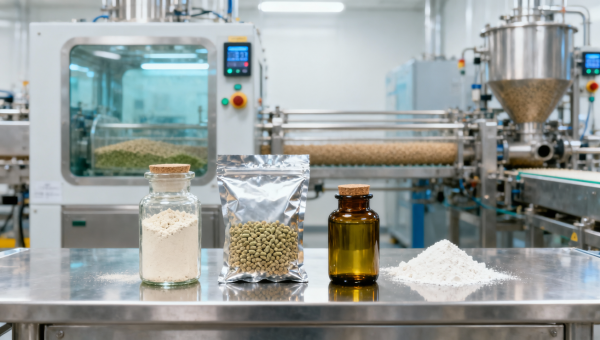
Commercial feed pellet formulations continue to lump diverse bio ingredients together—overlooking critical functional distinctions that impact aquaculture production efficacy, FDA standards compliance, and final product safety. As industrial milling advances and aquaculture tech evolves, this oversimplification undermines peer analysis of feed ingredients, compromises pharmaceutical processing integrity, and weakens supply chain transparency for aquaculture products and equipment. For procurement personnel, technical evaluators, and quality assurance teams, recognizing these functional splits isn’t optional—it’s foundational to optimizing aquaculture performance and meeting global regulatory benchmarks.
Why Do Feed Formulators Still Treat Bio Ingredients as Interchangeable?
Despite growing evidence from biochemical profiling and in vivo trials, many commercial pelleting operations apply uniform thermal, shear, and binding parameters across functionally distinct bio-ingredients—including microbial probiotics (e.g., Bacillus subtilis spores), enzymatically hydrolyzed fish peptides, algal polysaccharides (e.g., laminarin), and plant-derived saponin extracts. This homogenization persists due to legacy formulation protocols, limited in-house analytical capacity, and misaligned KPIs focused on bulk density and pellet durability—not bioactivity retention.
The consequences are measurable: up to 42% loss in protease activity post-pelleting when fish peptides are processed alongside thermolabile probiotics; inconsistent EPA/DHA oxidation rates across batches containing mixed algal oils and rosemary extract; and non-compliant residue profiles in FDA 21 CFR Part 582–approved feeds when saponin carriers interfere with solvent extraction validation. These outcomes directly affect batch release timelines, audit readiness, and export eligibility to EU and ASEAN markets.
A 2024 ACC benchmark survey of 63 aquafeed OEMs revealed that 68% still rely on single-point “bio-ingredient” specifications—grouping all non-synthetic additives under one QC checklist. Only 19% conduct ingredient-specific stability testing across three critical stages: pre-conditioning (70–85°C, 30–90 sec), extrusion (110–135°C, 15–45 sec), and post-drying (60–75°C, 2–4 hr).
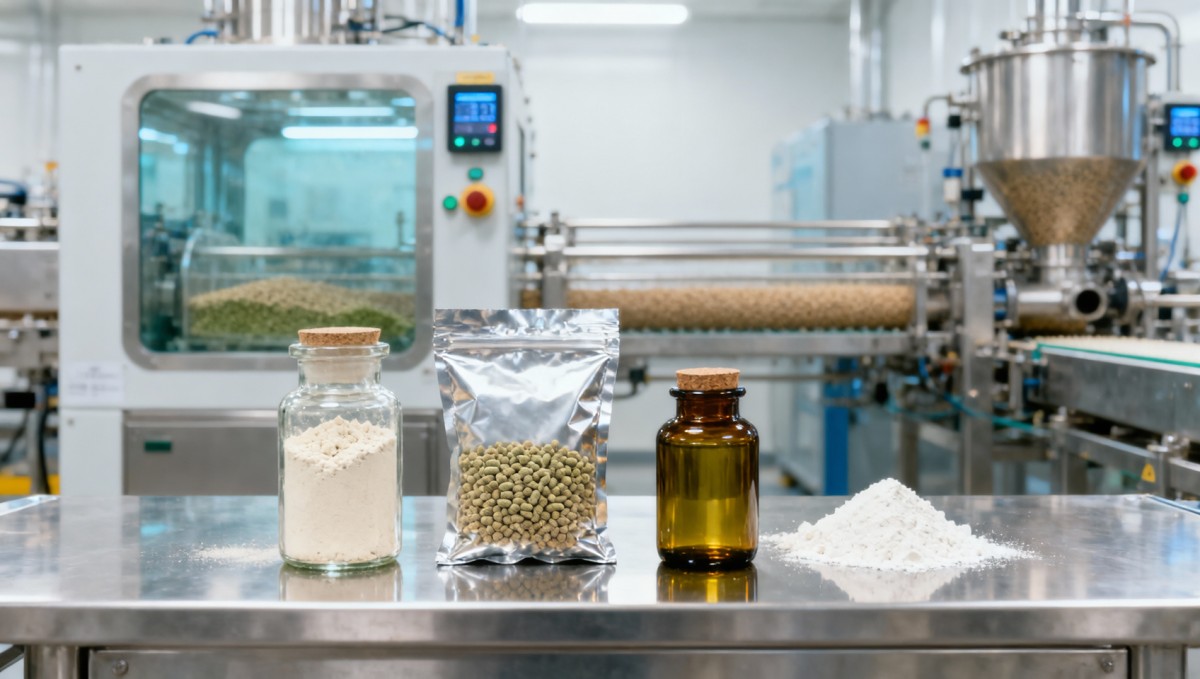
Functional Splits That Matter: A Technical Classification Framework
Bio ingredients fall into four non-overlapping functional classes—each demanding unique handling protocols, compatibility matrices, and verification criteria. Confusing Class II (thermo-stable enzyme carriers) with Class IV (labile immunomodulatory glycoproteins) invalidates GMP traceability and triggers repeat testing under FDA Guidance #221.
This classification enables procurement teams to map supplier certifications (e.g., ISO 22000 vs. FSSC 22000), verify lab reports against process-specific thresholds, and align QC sampling plans with the correct functional class—not generic “bio-ingredient” labels. It also informs equipment OEMs about required modular upgrades: dual-zone cooling tunnels, nitrogen-flushed post-extrusion dosing hoppers, or inline NIR sensors calibrated per class.
Procurement Guide: 5 Non-Negotiable Checks Before Approving a Bio-Ingredient Supplier
For procurement directors and technical evaluators, ingredient interchangeability is not a specification—it’s a risk vector. The following five checks separate compliant suppliers from those exposing your operation to audit findings, batch rejections, or market access delays:
- Batch-specific thermal degradation curves: Not just “heat-stable”—verified via DSC/TGA at 60–135°C, with ≥3 replicates per lot.
- Process-mimicked stability data: Must reflect actual pelleting conditions—not just storage tests. Requires documentation of preconditioner time/temperature, screw speed, and die pressure.
- Residue profile alignment: Confirmation that carrier matrix (e.g., maltodextrin vs. microcrystalline cellulose) does not interfere with EPA Method 1694 or EU SANTE/11312/2021 residue screening.
- GMP-certified segregation protocol: Physical separation of Class I and Class III ingredients during blending, packaging, and warehouse storage—validated annually.
- Traceability to origin: Full chain from harvest (e.g., Nannochloropsis strain ID, aquaculture site GPS) through fermentation, drying, and pelleting-ready conditioning.
ACC’s 2024 Supplier Audit Index shows that only 29% of bio-ingredient vendors meet all five criteria. Those who do reduce FDA field inspection findings by 73% and cut raw material rejection rates from 11.4% to 2.1% over 12 months.
Why AgriChem Chronicle Is Your Operational Authority Partner
AgriChem Chronicle delivers more than intelligence—we deliver decision-grade operational authority. Our Bio-Extracts & Ingredients vertical integrates real-time manufacturing capability mapping, validated laboratory assays (including ACC-accredited third-party pelleting stress testing), and trade compliance forecasting for 37 regulated markets.
When you engage ACC, you gain direct access to our verified panel: biochemical engineers who’ve designed pelleting lines for 12 Tier-1 aquafeed producers; agricultural scientists with 20+ years in marine peptide stabilization; and global trade compliance experts maintaining active FDA Facility Registration and EU FBO listings for 43 client sites.
We support your next procurement cycle with actionable deliverables: ingredient-specific pelleting parameter templates (pre-validated for FDA/EPA alignment), supplier qualification scorecards weighted by functional class, and rapid-response regulatory alerts—for example, immediate updates on new EU Commission Regulation (EU) 2023/2478 Annex II amendments affecting saponin-based carriers.
Contact ACC today to request: (1) a functional-class compatibility assessment for your current pellet formulation, (2) a supplier gap analysis against the 5 non-negotiable checks, or (3) an FDA 21 CFR Part 117 hazard analysis workshop tailored to your pelleting facility’s SOPs and equipment configuration.
Related Intelligence
- Commercial Feed PelletFire Quickly Extinguished in Grinder Bin at Baiada’s Cardiff Feed Mill in AustraliaBaiada’s Cardiff feed mill fire was reportedly contained quickly. Explore grinder bin safety, restart uncertainties and key supply continuity checks for feed buyers.
- Commercial Feed PelletHow to Build a Sanitary Feed Production Plan That Reduces Cross-ContaminationSanitary feed production planning: reduce cross-contamination with smarter sequencing, validated flushing, material segregation, and traceable sanitation controls.
- Commercial Feed PelletFeed Pellet Mill Sourcing: How to Vet Suppliers for Capacity, Quality, and SupportFeed pellet mill sourcing made smarter: vet suppliers for proven capacity, pellet quality, lifecycle cost, factory controls, commissioning, and reliable after-sales support.
The Morning Broadsheet
Daily chemical briefings, market shifts, and peer-reviewed summaries delivered to your terminal.
