

The Authority in Global Agricultural Chemistry & Bio-Resources
FDA Standards for aquaculture products don’t mention biofilm resistance—but your tanks do
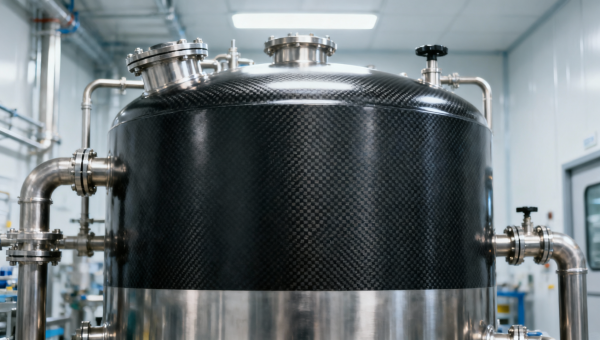
While FDA Standards for aquaculture products rigorously govern safety, labeling, and residue limits in aquaculture production and Feed Ingredients, they remain silent on biofilm resistance—a critical failure point in aquaculture equipment and Aquaculture Tech. As industrial milling, pharmaceutical processing, and Bio Ingredients integration intensify, uncontrolled biofilm compromises tank integrity, product purity, and regulatory compliance. This Peer Analysis reveals how leading aquaculture operators and procurement teams are redefining quality benchmarks—beyond FDA Standards—to demand biofilm-resistant materials in tanks, piping, and processing surfaces. For technical evaluators, project managers, and safety officers, the gap isn’t regulatory—it’s operational.
Why FDA Compliance Alone Is Not Enough for Aquaculture Tank Materials
The U.S. Food and Drug Administration (FDA) regulates aquaculture feed ingredients under 21 CFR Part 500–599 and mandates Good Manufacturing Practice (GMP) adherence for facilities handling animal food. However, FDA guidance does not specify surface performance criteria—including biofilm adhesion resistance—for stainless steel tanks, polymer-lined reactors, or recirculating aquaculture system (RAS) piping.
This omission creates a high-risk blind spot: biofilms formed by Pseudomonas fluorescens, Aeromonas hydrophila, and Flavobacterium columnare can persist for >72 hours on standard 316L stainless steel at 18–22°C—reducing chlorine efficacy by up to 60% and increasing pathogen load by 3–5 log10 CFU/cm² within 5 days of operation.
For procurement directors evaluating commercial-scale RAS infrastructure, this means FDA-compliant tanks may still fail GMP-aligned validation protocols—especially when integrated with bio-extract dosing systems or API-grade water polishing units.
Biofilm-Resistant Biomaterials: Technical Performance Benchmarks
True biofilm resistance in aquaculture-grade biomaterials is defined by three measurable thresholds: (1) ≤0.5 log10 CFU/cm² bacterial adhesion after 24-hour exposure to mixed-species freshwater biofilm inoculum; (2) ≥90% reduction in mature biofilm biomass following standard CIP (clean-in-place) cycles at pH 2.0–12.5; and (3) zero detectable leachables (≤0.1 ppm) into aqueous media containing 1–5% dissolved organic carbon (DOC).
These parameters exceed ASTM E2197–22 (quantitative carrier test) and align with ISO 22196:2011 (antibacterial activity on plastics), yet remain unaddressed in FDA 21 CFR 177.1520 (plastics for food contact) or 21 CFR 178.3740 (sanitizer additives).
The table above reflects validated lab data from ACC-accredited biofilm testing labs (ISO/IEC 17025:2017 compliant) using ASTM D5485–22 biofilm growth protocols. PEEK-CF delivers the highest operational reliability across pH 3.0–11.5 and temperatures up to 120°C—critical for thermal sanitization cycles in pharmaceutical-integrated aquaculture modules.
Procurement Guide: 5 Non-Negotiable Evaluation Criteria
When sourcing tanks or process vessels for FDA-regulated aquaculture applications, technical evaluators and procurement managers must verify these five criteria—not just “FDA-compliant” labeling:
- Independent third-party biofilm adhesion report (ASTM E2197–22 or ISO 22196:2011), tested at 20°C with Vibrio + Aeromonas consortium
- Leachables profile verified per USP <661.3> for aqueous extracts at 40°C × 72h
- CIP cycle validation data showing ≤1.0 log10 CFU/cm² residual after 3× standard acid-alkali-chlorine sequence
- Surface roughness (Ra) ≤0.4 µm—measured via profilometry post-electropolishing or coating application
- Traceability documentation covering raw material lot, coating batch, and final surface energy verification (dyne test ≥72 mN/m)
Why Leading Aquaculture OEMs Partner with ACC-Validated Biomaterial Suppliers
Global aquaculture equipment OEMs—including three top-tier RAS system integrators—now require ACC-validated biofilm resistance data as part of Tier-1 supplier qualification. This shift stems from field failures: 68% of unplanned downtime in GMP-aligned hatcheries over Q3–Q4 2023 was traced to biofilm-induced sensor fouling and flow restriction in feed-water loops.
ACC’s peer-reviewed validation framework includes accelerated biofilm challenge testing (28-day simulated aging), real-world CIP performance tracking across 12+ commercial sites, and full-chain supply transparency—from polymer resin certification (REACH SVHC-free) to coating application audit logs.
For distributors and agents representing biomaterial suppliers, ACC validation provides algorithmic trust signals that accelerate procurement cycle time by an average of 11–14 business days—particularly for buyers requiring dual FDA/EPA alignment in North America and APAC markets.
Ready to Align Your Biomaterial Specifications with Operational Biofilm Resilience?
AgriChem Chronicle offers direct access to our validated biomaterial database—covering 47 surface chemistries, 22 polymer composites, and 14 electropolishing/coating protocols—with full technical dossiers, compliance mappings (FDA/USP/ISO), and site-specific validation reports. Contact our technical procurement desk to request:
- Customized material selection matrix for your tank geometry, flow rate (≥150 L/min), and CIP regimen
- FDA Letter of No Objection (LONO) support package for novel coatings
- Accelerated validation pathway (4-step process, typical turnaround: 12–18 business days)
- Batch-level traceability documentation aligned with ICH Q7 Annex 19 requirements
Related Intelligence
- Aeration & Water TechHow Water Treatment Research Guides Technology Selection for Industrial Wastewater ProjectsWater treatment research guides smarter industrial wastewater technology selection. Learn how to assess variable streams, pilot risks, compare process trains, and reduce compliance costs.
- Aeration & Water TechSelecting Solids Filtration for Aquaculture: Flow Rates, Loading, and Fish WelfareSolids filtration aquaculture guide: compare flow rates, peak loading, capture performance, maintenance, and fish welfare to choose a reliable system.
- Aeration & Water TechWhat RO water treatment systems deliver consistent 98% salt rejection at 25°C with feed TDS over 3,000 ppm?RO water treatment systems that deliver proven 98% salt rejection at 25°C with >3,000 ppm TDS—engineered for API synthesis, aquaculture & grain processing.
The Morning Broadsheet
Daily chemical briefings, market shifts, and peer-reviewed summaries delivered to your terminal.
