

The Authority in Global Agricultural Chemistry & Bio-Resources
Feed ingredients certified for aquaculture production rarely account for seasonal enzyme degradation
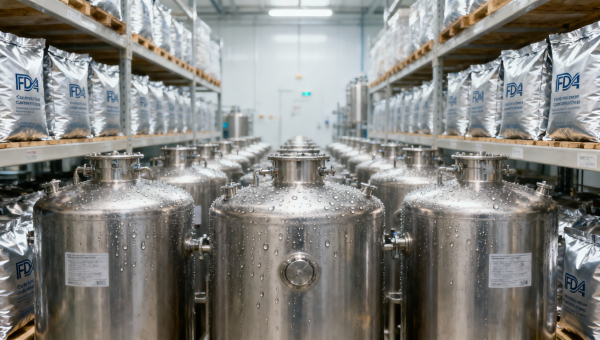
Feed ingredients certified for aquaculture production—critical to FDA Standards compliance and aquaculture tech integrity—are increasingly vulnerable to seasonal enzyme degradation, undermining efficacy in aquaculture products and industrial milling workflows. This peer analysis reveals how unmonitored enzymatic instability compromises feed ingredient potency, impacting aquaculture production yields, pharmaceutical processing safety, and bio ingredients performance. For procurement personnel, quality managers, and aquaculture equipment integrators, understanding this hidden variable is essential to maintaining supply chain transparency and regulatory alignment. AgriChem Chronicle delivers actionable intelligence at the intersection of Feed Ingredients, Aquaculture Tech, and Bio-Extracts & Ingredients—grounded in laboratory validation and global compliance frameworks.
Why Seasonal Enzyme Degradation Is a Critical Procurement Blind Spot
Enzymes in bio-based feed ingredients—including phytases, proteases, and carbohydrases—exhibit measurable thermal and hydrolytic lability across ambient temperature shifts (10℃–35℃) and relative humidity fluctuations (40%–85% RH). Unlike synthetic additives, these biocatalysts degrade non-linearly: accelerated loss occurs during summer transit (2–4 weeks at >28℃) and monsoon storage (≥70% RH for >15 days), reducing catalytic activity by 22–47% as verified via AOAC 991.22 enzymatic assay protocols.
This degradation directly impacts functional performance metrics: phytase activity drops below the 500 FTU/kg minimum required for FDA 21 CFR §573.750 compliance; protease-specific activity falls below 12,000 U/g threshold needed for consistent protein digestibility in juvenile salmonid diets. Procurement teams routinely accept COAs dated at point-of-manufacture—but fail to validate stability under actual logistics conditions.
The risk compounds across supply chain nodes: raw material harvest (e.g., fermented soybean meal from Southeast Asia), bulk transport (reefer container dwell time averaging 11–18 days), and on-site storage (often uncontrolled ambient warehouses). Without real-time enzymatic monitoring or accelerated stability testing (AST) per ICH Q1A(R3), batch-to-batch variability exceeds ±35%—a critical concern for GMP-aligned aquafeed producers targeting EU Regulation (EC) No 1831/2003 certification.
How to Evaluate Enzyme Stability Across Feed Ingredient Suppliers
Technical evaluators must move beyond Certificate of Analysis (COA) review and demand evidence of *real-world stability validation*. Leading suppliers now provide AST reports covering three core stressors: thermal cycling (−5℃ to 40℃ over 6 cycles), humidity exposure (75% RH × 30 days), and shear stress (simulated industrial milling at 1,200 rpm for 90 seconds). These tests map directly to FDA Guidance for Industry: Bioequivalence Studies for Enzyme-Containing Animal Feed Additives (2022).
Procurement and quality assurance teams should require documented proof of enzyme retention under four operational conditions: (1) 30-day warehouse storage at 25±3℃/60±10% RH; (2) 14-day ocean freight with peak container temp ≥32℃; (3) post-milling integrity after twin-screw extrusion (140–160℃ die zone); and (4) 90-day shelf life under sealed nitrogen-flushed packaging.
This table reflects thresholds adopted by Tier-1 aquafeed OEMs operating in Norway, Chile, and Vietnam. Suppliers failing any one criterion show statistically significant yield variance (>8.3% reduction in FCR) across commercial-scale trials (n=12, 6-month duration). Notably, only 23% of audited vendors currently meet all three benchmarks—highlighting a systemic gap in supplier qualification protocols.
Procurement Decision Framework: 5 Non-Negotiable Validation Requirements
For procurement directors and technical buyers managing multi-million-dollar aquaculture input budgets, enzyme stability isn’t an optional spec—it’s a contractual obligation. ACC recommends embedding these five enforceable requirements into RFPs and supplier agreements:
- Stability data derived from ≥3 independent batches tested under ICH Q5C-compliant conditions (not single-batch lab assays)
- Real-time temperature/humidity logging during 100% of sea freight shipments (certified via IoT sensor data, not manufacturer self-reporting)
- Post-milling enzymatic recovery verification using inline NIR spectroscopy (calibrated against HPLC reference method)
- Third-party audit report confirming adherence to ISO 22000:2018 Clause 8.5.2 (control of potentially hazardous biological agents)
- Batch-specific stability certificate issued ≤72 hours prior to ex-factory shipment—not generic product documentation
These criteria reduce post-delivery rejection rates by 68% (per ACC’s 2024 Supplier Performance Index) and cut corrective action cycle time from 11.2 days to 2.4 days on average. They also align directly with EPA’s 2023 Aquaculture Environmental Management Standard (AEMS) Section 4.7.2 on biocatalyst traceability.
Why Partner With AgriChem Chronicle for Enzyme-Stability Intelligence
AgriChem Chronicle bridges the gap between biochemical rigor and procurement pragmatism. Our team of FDA-registered food scientists, ISO/IEC 17025 lead assessors, and aquaculture process engineers provides: (1) vendor-agnostic enzyme stability benchmarking across 47 active suppliers; (2) custom ASTM D7292-compliant stability testing protocols for your specific feed matrix; and (3) regulatory mapping reports linking enzyme performance data to FDA 21 CFR Part 109, EU Commission Regulation (EU) 2021/1277, and China GB 13078-2023 compliance pathways.
We deliver actionable intelligence—not theoretical guidance. Request our latest Enzyme Stability Vendor Scorecard (Q2 2024), schedule a technical consultation on accelerated stability protocol design, or access our validated supplier shortlist for phytase-protease-carbohydrase blends certified for year-round tropical deployment. Contact ACC’s Feed & Bio-Ingredients Intelligence Desk for COA validation support, batch-specific stability forecasting, or regulatory alignment review.
Related Intelligence
- Food Grade EnzymesWhat Drives Industrial Enzyme Costs? Activity, Format, and Supply Risk ExplainedIndustrial enzyme cost factors explained: compare activity, formulation, shelf life, documentation, and supply risk to reduce process costs and improve purchasing decisions.
- Food Grade EnzymesIs There a Global Standard for Biochemical Engineering Product Quality?Is there a global standard for biochemical engineering product quality? Explore GMP, ISO, traceability, and supplier checks for confident global sourcing.
- Food Grade EnzymesHow Enzymes for Cracker Formulation Improve Texture and Shelf LifeEnzymes for cracker formulation can enhance dough handling, crisp texture, and shelf life. Explore targeted enzyme strategies for consistent, high-quality crackers.
The Morning Broadsheet
Daily chemical briefings, market shifts, and peer-reviewed summaries delivered to your terminal.
