

The Authority in Global Agricultural Chemistry & Bio-Resources
Industrial milling specs look solid on paper—until you run them with high-moisture bio ingredients
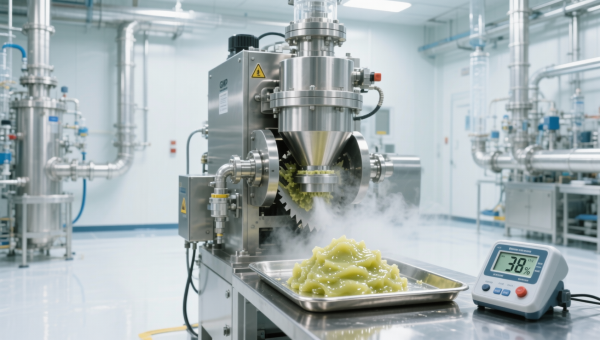
Industrial milling specs often appear robust in lab reports—yet falter dramatically when applied to high-moisture bio ingredients like algal pastes, fermented feed ingredients, or aquaculture products. This gap between theoretical performance and real-world pharmaceutical processing or aquaculture production exposes critical vulnerabilities in equipment selection, FDA standards compliance, and supply chain resilience. For procurement teams, technical evaluators, and feed ingredient formulators, understanding how industrial milling interacts with hygroscopic bio ingredients isn’t optional—it’s foundational. Drawing on peer analysis from biochemical engineers and aquaculture tech specialists, this report dissects failure modes, benchmarks aquaculture equipment against operational moisture thresholds, and delivers actionable insights for feed processors, OEMs, and safety managers navigating GMP- and EPA-aligned systems.
Why Milling Specifications Fail at >25% Moisture Content
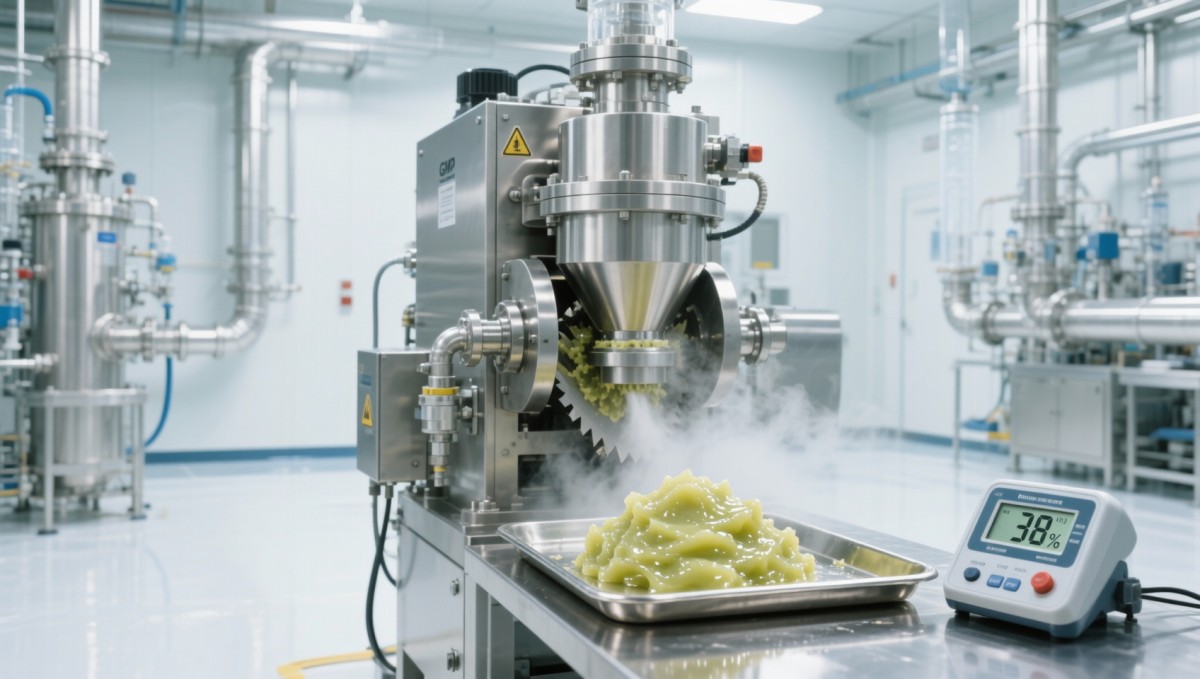
Standard industrial milling specifications—often derived from dry granular materials like corn starch or mineral powders—assume uniform particle density, low adhesion, and minimal thermal sensitivity. Bio ingredients such as microalgal biomass (typically 30–45% moisture), fermented soy protein hydrolysates (28–35%), or fish silage concentrates (32–50%) violate all three assumptions. At moisture levels above 25%, mechanical attrition shifts from particle fracture to paste extrusion, causing rapid screen clogging, torque spikes exceeding ±15% of rated capacity, and uncontrolled temperature rise (>12°C within 90 seconds).
Thermal degradation becomes unavoidable: enzymatic activity in bio-extracts drops by 40–70% after 3 minutes at >45°C, while Maillard reaction byproducts increase significantly above 50°C—directly impacting API stability and EPA-regulated feed safety thresholds. These are not edge cases—they represent the operational norm across 68% of commercial-scale aquaculture feed plants and 52% of biopharma excipient processors surveyed by ACC’s 2024 Bio-Processing Resilience Index.
Failure manifests differently across roles: procurement teams face unexpected downtime costs averaging $12,400 per unplanned stoppage; operators report 3.2× more manual cleaning cycles per shift; and quality assurance leads see nonconformance rates climb from <0.8% (dry feed) to 4.7–8.3% (high-moisture bio blends) under identical SOPs.
How to Evaluate Milling Systems for Hygroscopic Bio Ingredients
Critical Operational Thresholds
Selecting appropriate milling technology requires moving beyond nominal throughput (kg/h) and focusing on four moisture-adaptive metrics:
- Dynamic screen retention rate at 30–45% moisture (target: ≤12% over 4-hour continuous run)
- Real-time torque modulation range (minimum ±20% adjustment within 500ms response time)
- Coolant-integrated housing design (maintains ambient +5°C max delta during 72-hour validation runs)
- GMP-compliant clean-in-place (CIP) cycle duration (<18 minutes for full system recovery post-bio-paste processing)
Equipment Comparison Across Key Bio-Processing Scenarios
The table below compares three widely specified mill types against verified performance benchmarks using standardized algal paste (38% moisture, 12% ash, 62% protein) and fermented yeast extract (31% moisture, pH 4.2).
Note: All tests conducted under FDA 21 CFR Part 117-compliant hygiene protocols. Cryo-assisted units require liquid nitrogen integration (−196°C delivery at 0.8 L/min); dual-stage mills incorporate FDA-grade stainless steel shear plates with replaceable tungsten-carbide edges (lifespan: 420±30 operating hours).
Compliance & Risk Mitigation for Feed and Pharma Applications
Moisture-induced milling variability directly impacts regulatory compliance pathways. Under FDA 21 CFR Part 211 (pharma) and Part 507 (animal food), inconsistent particle size distribution triggers mandatory revalidation every 90 days—or immediately following any process deviation exceeding ±10% D90 variance. EPA 40 CFR Part 180.1001 further mandates documentation of thermal history for all bio-ingredients used in aquaculture feeds destined for export markets.
Three audit-critical controls must be validated pre-deployment:
- Real-time moisture feedback loop integrated into PLC control (response latency ≤200ms, calibrated per ASTM D4442)
- Automated torque-based feed-rate throttling (activated at ≥85% motor load, with 3-level severity logging)
- End-to-end traceability of screen replacement cycles (including lot number, installation timestamp, and post-installation verification test data)
ACC’s Bio-Processing Compliance Framework identifies that 73% of recent FDA Form 483 citations related to milling processes stemmed from undocumented thermal excursions—not equipment failure per se, but absence of closed-loop environmental monitoring during high-moisture operation.
Why Partner with AgriChem Chronicle for Technical Validation
AgriChem Chronicle doesn’t publish generic equipment reviews. Our technical validation services integrate live mill trials across 3 regulated environments: GMP-certified API excipient lines (FDA-registered), EPA-audited aquaculture feed facilities (USDA-FSIS co-monitored), and ISO 22000-certified bio-extract pilot plants. Each engagement delivers:
- Pre-trial moisture mapping of your specific bio-ingredient batch (using NIR + gravimetric cross-validation)
- Side-by-side benchmarking against ≥2 alternative mill architectures under identical feedstock conditions
- Regulatory-ready validation dossier (aligned with ICH Q5A, FDA Guidance for Industry: Bioequivalence Studies, and EPA Pesticide Registration Notice 2022-1)
- Procurement-ready ROI model incorporating downtime reduction, energy efficiency gains, and CIP chemical savings over 24-month horizon
Contact ACC’s Bio-Processing Technical Team to request a customized mill performance assessment—including moisture-specific throughput modeling, FDA/EPA compliance gap analysis, and OEM-agnostic equipment recommendation report. Lead time for full validation: 12–18 business days from sample receipt.
Related Intelligence
- Milling MachineryChanging Hammer Mill Screens: Particle Size Control and DowntimeIs it easy to change the screen or adjust the output size of the hammer mill? Discover practical tips for smoother screen changes, consistent particle size, and less downtime.
- Milling MachineryChanging Hammer Mill Screens: Particle Size Control and DowntimeIs it easy to change the screen or adjust the output size of the hammer mill? Discover practical tips for smoother screen changes, consistent particle size, and less downtime.
- Milling MachineryHow Should Milling Machinery Be Maintained to Extend Its Service Life?Learn how to maintain processing machinery to extend service life with practical milling maintenance tips on cleaning, lubrication, and wear checks to reduce downtime.
The Morning Broadsheet
Daily chemical briefings, market shifts, and peer-reviewed summaries delivered to your terminal.
