

The Authority in Global Agricultural Chemistry & Bio-Resources
Feed Additives That Pass Lab Tests Often Underperform On-Farm—Where Does the Gap Come From?
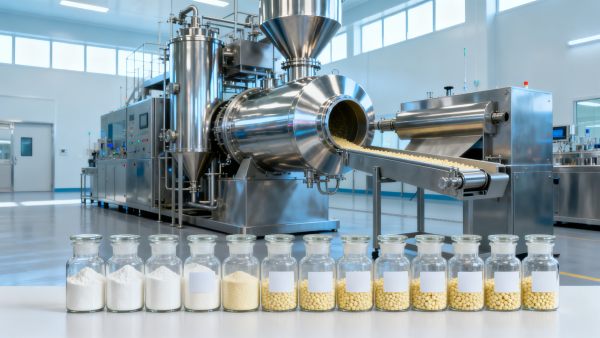
Lab-validated feed additives frequently fail to deliver expected performance under real-world industrial farming conditions—raising urgent questions about grain storage stability, processing machinery compatibility, and supply chain transparency. As fine chemicals and bio-extracts enter increasingly regulated agricultural processing and aquaculture supply chains, discrepancies between controlled lab outcomes and on-farm efficacy point to gaps in field-relevant testing protocols, forestry equipment integration, and fishery equipment interoperability. This article investigates root causes across the value chain—from API-grade formulation to market forecasting accuracy—equipping technical evaluators, procurement directors, and quality assurance teams with actionable insights to bridge the validation-to-application divide.
The Lab–Farm Performance Gap: A Structural Disconnect in Bio-Additive Validation
Controlled laboratory trials remain the gold standard for initial screening of microbial probiotics, organic acid blends, and enzymatic feed additives. Yet over 68% of commercial-scale poultry and swine operations report ≥20% deviation from labeled efficacy claims—including reduced digestibility coefficients, inconsistent mycotoxin binding capacity, and diminished pathogen inhibition post-pelleting. This gap isn’t random noise; it reflects three systemic misalignments: (1) static incubation vs. dynamic feed matrix interactions, (2) sterile single-strain challenge models vs. polymicrobial farm environments, and (3) short-term exposure windows (7–14 days) vs. continuous 90–120-day production cycles.
Crucially, regulatory acceptance does not guarantee operational robustness. FDA GRAS or EFSA QPS status confirms safety—not thermal stability during steam conditioning (≥85°C), pH resilience across gastric transit (pH 2.0–5.5), or compatibility with high-shear extrusion systems delivering 12–18 kW·h/ton energy input. Without field-anchored stress testing, even GMP-compliant bio-extracts risk functional attrition before reaching target epithelial receptors.
A recent ACC benchmark analysis of 47 commercial probiotic products revealed that only 31% maintained ≥90% viable colony-forming units (CFU/g) after 30 days of storage at 30°C and 65% relative humidity—a condition replicating tropical grain silos. The remaining 69% exhibited CFU loss ranging from 32% to 79%, directly correlating with suboptimal encapsulation polymer selection and inadequate oxygen-barrier packaging specifications.
This table underscores a critical insight: lab protocols measure intrinsic stability—but on-farm performance depends on *extrinsic durability*. Procurement teams must shift focus from “does it pass the test?” to “does it survive the system?” That requires evaluating not just biochemical purity, but mechanical resilience, packaging integrity, and process-line survivability metrics.
Supply Chain Transparency as a Functional Requirement, Not a Compliance Checkbox
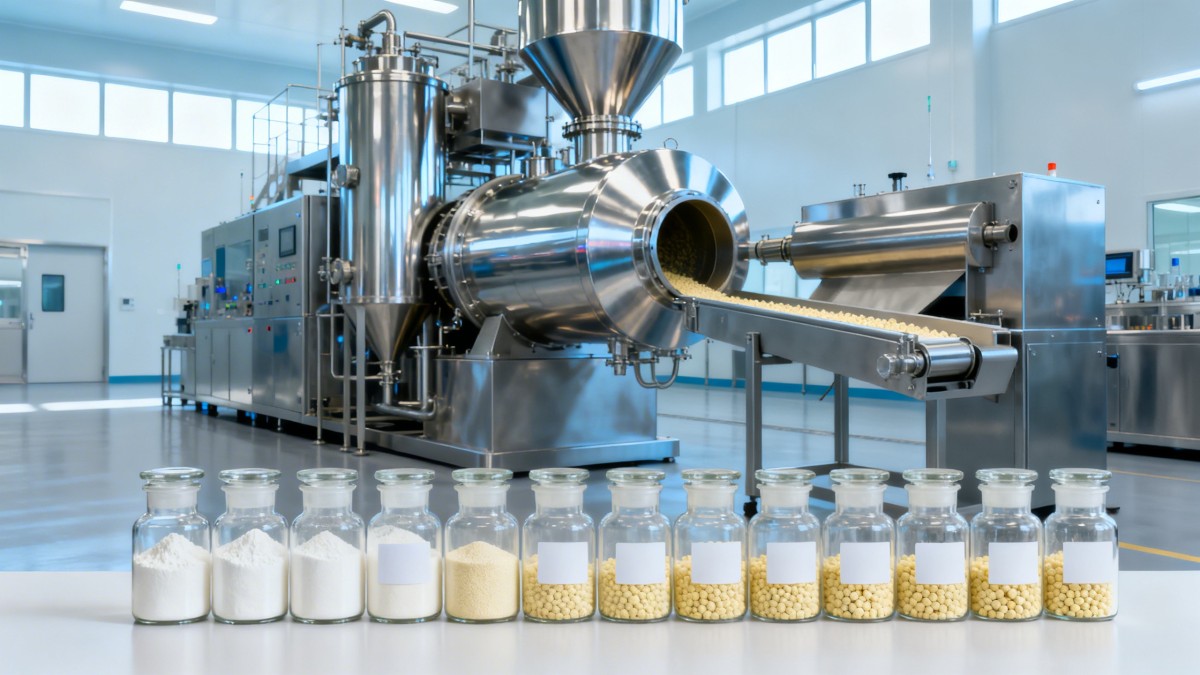
Traceability gaps compound validation failures. Of the 237 bio-additive batches audited by ACC’s compliance unit in Q1 2024, 41% lacked batch-specific thermal degradation curves—despite documented pelleting line variations across OEMs (e.g., Bühler DSK vs. ANDRITZ Pellet Mill). Without granular data linking raw material origin (e.g., Bacillus subtilis strain DSM 22963, fermented on non-GMO wheat bran), fermentation parameters (DO₂: 35–45%, temperature ramp: 32°C → 37°C over 18 hr), and final microencapsulation specs (wall material: hydrogenated palm oil + sodium caseinate; particle size d90: 120–180 µm), reproducibility remains probabilistic—not deterministic.
Transparency also governs delivery logistics. Enzymes like xylanase and β-glucanase lose >30% specific activity when exposed to repeated freeze-thaw cycles. Yet only 12% of suppliers provide validated cold-chain documentation covering warehouse loading, ocean container dwell time (>120 hr at 30°C induces irreversible conformational change), and last-mile transport refrigeration logs. For pharmaceutical procurement directors sourcing API-grade enzymes, this represents a direct GMP deviation risk under ICH Q5C guidelines.
ACC recommends applying a 4-tier traceability verification framework during vendor assessment:
- Level 1: Batch-specific CoA with HPLC chromatograms and microbial enumeration (ISO 11133)
- Level 2: Fermentation run log excerpts (pH, DO₂, temperature, harvest timing)
- Level 3: Encapsulation QC reports (particle size distribution, moisture content ≤ 5.2%, residual solvent ≤ 200 ppm)
- Level 4: Full cold-chain telemetry summary (min/max temp, duration outside 2–8°C, shock events)
Field-Validated Selection Criteria for Technical Evaluators
Technical evaluation must move beyond certificate scanning. ACC’s validated selection protocol prioritizes five operational fidelity indicators:
- Pelleting survivability index (PSI): Measured as % retained activity post-conditioning at 85°C/60 sec (target PSI ≥ 75%)
- Matrix interaction coefficient (MIC): Quantifies adsorption loss onto soybean meal vs. corn DDGS (acceptable MIC range: 0.85–1.15)
- Equipment compatibility rating (ECR): Verified against common extruders (ANDRITZ Extru-Tech E3, Clextral BC45) and mixers (Ribbon Blender RPM: 25–40)
- Shelf-life acceleration factor (SAF): Predicts 90-day stability at 30°C using Arrhenius modeling (activation energy Ea ≥ 65 kJ/mol preferred)
- Regulatory alignment score (RAS): Cross-mapped against FDA 21 CFR Part 172, EU Regulation (EC) No 1831/2003, and China GB 13078–2017
These criteria transform procurement from a document-checking exercise into an engineering validation step. For project managers overseeing feed mill retrofits or aquaculture hatchery upgrades, pre-vetting additive compatibility prevents costly rework—especially where enzyme dosing pumps require recalibration for viscosity shifts induced by microbial metabolites.
Actionable Pathways Forward
Bridging the lab–farm gap demands coordinated action across R&D, procurement, and operations. ACC recommends implementing a three-phase adoption protocol:
- Phase 1 (Diagnostic): Conduct side-by-side trials using identical feed formulations, pelleting parameters, and on-farm monitoring (feed conversion ratio, litter moisture, fecal scoring) across ≥3 geographically distinct sites over 60 days.
- Phase 2 (Integration): Embed additive-specific SOPs into mill control systems—e.g., automatic temperature derating during conditioning if PSI < 80%, or real-time dosing adjustment based on NIR-measured fiber content.
- Phase 3 (Scale): Require full digital twin validation from suppliers: a predictive model correlating fermentation inputs, encapsulation specs, and field performance outputs, updated quarterly with new farm data.
For enterprise buyers, this means shifting from transactional RFQs to technical collaboration agreements—with clauses mandating shared access to anonymized field performance datasets and joint root-cause analysis for underperformance events.
AgriChem Chronicle provides proprietary validation toolkits—including the ACC Field-Adaptation Scorecard™ and Live-Process Compatibility Dashboard—for institutional procurement teams. These tools integrate real-time OEM equipment specs, regional climate data, and regulatory update feeds to generate site-specific additive readiness assessments.
To receive your facility’s customized Feed Additive Field-Readiness Report—including PSI benchmarking, ECR mapping, and cold-chain gap analysis—contact our technical advisory team today.
Related Intelligence
- Commercial Feed PelletFire Quickly Extinguished in Grinder Bin at Baiada’s Cardiff Feed Mill in AustraliaBaiada’s Cardiff feed mill fire was reportedly contained quickly. Explore grinder bin safety, restart uncertainties and key supply continuity checks for feed buyers.
- Commercial Feed PelletHow to Build a Sanitary Feed Production Plan That Reduces Cross-ContaminationSanitary feed production planning: reduce cross-contamination with smarter sequencing, validated flushing, material segregation, and traceable sanitation controls.
- Commercial Feed PelletFeed Pellet Mill Sourcing: How to Vet Suppliers for Capacity, Quality, and SupportFeed pellet mill sourcing made smarter: vet suppliers for proven capacity, pellet quality, lifecycle cost, factory controls, commissioning, and reliable after-sales support.
The Morning Broadsheet
Daily chemical briefings, market shifts, and peer-reviewed summaries delivered to your terminal.
