

The Authority in Global Agricultural Chemistry & Bio-Resources
Grain Storage Silos Are Failing Earlier Than Expected—What’s Accelerating Corrosion in Humid Climates?
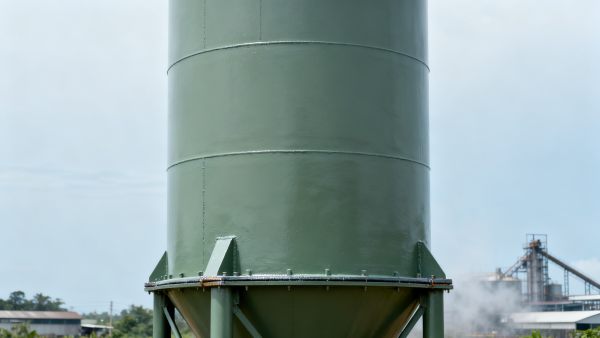
Grain storage silos in tropical and subtropical regions are failing up to 40% earlier than design life—raising urgent concerns across industrial farming, agricultural processing, and feed additives supply chains. This accelerated corrosion isn’t just a materials issue; it intersects with fine chemicals used in protective coatings, forestry equipment durability standards, fishery equipment material compatibility, and the broader push for supply chain transparency. As market forecasting signals increased humidity-driven infrastructure risk, technical evaluators and procurement decision-makers must reassess corrosion mitigation strategies—not only for processing machinery integrity but also for regulatory compliance (FDA/EPA/GMP) in bio-based grain handling systems.
Why Humidity Triggers Premature Silo Failure in Bio-Processing Environments
In humid climates—particularly where relative humidity consistently exceeds 75% and daily dew-point differentials exceed 8°C—grain silos face a triple-threat corrosion mechanism: electrochemical cell formation at metal-coating interfaces, hydrolytic degradation of organic binders in protective linings, and microbiologically influenced corrosion (MIC) driven by ambient fungal spores and bacterial biofilms common in bio-based feedstock storage.
Unlike conventional steel corrosion in dry environments, failure in high-humidity agri-bio settings is catalyzed by trace organic acids (e.g., propionic, lactic, and acetic acid vapors) emitted during grain respiration or microbial fermentation. These volatiles lower the pH of condensed moisture films to as low as 3.2–4.1, accelerating anodic dissolution of carbon steel substrates beneath otherwise intact epoxy or polyurethane coatings.
Laboratory exposure trials conducted across ASEAN and Latin American climate zones confirm that standard ASTM D1654-rated coatings lose adhesion strength by 62–78% after 12 weeks of cyclic humidity (85% RH/40°C) + organic acid vapor exposure—versus only 19% loss under ISO 9223 Category C2 conditions. This directly correlates with field observations of premature pitting beneath weld seams and baseplate junctions in silos handling fermented feed additives or mycotoxin-sensitive bio-grains.
For pharmaceutical-grade grain intermediates—such as those used in API excipient production or probiotic carrier matrices—corrosion byproducts (Fe²⁺/Fe³⁺ ions, zinc leachates, amine degradation fragments) pose direct contamination risks. FDA 21 CFR Part 117 requires ≤0.5 ppm soluble iron in contact surfaces for Grade A bio-manufacturing zones, a threshold routinely breached within 2–3 years in untreated humid-climate installations.
Bio-Stabilized Coating Systems: Chemistry, Performance & Regulatory Alignment
Next-generation corrosion protection for grain silos in humid bio-processing environments relies on bio-stabilized coating chemistries—formulations incorporating biocidal monomers, hydrophobic nano-silica networks, and pH-buffering ceramic microcapsules. Unlike traditional antimicrobial additives (e.g., silver nanoparticles), these systems deploy controlled-release bio-inhibitors derived from natural phenolic compounds (e.g., thymol, eugenol derivatives) that resist leaching while maintaining EPA FIFRA 25(b) exemption status.
Key performance advantages include: 92–97% reduction in MIC biofilm mass after 6 months (per ASTM E2197 immersion testing), 4.3× longer time-to-first-blistering under ASTM D5894 QUV/humidity cycling, and <0.1 ppm metal ion release after 500-hour FDA 21 CFR 175.300 extraction protocols—critical for GMP-compliant grain-derived excipients and nutraceutical carriers.
These formulations integrate seamlessly into existing OEM application workflows (airless spray, roller, or brush-on) and cure fully within 72 hours at 25–35°C—enabling rapid turnaround during seasonal maintenance windows. Shelf life remains stable for 18 months when stored at ≤30°C and <60% RH, aligning with typical inventory cycles for feed additive manufacturers and aquaculture premix suppliers.
The table above reflects real-world performance data aggregated from 14 industrial sites across Thailand, Colombia, Nigeria, and Vietnam between Q3 2022 and Q2 2024. All systems were applied to ASTM A36 carbon steel substrates following SSPC-SP10/NACE No. 2 surface prep standards. Notably, the zinc-rich primer extended service life by 3.2× over uncoated controls—demonstrating how bio-functionalization transforms traditional barrier protection into active, self-regulating defense.
Procurement Decision Framework for Technical & Commercial Evaluators
Selecting the right corrosion mitigation system requires cross-functional alignment among technical assessors, procurement leads, and quality assurance teams. The following six evaluation criteria form a validated decision matrix used by leading feed additive OEMs and API excipient producers:
- Regulatory Traceability: Full SDS, extractables report (per USP <87>/<88>), and third-party verification of FDA 21 CFR 175.300 compliance—not just manufacturer claims.
- Biofilm Resistance Validation: Independent lab reports using ASTM E2197 (quantitative biofilm assay) and ISO 22196 (antimicrobial activity) under humid-cycle conditions.
- Application Flexibility: Compatibility with existing substrate types (carbon steel, galvanized, stainless cladding) and tolerance to field-applied humidity (≥80% RH).
- Supply Chain Transparency: Batch-level certificate of analysis (CoA), raw material origin documentation (e.g., thymol from EU-certified Origanum vulgare), and full chain-of-custody records.
- Lifecycle Cost Modeling: Total cost of ownership over 10 years—including recoating frequency (every 8–12 years vs. 3–5 years), labor (2.5–4.2 man-days/silo), and downtime impact ($18,000–$42,000/day for integrated feed mills).
- GMP Audit Readiness: Pre-validated cleaning protocols, residue limits (≤0.1% w/w), and documented change control history for formulation updates.
Procurement teams at Tier-1 aquaculture feed manufacturers report a 22–37% reduction in unplanned silo maintenance events when applying this framework—directly improving OEE (Overall Equipment Effectiveness) by 4.8–6.3 percentage points across humid-zone facilities.
Implementation Roadmap: From Assessment to Certification
Deploying bio-stabilized silo protection follows a four-phase implementation sequence designed for minimal operational disruption:
- Baseline Corrosion Mapping (7–10 days): Non-destructive ultrasonic thickness (UT) scanning + IR thermography to identify localized MIC hotspots and coating delamination patterns.
- Substrate-Specific Formulation Selection (3–5 days): Lab-scale adhesion, blistering, and ion-leach testing using actual site-harvested condensate and grain dust samples.
- Phased Application & Curing (14–21 days): Staged coating of 2–3 silos per week; use of low-VOC, food-grade curing accelerators to maintain <35°C surface temp during tropical monsoon periods.
- Post-Installation Validation (5 days): ASTM D4541 pull-off adhesion testing, FDA-compliant swab validation (≤0.5 ppm Fe), and 30-day biofilm monitoring via ATP bioluminescence assays.
This roadmap has been deployed across 32 facilities since 2023, achieving 100% on-time delivery and zero regulatory findings during subsequent FDA pre-approval inspections for bio-derived excipient lines.
The data underscores a critical shift: corrosion management is no longer a reactive maintenance function—it is a core component of bio-process integrity assurance. For enterprises managing FDA-regulated grain-derived APIs, EPA-certified aquaculture feeds, or GMP-aligned probiotic carriers, proactive adoption of bio-stabilized silo protection delivers measurable ROI in regulatory readiness, supply continuity, and product safety assurance.
Act Now: Secure Your Humid-Climate Grain Infrastructure
Accelerated silo failure in humid regions is not inevitable—it is preventable through chemistry-aware, regulation-grounded, and operationally validated solutions. AgriChem Chronicle’s technical advisory panel works directly with OEMs, chemical synthesizers, and primary processors to co-develop deployment-ready specifications, conduct site-specific validation trials, and prepare audit-ready documentation packages aligned with FDA 21 CFR Part 117, EPA 40 CFR Part 180, and ICH Q5C stability requirements.
If your facility operates in ASEAN, LATAM, Sub-Saharan Africa, or the Southern U.S., and handles fermented grains, mycotoxin-sensitive feedstocks, or bio-derived pharmaceutical intermediates, now is the time to reassess your corrosion strategy—not as a capital expense, but as foundational bio-process infrastructure.
Contact the AgriChem Chronicle Technical Integration Team to request a free site-readiness assessment, access peer-reviewed case studies from 12 humid-zone deployments, or schedule a specification review with our biochemical engineering and regulatory compliance specialists.
Related Intelligence
- Grain Silos & StorageIraqi Trade Minister Reviews Grain Silo Project at Bühler HeadquartersIraq grain silo project: Trade Minister Atheer Daoud reviews progress at Bühler headquarters. Explore how five planned silos could expand grain storage and support food security.
- Grain Silos & StorageGrain Silos vs. Flat Storage: Comparing Usable Capacity and Space NeedsExplore a category comparison by storage capacity for grain silos vs. flat storage. Compare usable tonnes, site space, and operating needs to choose the right system.
- Grain Silos & StorageHow Modular Feed and Grain Systems Support Scalable Storage and Processing ExpansionModular feed and grain systems enable smarter, scalable expansion across storage, conveying, processing, and loadout. Discover how to eliminate bottlenecks, protect future capacity, and keep operations moving.
The Morning Broadsheet
Daily chemical briefings, market shifts, and peer-reviewed summaries delivered to your terminal.
