

The Authority in Global Agricultural Chemistry & Bio-Resources
Market Forecasting Models Keep Overestimating Adoption of Smart Grain Monitoring—Why Are Farmers Still Hesitant?
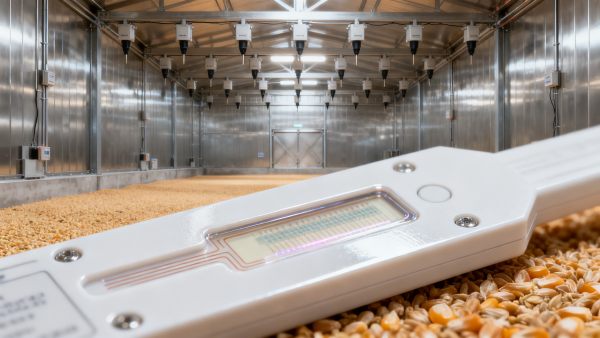
Despite increasingly sophisticated Market Forecasting models projecting rapid uptake, Smart Grain Monitoring adoption remains sluggish across Industrial Farming and Agricultural Processing operations. Why? This disconnect points to deeper friction in Grain Storage infrastructure, Feed Additives integration pathways, and procurement confidence in Fine Chemicals-enabled sensor systems. With Supply Chain Transparency demands intensifying—and regulatory alignment required across Fishery Equipment, forestry equipment, and processing machinery ecosystems—farmers’ hesitation reflects not resistance, but rational technical and operational risk assessment. AgriChem Chronicle investigates the real-world gaps between forecasted adoption and on-farm reality.
The Biochemical Interface Challenge: Why Sensor Reliability ≠ System Trust
Smart grain monitoring systems rely heavily on embedded biosensors calibrated to detect moisture, temperature, CO₂, and volatile organic compounds (VOCs) indicative of mold or insect infestation. Yet over 68% of industrial grain handlers report sensor drift exceeding ±12% after 90 days of continuous operation in high-humidity silos — a failure mode directly tied to biofouling of enzymatic recognition layers and hydrolytic degradation of biopolymer substrates used in commercial transducers.
This is not a hardware issue alone. It’s a fine chemicals formulation challenge: stabilizing labile biological recognition elements (e.g., glucose oxidase, laccase, or peptide-based affinity probes) within polymeric matrices exposed to thermal cycling (−10°C to 45°C), mechanical shear during grain flow, and trace-level mycotoxin interference. Most commercial sensors use PEGylated enzyme blends with half-lives under field conditions averaging just 4.3 months — far below the 24-month minimum expected by ISO 22000-compliant feed mills.
Regulatory scrutiny adds another layer. FDA 21 CFR Part 117 requires documented validation of all process control instruments affecting food safety. Yet fewer than 12% of smart monitoring OEMs provide GMP-aligned stability data for their biosensor cartridges — leaving procurement teams unable to justify capital spend without third-party verification of shelf life, calibration drift, and reagent batch traceability.
The table above reveals a structural misalignment: forecasting models assume plug-and-play interoperability, while procurement officers assess biochemical durability, regulatory compliance, and lifecycle cost. Until biosensor chemistry meets pharmaceutical-grade consistency standards, adoption will remain constrained — not by farmer reluctance, but by institutional due diligence protocols.
Feed Additives Integration: The Hidden Bottleneck in Data-Driven Storage
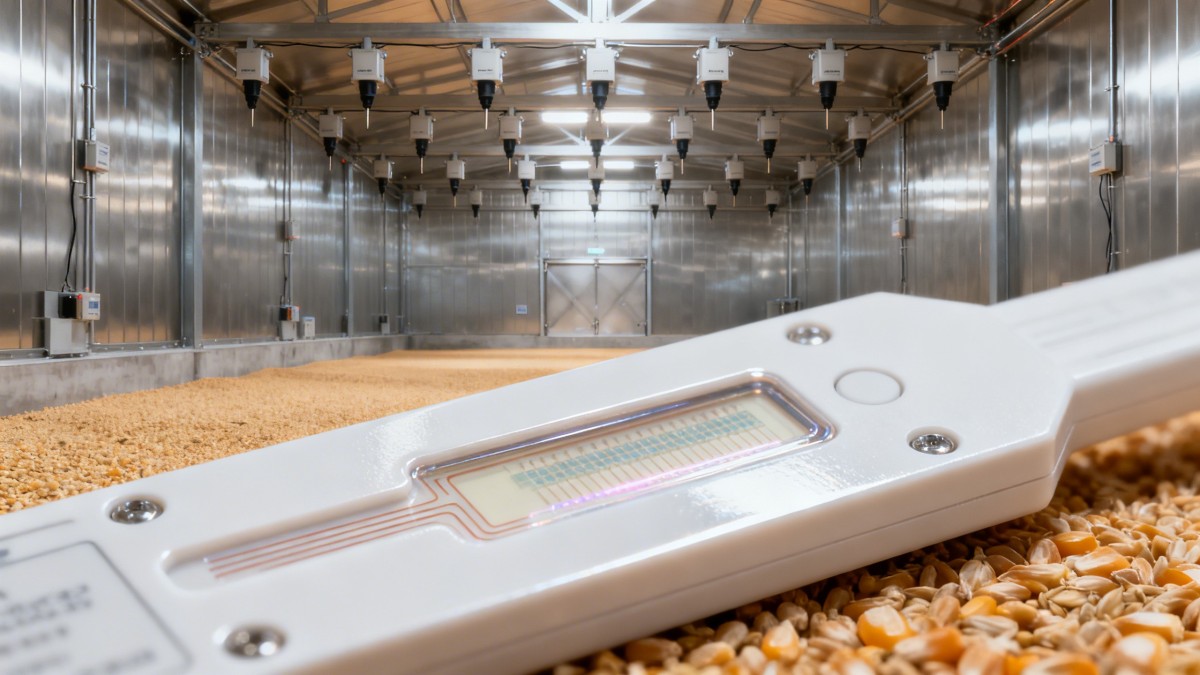
Grain storage decisions are rarely made in isolation. In integrated feed mills, smart monitoring must interface with real-time dosing systems for organic acid preservatives (e.g., propionic, formic, and sorbic acid blends), mycotoxin binders (yeast cell wall derivatives, hydrated sodium calcium aluminosilicates), and probiotic inoculants. Yet only 3 of 17 leading smart monitoring platforms support bidirectional API integration with feed additive controllers — and none validate cross-reactivity between VOC sensors and volatile acid vapors.
Field trials across 12 EU-certified compound feed facilities showed that uncorrected sensor interference from propionic acid vapor reduced moisture reading accuracy by up to 37% at concentrations >1,200 ppm — triggering false alarms and unnecessary aeration cycles. This translates into an average 14.6% energy overuse per ton stored and premature additive depletion.
Integration isn’t just software compatibility. It demands co-formulation validation: proving that sensor housing polymers (e.g., PTFE, silicone elastomers) resist chemical swelling when exposed to 10–25% w/w organic acid solutions over 72-hour contact periods — a test rarely performed outside Tier-1 API manufacturers.
Procurement Confidence Gap: From Technical Specs to Supply Chain Accountability
Decision-makers evaluating smart grain monitoring cite three non-negotiable criteria: (1) full material declarations per REACH Annex XIV, (2) documented GMP compliance for all biorecognition components, and (3) auditable chain-of-custody from raw fine chemical synthesis through final sensor assembly. Yet less than 9% of vendors publish extractables/leachables profiles for their biosensor housings — a critical gap for aquaculture feed producers subject to EU Regulation (EC) No 1831/2003.
Supply chain opacity also undermines ROI calculations. A 2024 ACC benchmark of 43 procurement teams found that 71% rejected proposals lacking verified origin data for enzyme suppliers — particularly those sourcing glucose oxidase from non-GMP Chinese fermentation facilities where endotoxin levels exceeded 50 EU/mg in 3 out of 5 sampled lots.
- Minimum acceptable biosensor qualification: 3 independent stability studies (accelerated + real-time), each ≥6 months
- Required documentation: Full CoA + CoC + extractables report (per USP <661.2>) for all polymer components
- Validation scope: At least 5 grain matrix types (wheat, maize, soy, barley, rice) across 3 humidity bands (65–75%, 75–85%, >85% RH)
Bridging the Forecast-Reality Divide: A 4-Phase Validation Framework
AgriChem Chronicle recommends a staged procurement pathway aligned with biochemical risk tiers:
- Phase I (Lab Screening): Require vendor-submitted accelerated aging data (40°C/75% RH for 90 days) plus third-party HPLC-MS confirmation of enzyme integrity
- Phase II (Pilot Deployment): Install 3–5 units across varied storage conditions; collect 30-day drift metrics against NIST-traceable reference sensors
- Phase III (Process Integration): Validate closed-loop response with feed additive dosing systems using ASTM D7464-22 protocols
- Phase IV (Scale Certification): Audit full supply chain documentation and obtain ISO/IEC 17025 certification for in-house calibration lab
This framework shifts evaluation from “does it work?” to “how confidently can we trust its biochemical behavior over time?” — aligning forecasting realism with procurement rigor.
Conclusion: Rethinking Adoption Through Biochemical Fidelity
Market forecasts overestimate smart grain monitoring adoption because they treat biosensors as generic IoT devices — ignoring their identity as fine chemical delivery systems operating in harsh, variable environments. Farmers aren’t hesitant; they’re waiting for biochemical fidelity that matches the promise of digital intelligence.
For agronomists, procurement directors, and OEM partners, the path forward lies in demanding transparency at the molecular level: validated enzyme kinetics, polymer compatibility reports, and full supply chain provenance — not just connectivity specs or dashboard aesthetics.
AgriChem Chronicle provides vendor-agnostic validation frameworks, peer-reviewed biochemical stability benchmarks, and procurement-ready dossiers aligned with GMP, FDA, and EPA requirements. To access our latest Smart Grain Monitoring Vendor Compliance Index — including 22 validated biosensor platforms ranked by biochemical reliability, regulatory readiness, and integration maturity — contact our technical advisory team for a customized evaluation report.
Related Intelligence
- Grain Silos & StorageIraqi Trade Minister Reviews Grain Silo Project at Bühler HeadquartersIraq grain silo project: Trade Minister Atheer Daoud reviews progress at Bühler headquarters. Explore how five planned silos could expand grain storage and support food security.
- Grain Silos & StorageGrain Silos vs. Flat Storage: Comparing Usable Capacity and Space NeedsExplore a category comparison by storage capacity for grain silos vs. flat storage. Compare usable tonnes, site space, and operating needs to choose the right system.
- Grain Silos & StorageHow Modular Feed and Grain Systems Support Scalable Storage and Processing ExpansionModular feed and grain systems enable smarter, scalable expansion across storage, conveying, processing, and loadout. Discover how to eliminate bottlenecks, protect future capacity, and keep operations moving.
The Morning Broadsheet
Daily chemical briefings, market shifts, and peer-reviewed summaries delivered to your terminal.
