

The Authority in Global Agricultural Chemistry & Bio-Resources
How to Choose a Magnetic Separator for Feed: Key Capacity and Metal Removal Factors
Why the Right Magnetic Separator for Feed Matters Early
Selecting a magnetic separator for feed is not just about catching stray metal. It directly affects line uptime, finished feed quality, and the protection of grinders, mixers, pellet mills, and extruders.
In real plants, the wrong unit often fails in two ways. It either restricts flow and creates bottlenecks, or it misses fine ferrous contamination that later damages equipment.
That is why capacity and metal removal performance must be reviewed together. A magnetic separator for feed should fit the process, the product behavior, and the contamination risk profile.
For ACC’s industry coverage, this is a familiar pattern across feed, grain, biochemical ingredients, and primary processing lines: separation equipment performs best when process data drives the selection.
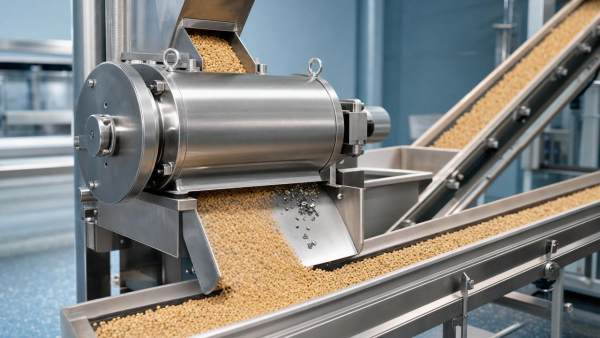
[Image 01: Magnetic separator for feed installed above a gravity chute in a feed processing line]
A practical evaluation starts with a simple question: what kind of metal must be removed, at what flow rate, and at which point in the line?
Start with Throughput, Not Magnet Strength Alone
A strong magnet looks impressive on paper, but nameplate gauss alone does not guarantee results. Throughput conditions decide whether contaminants stay in the magnetic field long enough to be captured.
Bulk density, feed form, moisture, and flow velocity all matter. Mash feed behaves differently from pellets, and sticky material behaves differently from dry, free-flowing grain blends.
- Match rated capacity to actual peak flow, not average hourly output. A magnetic separator for feed loses efficiency quickly when product depth becomes too thick across the magnetic face.
- Check bulk density and flow pattern before choosing plate, grate, drum, or inline designs. The best magnetic separator for feed depends on how material approaches and leaves the field.
- Review surge conditions from bins and conveyors. Short overload events can reduce metal capture even when the separator seems correctly sized during steady-state operation.
- Ask for performance data at comparable feed rates and product types. Lab numbers without process context rarely predict plant-level separation efficiency with enough confidence.
A quick rule for sizing discussions
If the product bed is deep, fast, or inconsistent, the separator usually needs more than higher magnetic intensity. It may need a wider housing, slower presentation, or a different product path.
Define the Metal Risk Before Comparing Designs
Not all contamination behaves the same way. Tramp iron, work-hardened wire, wear fragments, and fine ferrous dust each require different capture conditions.
This is where many evaluations go off track. A magnetic separator for feed selected for large bolts may underperform when the actual risk is fine metal generated by upstream wear.
- Separate the contamination profile into large tramp metal and fine ferrous particles. These two risks often call for different magnetic circuits or different installation points.
- Map likely metal sources across receiving, grinding, mixing, pelleting, and packing. A better magnetic separator for feed choice comes from tracing where contamination actually enters.
- Do not ignore weakly magnetic fines from equipment wear. They are harder to capture and often matter more for downstream die protection and product purity.
- Confirm whether non-ferrous or stainless contamination is also possible. If yes, magnets alone will not solve the problem and another inspection method may be needed.
A common process scenario
At raw material intake, larger metal pieces are the usual concern. Near final processing, the risk often shifts toward smaller wear particles that can affect product consistency or damage sensitive equipment.
That is why one magnetic separator for feed is not always enough. In many plants, staged separation works better than asking one unit to do every job.
Choose a Design That Fits the Process Path
The separator design should follow the material path, not the other way around. Gravity-fed lines, pneumatic lines, and conveyor-fed lines each create different separation conditions.
A well-matched design reduces cleanup time and keeps capture efficiency stable. A poorly matched one may look adequate in specification sheets but struggle in daily operation.
- Use gravity units where product falls evenly and predictably. Uneven feed distribution leaves dead zones and reduces what a magnetic separator for feed can actually capture.
- Choose self-cleaning options when contamination load is high or labor access is limited. Manual cleaning intervals that are too long often cause invisible performance loss.
- Check sanitation and cleanability if the line handles additives, medicated feed, or sensitive ingredients. Residue buildup can block flow and complicate compliance routines.
Look Closely at Installation Conditions
Even a good magnetic separator for feed can underperform when installation space is tight or maintenance access is poor. This issue is more common than most specifications suggest.
The product must meet the magnet correctly. If upstream elbows, valves, or transitions disturb the flow, capture rates can fall without any visible warning.
- Inspect available straight run, chute angle, and access doors before final selection. Layout details often decide whether a magnetic separator for feed works consistently or not.
- Confirm cleaning clearance and safe handling space around the unit. Strong magnets attract sharp fragments, so maintenance must be practical as well as safe.
- Review temperature, humidity, dust load, and washdown requirements. Environmental mismatch shortens service life and may affect magnetic housing integrity over time.
Another easy-to-miss point
Pressure loss matters in pneumatic systems. If the separator creates too much resistance, conveying balance changes and material behavior at the magnet face may become unstable.
Do Not Skip Verification Data
A serious evaluation should go beyond brochure claims. Ask for application data, test procedures, cleaning frequency assumptions, and evidence from similar installations.
This matters even more in regulated or quality-sensitive supply chains. ACC regularly tracks how better documentation improves equipment decisions across agricultural processing and fine chemical handling environments.
- Request test details, not just peak gauss values. Distance from the magnetic surface often tells more about real separator performance than the highest measured point.
- Check magnet material grade, housing construction, and finish quality. Long-term durability is part of magnetic separator for feed value, especially in abrasive environments.
- Review cleaning method, expected metal loading, and service intervals together. A unit that captures well but cleans poorly can still become a process liability.
- Ask for references from comparable feed, grain, or ingredient lines. Similar operating conditions provide more reliable insight than broad claims across unrelated industries.
Where Selection Mistakes Usually Happen
Most selection mistakes are not dramatic. They are small assumptions that add up: using average flow instead of peak flow, ignoring fines, or underestimating cleaning frequency.
Another common mistake is placing the magnetic separator for feed too late in the line. By then, contamination may already have damaged critical equipment.
In blended operations handling feed ingredients, bio-extracts, or chemical additives, it is also important to review material compatibility and hygiene expectations before final approval.
A simple comparison framework
A Practical Way to Make the Final Choice
When comparing options, keep the decision simple. First confirm contamination type, then verify capacity under real conditions, then check installation and cleaning practicality.
If two units appear similar, choose the one with clearer performance evidence and easier maintenance. Over time, that usually creates better process stability than chasing the strongest published gauss number.
A magnetic separator for feed should support the whole process, not just pass a specification review. The best choice is the one that protects equipment, maintains purity, and stays effective during normal plant variability.
As a next step, build a short evaluation sheet using actual throughput, contamination sources, layout limits, and cleaning intervals. That turns a broad equipment search into a decision grounded in plant reality.
Related Intelligence
- Commercial Feed PelletFire Quickly Extinguished in Grinder Bin at Baiada’s Cardiff Feed Mill in AustraliaBaiada’s Cardiff feed mill fire was reportedly contained quickly. Explore grinder bin safety, restart uncertainties and key supply continuity checks for feed buyers.
- Commercial Feed PelletHow to Build a Sanitary Feed Production Plan That Reduces Cross-ContaminationSanitary feed production planning: reduce cross-contamination with smarter sequencing, validated flushing, material segregation, and traceable sanitation controls.
- Commercial Feed PelletFeed Pellet Mill Sourcing: How to Vet Suppliers for Capacity, Quality, and SupportFeed pellet mill sourcing made smarter: vet suppliers for proven capacity, pellet quality, lifecycle cost, factory controls, commissioning, and reliable after-sales support.
The Morning Broadsheet
Daily chemical briefings, market shifts, and peer-reviewed summaries delivered to your terminal.
